Etiology
Mycobacterium tuberculosis
- Virulence factors and resistances
- Cord factor: arranges M. tuberculosis in a serpentine cord → ↑ TNF-α release and activation of macrophages → granuloma formation
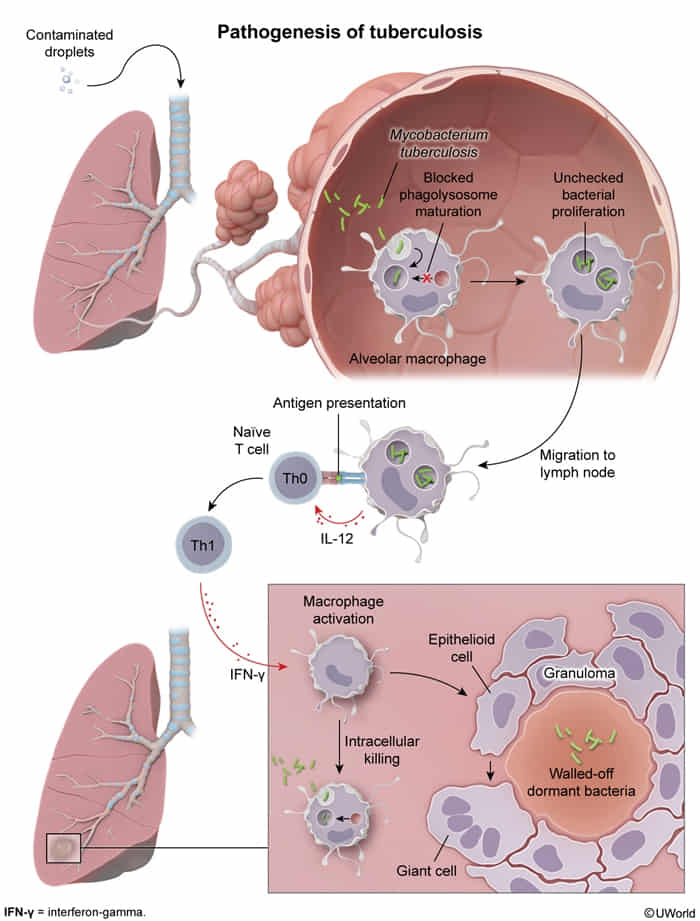
- Surface glycolipids: (sulfatides) inhibit phagolysosomal fusion
- Infiltration of nonactivated macrophages → escape of humoral immune response
- Multi-drug resistance: mutation in KatG (catalase-peroxidase) → INH conversion to its active metabolite → INH resistance
- Cord factor: arranges M. tuberculosis in a serpentine cord → ↑ TNF-α release and activation of macrophages → granuloma formation
Pathophysiology
Primary tuberculosis
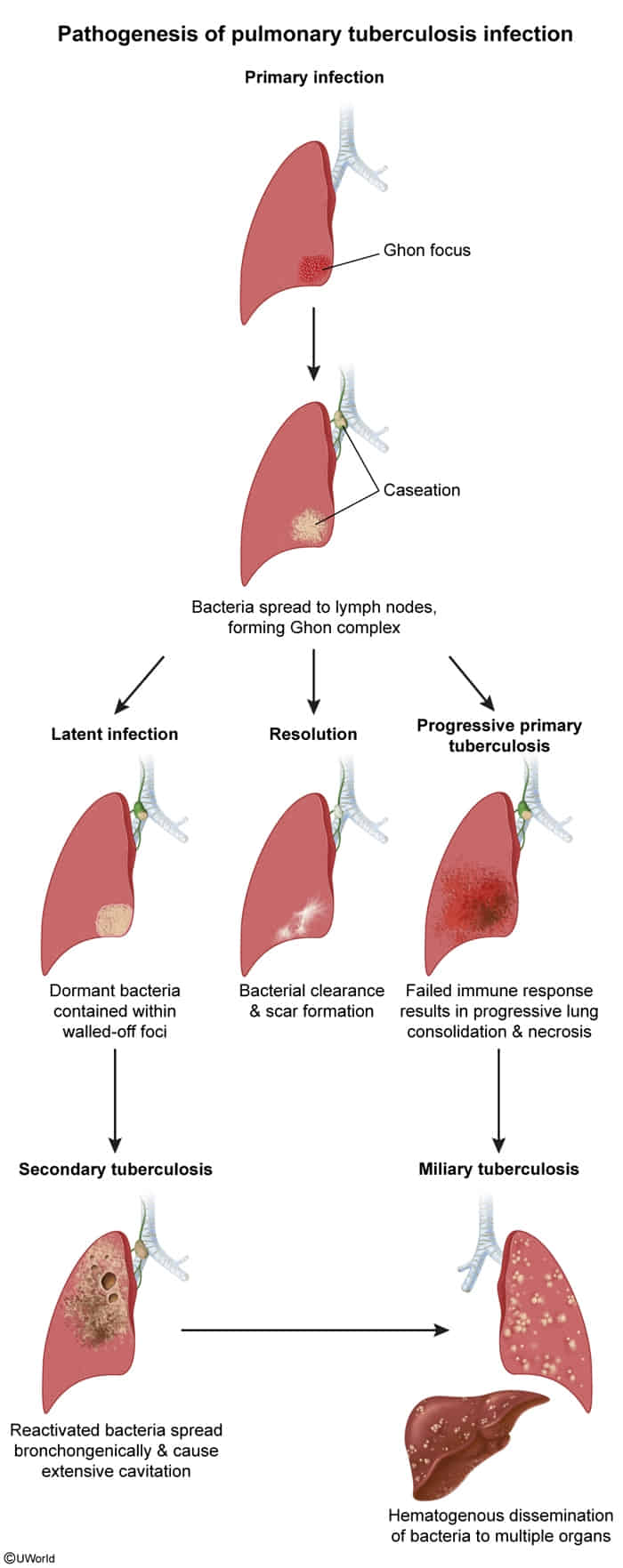
- Ghon focus: a granuloma typically located in the middle/lower lung lobes.
- Ghon complex: formed by the Ghon focus, regional lymph node, and the linking lymphatic vessels
- The organisms can remain dormant in a walled-off Ghon complex for many years before reactivating.
- Alternatively, the lesion may heal, forming a benign, calcified Ranke complex that is not associated with reactivation tuberculosis.
Secondary tuberculosis
- In < 10% of individuals with primary TB, the host immune response fails to control the infection, leading to active primary TB and progressive disease.
- In > 90% of individuals, the host immune response can control the infection, resulting in latent TB infection. Weakening of host immune response can allow reactivation of disease (or, less commonly, reinfection) and further disease progression.
Clinical features
- Primary TB:
- Commonly asymptomatic.
- Ghon focus (subpleural parenchymal lesion) + hilar lymphadenopathy = Ghon complex.
- Airway Compression: Enlarged hilar lymph nodes can cause extrinsic compression of adjacent bronchi, leading to focal airway obstruction (manifesting as unilateral decreased breath sounds and expiratory wheezing). c
- Calcified Ghon complex = Ranke complex.
- Latent TB Infection (LTBI):
- Asymptomatic, non-contagious, (+) TST/IGRA, normal CXR.
- Reactivation / Active Pulmonary TB:
- Constitutional: Night sweats, low-grade fever, unintentional weight loss, anorexia.
- Pulmonary: Chronic productive cough (>2–3 wks), hemoptysis, pleuritic chest pain.
- Extrapulmonary TB:
- Lymphadenitis: Scrofula (painless cervical lymphadenopathy).
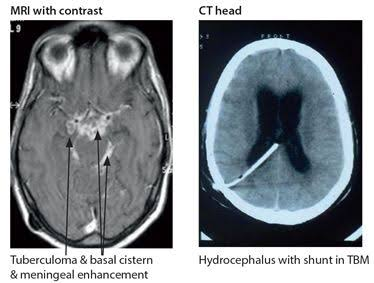
- CNS: Tuberculous meningitis (↑ Risk with immunodeficiency; basilar enhancement; CSF w/ lymphocytic predominance, high protein, low glucose). c
- Musculoskeletal: Pott disease (tuberculous spondylodiscitis, thoracic spine).
- Pericardial: Constrictive pericarditis.
- Adrenal: Primary adrenal insufficiency (Addison disease).
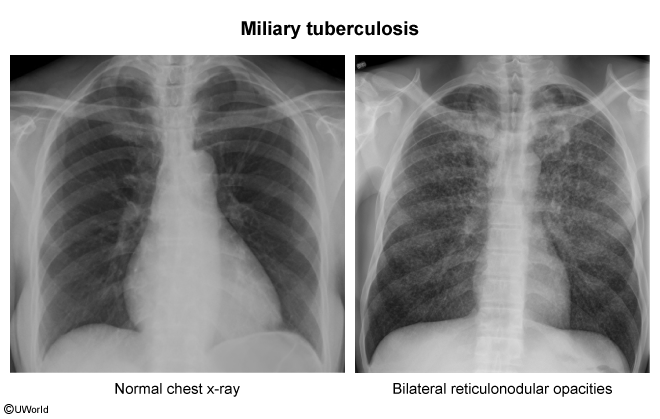
- Disseminated: Miliary TB (millet seed-like hematogenous spread). c
Diagnostics
Active TB infection
- Initial Test: CXR
- Reactivation TB: Apical/posterior upper lobe cavitary lesions.
- Primary TB: Lower/middle lobe infiltrates + hilar lymphadenopathy.
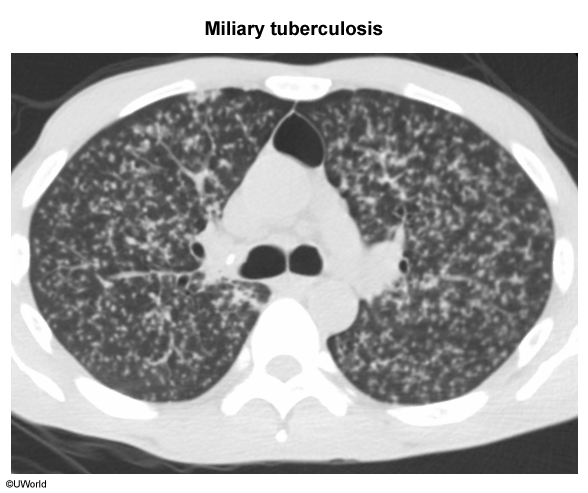
- Miliary TB: Diffuse “millet seed” reticulonodular pattern.
- Acid-fast bacilli smear microscopy
- Description: Ziehl Neelsen stain or auramine rhodamine stain are used.
- Advantages:
- Rapid detection
- Inexpensive
- Disadvantages:
- Low sensitivity because high burden (>10,000/mL) of organisms required in sample
- Cannot differentiate M. tuberculosis from other nontuberculous Nontuberculous Mycobacteria
- Both viable and nonviable Nontuberculous Mycobacteria will stain
- Nucleic acid amplification test
- Description: For initial testing (along with AFB smear microscopy and culture) if clinical suspicion is high. Used for confirmation of AFB positive smears.
- Advantages:
- High specificity and sensitivity (lower sensitivity in individuals with a negative AFB smear)
- Rapid diagnosis
- Rapid detection of drug-resistant strains
- Low cross-reactivity with nontuberculous Nontuberculous Mycobacteria
- Disadvantages:
- Requires laboratory equipment and trained staff, which may make use in resource-limited settings more difficult
- Both viable and nonviable Nontuberculous Mycobacteria are detectable
- Culture
Latent TB infection
LTBI is diagnosed when there is evidence of M. tuberculosis infection (positive TST or IGRA) in the absence of active clinical or radiologic disease.
- Tuberculin skin test (purified protein derivative test, Mantoux test)
- Mechanism
- Tests cell-mediated immunity against M. tuberculosis via delayed hypersensitivity reaction (type IV HSR) mounted by T cells
- ≥5 mm: HIV(+), recent TB contacts, fibrotic CXR changes, organ transplant recipients / immunosuppressed (steroids ≥15 mg/day, TNF-α blockers). c
- ≥10 mm: Recent arrivals (<5 yr) from endemic countries, IVDU, high-risk settings (prisons, healthcare), children <4 yr, high-risk comorbidities (DM, ESRD, silicosis).
- ≥15 mm: Healthy individuals w/ no known risk factors.
- Mechanism
- Interferon-γ release assay (IGRA)
- Mechanism
- Tests cell-mediated immunity against M. tuberculosis-specific antigens by measuring the amount of IFN-γ released by T cells using ELISA
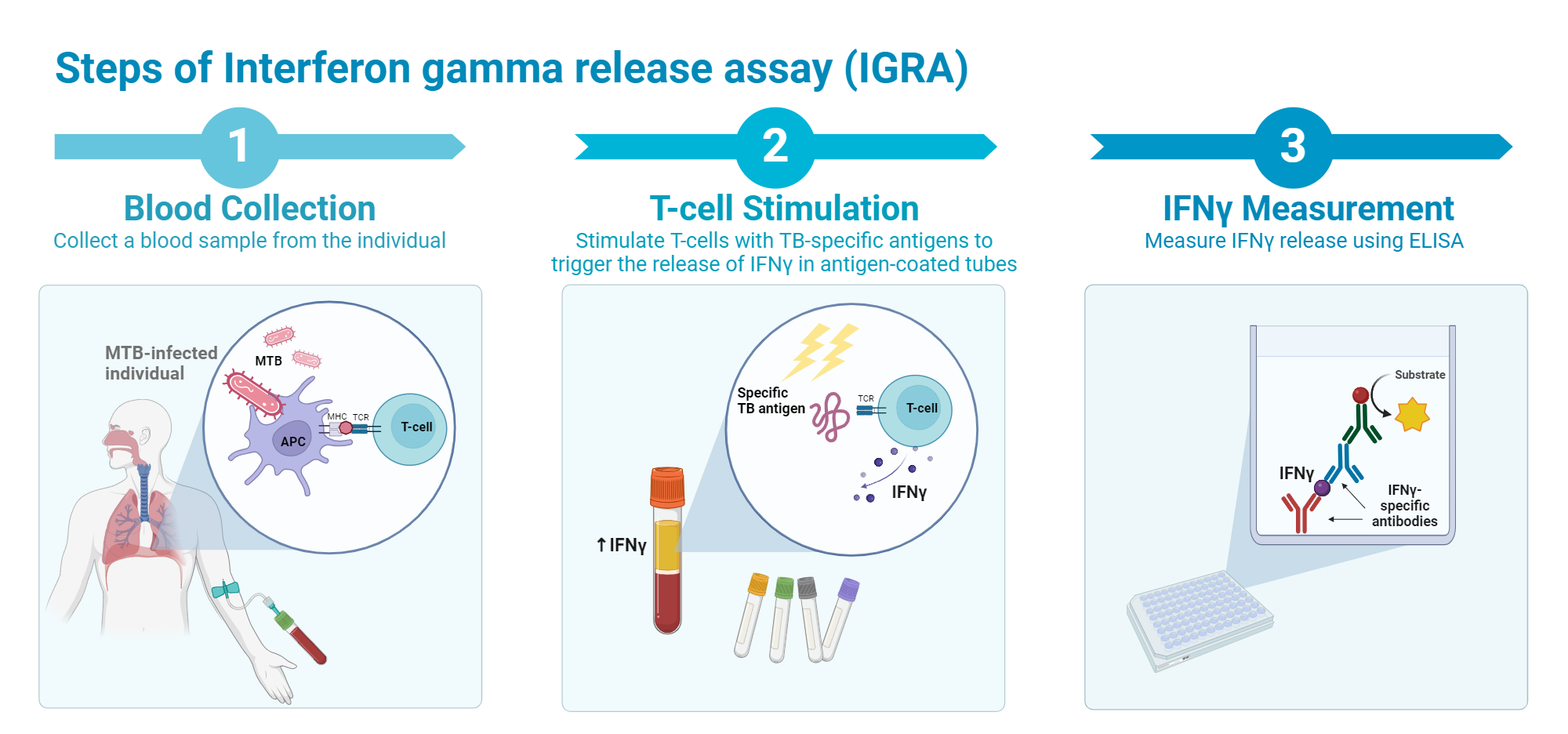
- Tests cell-mediated immunity against M. tuberculosis-specific antigens by measuring the amount of IFN-γ released by T cells using ELISA
- Preferred test in individuals with prior BCG vaccination
- Uses antigens that are found only in Mycobacterium tuberculosis, but not in BCG
- Mechanism
Treatment
- Public Health: Report to local health dept. Directly Observed Therapy (DOT) for adherence. Contact tracing + PPD/IGRA for close contacts. c
Mnemonic
b在里,脸在外,利益万能,纯洁无害
- 吡 细胞内
- 链 细胞外
- 利 内+外
- 醇 抑菌不杀菌
Rifamycins
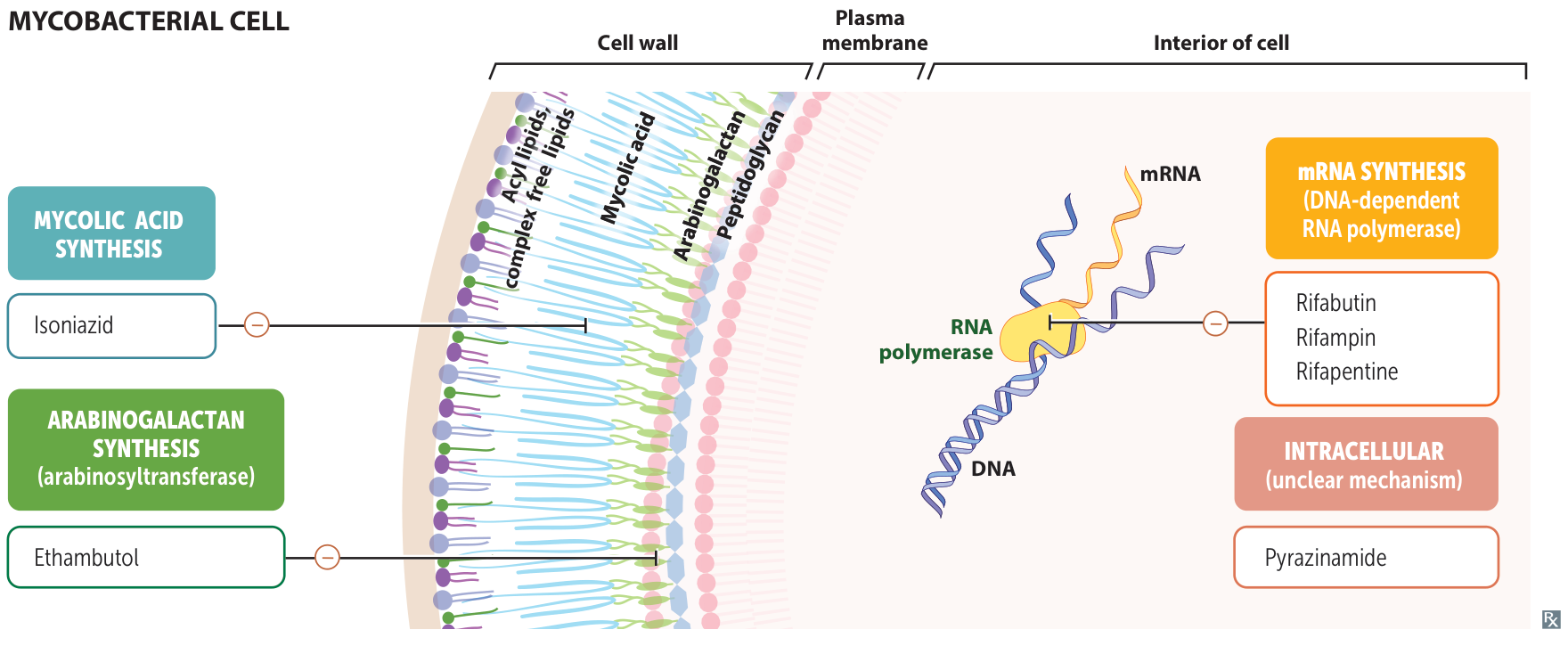
- Mechanism of action: inhibits bacterial DNA-dependent RNA-polymerase → prevention of transcription (mRNA synthesis) → inhibition of bacterial protein synthesis → cell death (bactericidal effect) t
- Mnemonic: “R for RNA Polymerase.”
- Other uses
- Prophylaxis:
- Meningococcal (N. meningitidis) contacts. t
- H. influenzae type b contacts.
- Prophylaxis:
Isoniazid (INH)
- Mechanism of action
- Isoniazid is a prodrug and needs to be converted into its active metabolite by bacterial catalase-peroxidase (encoded by KatG). t
- Prevents cell wall synthesis by inhibiting the synthesis of mycolic acid
- Mnemonic: “INHibits mycolic acid synthesis.”
Pyrazinamide
- Mechanism of action
- Not completely understood
- Prodrug: converted into active form pyrazinoic acid
- Most effective at acidic pH (e.g., in acidic phagolysosomes)
- Bactericidal effect
- Not completely understood
Ethambutol
- Mechanism of action: inhibits arabinosyltransferase → ↓ carbohydrate polymerization → prevention of mycobacterial cell wall synthesis (bacteriostatic effect)
Side effects of antituberculosis agents
- Isoniazid
- Asymptomatic elevation of transaminases
- In 10%-20% of patients, INH causes acute, mild hepatic dysfunction
- In rare instances (<1%), INH induces a frank hepatitis that causes a syndrome similar to viral hepatitis (eg, fever, anorexia, nausea, jaundice) t
- Cytochrome P450 inhibition: leading to interactions with numerous drugs, including antiretroviral agents, cardiovascular agents, and antibiotics
- Less common
- Drug-induced lupus
- Vitamin B6 deficiency: sideroblastic anemia, peripheral neuropathy c
- INH binds the active form of pyridoxine, resulting in renal excretion. Most patients have large enough stores of pyridoxine to tolerate increased excretion; however, those with malnourishment, pregnancy, or certain comorbid illnesses (eg, diabetes mellitus) may develop a deficiency.
- CNS toxicity: precipitation of benzodiazepine-refractory seizures with high doses of isoniazid, psychosis, ataxia
- Others: anion gap metabolic acidosis, pellagra, optic neuritis
- Asymptomatic elevation of transaminases
- Rifampin
- Cytochrome P450 induction: leading to important interactions with ART in patients with HIV (therefore, rifabutin is preferred)
- Orange discoloration of body fluids
- Pyrazinamide
- Greatest hepatotoxicity potential
- Hyperuricemia
- Ethambutol
- Optic neuritis (reversible red-green color blindness)
Management of TB in pregnant individuals
- Screening & Diagnosis
- TST / IGRA: Safe in all trimesters; preferred screening tools.
- CXR with abdominal shielding: Mandatory if TST/IGRA (+) or symptomatic; safe at any gestational age to rule out active disease. c
- Sputum AFB stain & culture + NAAT: 3 consecutive morning samples for suspected active TB.
- Active TB Treatment (Start Immediately)
- Standard 9-Month Regimen:
- Intensive phase (2 mos): INH + RIF + EMB.
- Continuation phase (7 mos): INH + RIF.
- Pyridoxine (Vit B6): 25–50 mg/day co-prescribed with INH to prevent maternal & fetal peripheral neuropathy.
- Pyrazinamide (PZA): Routinely omitted in the US due to limited safety data; added only for severe disease, HIV co-infection, or suspected drug resistance.
- Strictly Contraindicated:
- Streptomycin / Aminoglycosides: Causes fetal ototoxicity / CN VIII damage (congenital deafness).
- Fluoroquinolones & Ethionamide: Avoided due to cartilage toxicity / teratogenicity.
- Standard 9-Month Regimen:
- Latent TB Infection (LTBI) Treatment
- Low Risk: Delay treatment until 2–3 months postpartum to reduce hepatotoxicity risk.
- High Risk (HIV(+), recent converter yrs, close active contact): Treat during pregnancy with INH + Vit B6 daily for 6–9 months OR RIF daily for 4 months.
- Safety & Monitoring
- LFTs: Monitor monthly. Discontinue drugs if transaminases with symptoms (nausea, RUQ pain, jaundice) or without symptoms.
- Perinatal & Neonatal Considerations
- Breastfeeding: Safe and encouraged with first-line agents (INH, RIF, EMB); drugs in breast milk are non-toxic but non-therapeutic. Ensure infant receives Vit B6 if mother takes INH.
- Infant Management: If mother has active TB, evaluate infant (CXR, TST) and initiate empiric INH prophylaxis until mother is non-infectious and infant tests negative.