Description: anemia caused by defective heme metabolism, which leads to iron trapping inside the mitochondria
Etiology
Inherited: X-linked sideroblastic anemia due to a δ-ALA-synthase gene defect
ALA synthase, not ALA dehydratase t
Acquired
Diagnostics
CBC: microcytic anemia c
Serum iron studies
High ferritin
High iron
High transferrin saturation
Normal/low TIBC
Peripheral blood smear
Basophilic stippling of RBCs t
Basophilic stippling represents the aggregation and precipitation of residual rRNA within the red blood cell cytoplasm. Lead inhibits the enzyme pyrimidine 5’-nucleotidase . This enzyme normally degrades RNA during RBC maturation. Inhibition prevents breakdown, causing rRNA to clump.
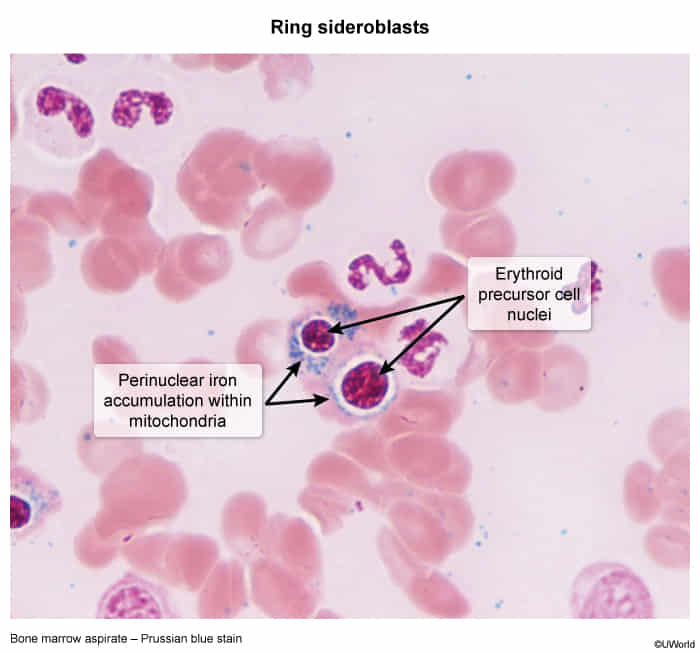
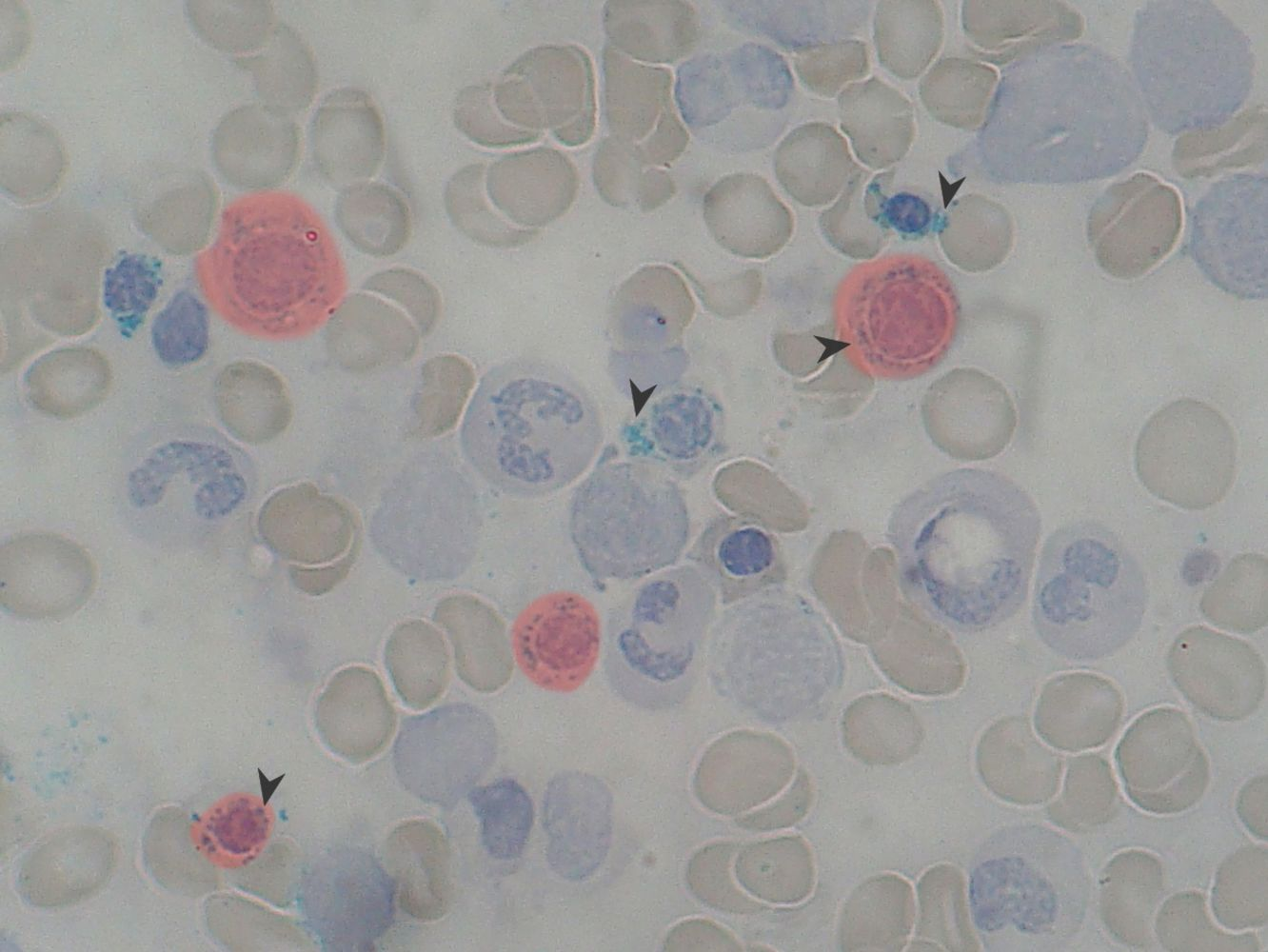
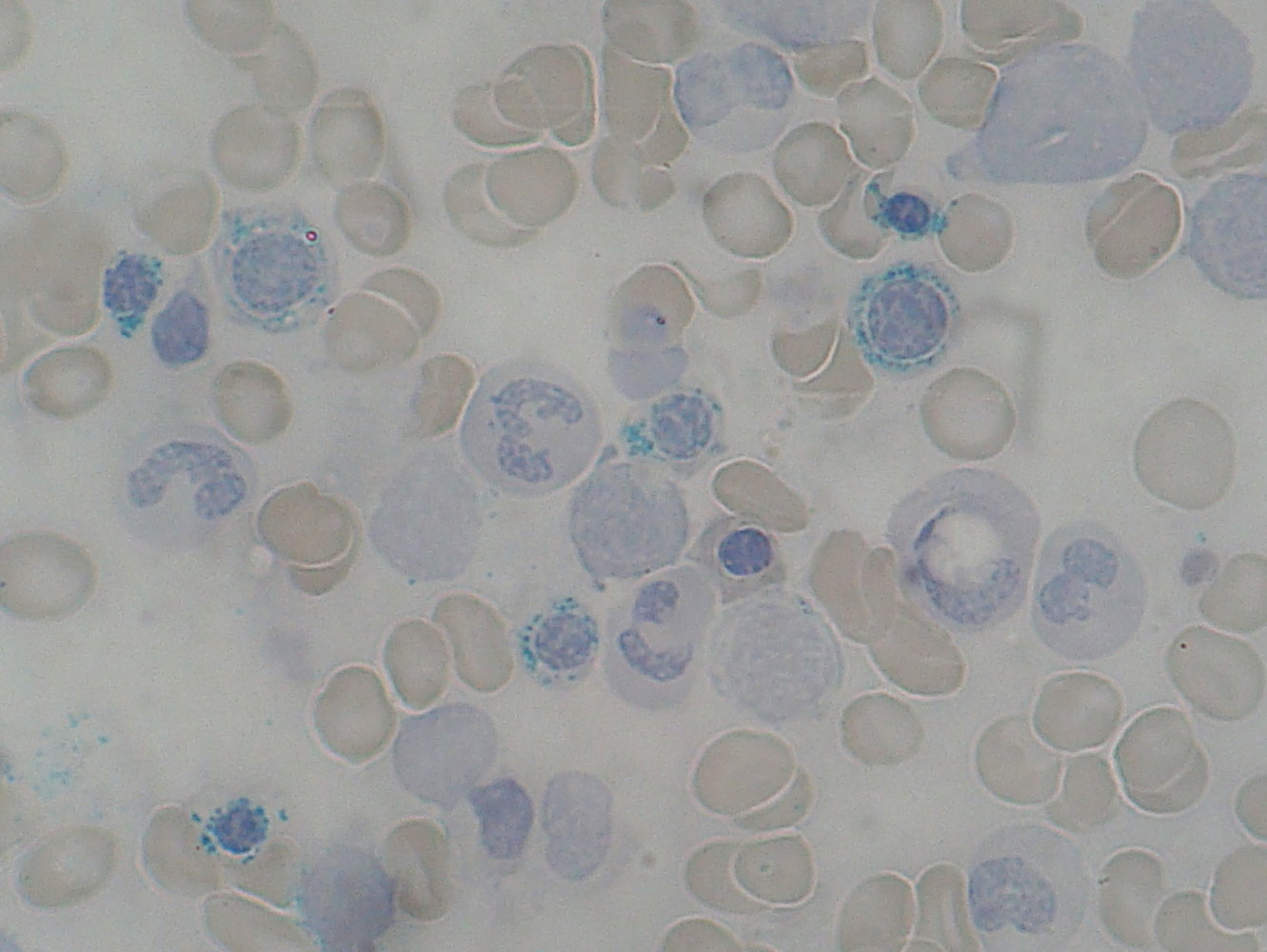
Prussian blue staining of bone marrow: ringed sideroblasts
Management
1. Remove Offending Agent / Treat Underlying Cause (First-line) :
Alcohol cessation : Resolves alcohol-induced mitochondrial toxicity.Drug-induced (e.g., INH) : Discontinue or administer Pyridoxine (Vitamin B6) (50 – 100 mg/day c Nutritional copper deficiency : Oral or IV copper supplementation; cease zinc supplements.Congenital (ALAS2 mutation) : Trial of high-dose Pyridoxine (Vitamin B6) (100 – 200 mg/day
2. Etiology-Specific Second-line Therapies :
Lead Poisoning :
Mild-moderate: Oral Succimer (DMSA).
Severe / Encephalopathy: IV Dimercaprol (BAL) followed by IV Calcium disodium EDTA .
MDS with Ring Sideroblasts :
Luspatercept (erythroid maturation agent) for transfusion-dependent pts with SF3B1 mutation refractory to ESAs.Erythropoiesis-stimulating agents (ESAs) if endogenous EPO ≤ 500 mU/mL
3. Management of Complications (Iron Overload) :
Iron Chelation Therapy : Deferasirox (oral) or Deferoxamine (subQ/IV) indicated when ferritin > 1000 ng/mL Avoid empiric iron supplementation.
Phlebotomy : Reserved only for pts with mild congenital forms who achieve normal Hb levels on pyridoxine.