- Sources of exposure
- Battery manufacturing, metallurgy
- Drinking water (contaminated by lead plumbing) or contaminated sources
- Lead-containing paint (common source of exposure in children) from:
- Antique or imported toys
- Walls of older homes (houses built before 1978 may still have lead-based paint) c
- Pathophysiology: inhibition of aminolevulinate dehydratase and ferrochelatase → heme synthesis disruption → ↑ protoporphyrin and ↑ aminolevulinic acid in RBCs
- Clinical features
- Nervous system
- Polyneuropathy, encephalopathy, headache, fatigue, muscle weakness, paresthesias, delirium, seizures
- Demyelination of peripheral nerves→ peripheral neuropathy → paralysis of muscles supplied by the radial or peroneal nerve (wrist/foot drop)
- Cognitive impairment, memory loss
- Kidneys: nephropathy
- Red blood cells: symptoms of anemia
- Other:
- Purple-blue line on the gums (lead line or Burton line)
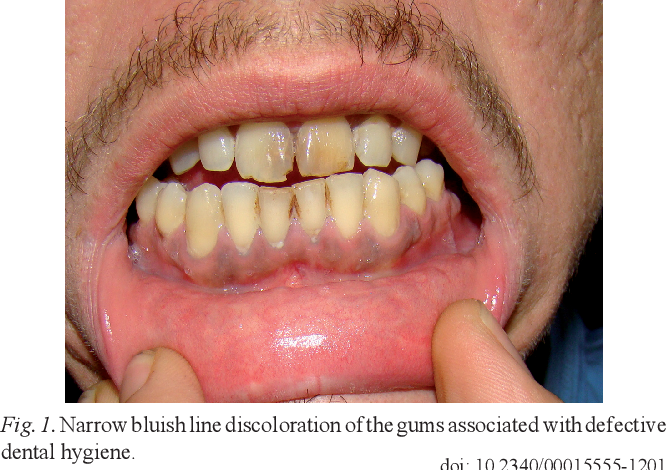
- Severe abdominal pain (lead colic)
- Constipation
- Diagnostics:
- Initial / Screening: Capillary blood lead level (Sensitive but high false-positive rate due to environmental contamination). c
- Confirmatory: Venous blood lead level (BLL) (mandatory confirmation). c
- Key Labs: Microcytic/normocytic anemia with basophilic stippling (rRNA aggregates), elevated free erythrocyte protoporphyrin (FEP).
- Imaging: Abdominal X-ray (radiopaque paint chips if acute ingestion); long-bone X-ray (metaphyseal “lead lines”).
- Treatment of lead toxicity
- BLL < 45 mcg/dL: Remove exposure source, optimize iron/calcium intake, repeat venous BLL in 1–3 months.
- BLL 45–69 mcg/dL: Chelation with oral Succimer (DMSA).
- BLL ≥ 70 mcg/dL or Encephalopathy: Emergency dual chelation with IM Dimercaprol (BAL) followed by IV Calcium Disodium Edetate (CaNa2EDTA) (give BAL first to avoid CNS redistribution).
- Adults: Remove from exposure; chelate with DMSA or EDTA/BAL if symptomatic or BLL > 50–80 mcg/dL.