Epidemiology


Etiology

  • Strong association with Epstein-Barr virus (EBV)
  • Immunodeficiency: e.g., organ or cell transplantation, immunosuppressants, HIV infection , chemotherapy
  • Autoimmune diseases (e.g., rheumatoid arthritis, sarcoidosis)

Hodgkin lymphoma vs non-Hodgkin lymphoma

FeatureHodgkin Lymphoma (HL)Non-Hodgkin Lymphoma (NHL)
Key CellReed-Sternberg (“owl-eye”)Malignant lymphocytes (B or T cell)
SpreadContiguous (orderly, predictable)Non-contiguous (disseminated)
PresentationLocalized, single node group (e.g., cervical, mediastinal)Multiple peripheral nodes, extranodal common
”B” SymptomsCommon (fever, night sweats, wt loss)Less common
AgeBimodal (20s, >50s)Typically >50 years old
PrognosisHigh cure rateVariable; depends on subtype
Key AssociationsEBVEBV, HTLV-1, HHV-8; translocations (e.g., t(14;18), t(8;14))
Link to original


Pathophysiology


Clinical features

  • B symptoms
    • Night sweats, weight loss > 10% in the past 6 months, fever > 38°C (100.4°F)
  • Pel-Ebstein fever: Intermittent fever with periods of high temperature for 1–2 weeks, followed by afebrile periods for 1–2 weeks. Relatively rare but very specific for HL.
  • Alcohol-induced pain: Pain in involved lymph nodes after ingestion of alcohol. Relatively rare but highly specific for HL.

Diagnostics

Histology

  • Lymph node excision
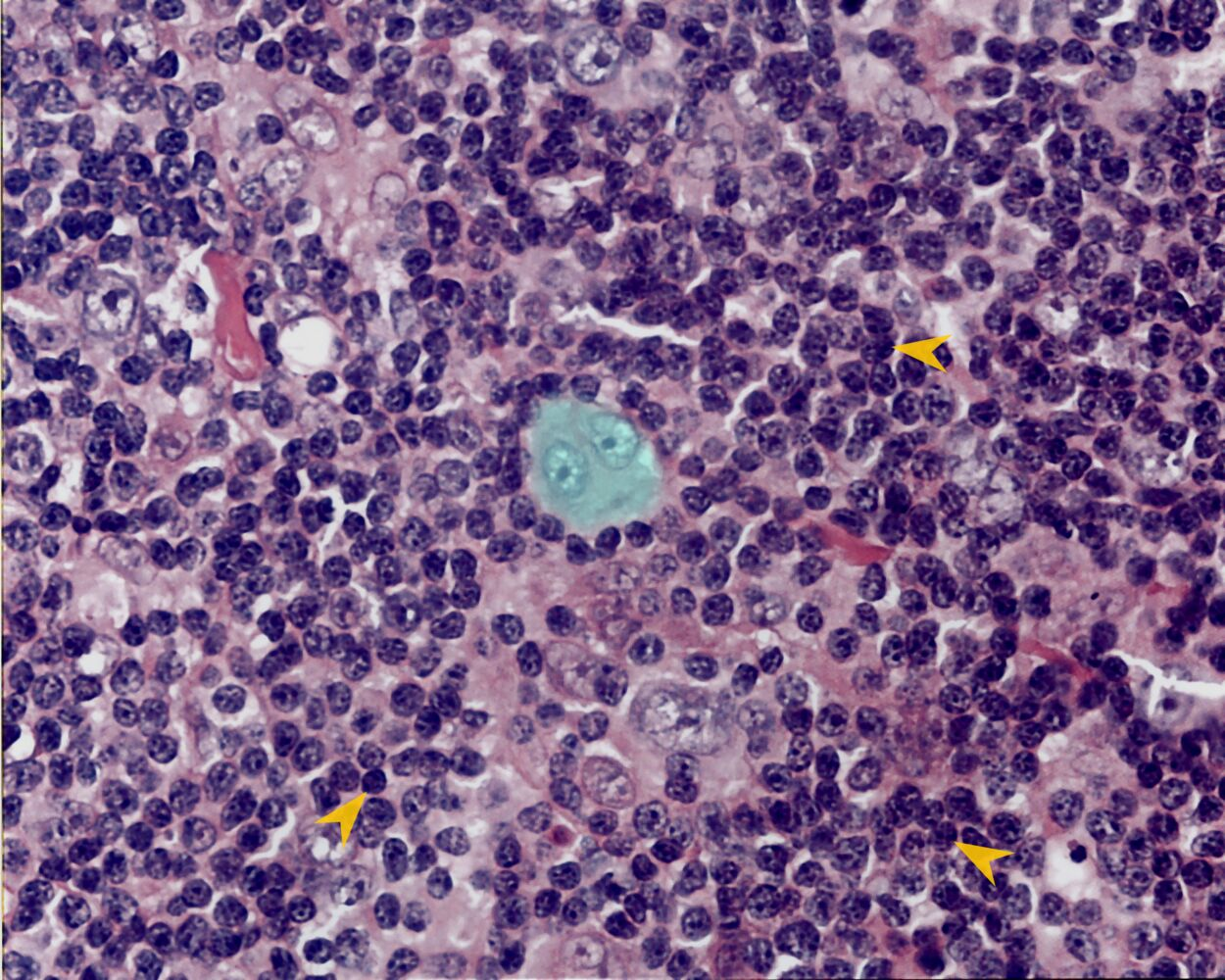
    • Reed-Sternberg cells (RSCs)
      • Tumor cells that are pathognomonic of HL
      • Originate from B cells
      • Large cells with binuclear/bilobed nuclei with dark centers of chromatin and pale halos, which results in an owl-eye appearance on histopathologic examination.
      • CD15/CD30-positive
    • Hodgkin cells: mononuclear, malignant B lymphocytes
      • Polynuclear RSCs are giant cells formed through the fusion of multiple Hodgkin cells.
Treatment