Tip
Exclusively or partially breastfed infants require vitamin D and iron supplementation until they can meet their daily requirements through their diet.
Breastfeeding
- Recommendation: Exclusive breastfeeding for the first ~6 months of life. Continue for ≥1 year as complementary foods are introduced.
- Benefits for Infant:
- GI: Decreased risk of necrotizing enterocolitis (NEC), gastroenteritis.
- Immune: ↓ risk of otitis media, respiratory infections (e.g., RSV), UTIs. Maternal IgA passed to infant provides passive immunity.
- Other: ↓ risk of SIDS, T1DM, obesity, and certain childhood cancers.
- Benefits for Mother: ↓ risk of breast/ovarian cancer, T2DM, postpartum depression. Promotes uterine involution (via oxytocin).
- Composition of Breast Milk:
- Colostrum: “Liquid gold” - first few days postpartum. High in protein, immunoglobulins (IgA), minerals, and vitamins.
- Mature Milk: Lower in protein but higher in fat and lactose than colostrum.
- Protein: Primarily whey (more easily digested) and casein.
- Fat: Main source of calories. Contains essential fatty acids (DHA, ARA).
- Carbohydrates: Lactose is the primary carb.
Complications
- Breast Engorgement
- Timing & Pathophysiology: Days 3-5 postpartum; vascular congestion + milk accumulation.
- Clinical Features: Bilateral, diffuse swelling, firmness, and pain; no systemic symptoms.
- Management: Frequent breastfeeding/pumping q2-3h, cold packs between feeds, warm compresses/showers before feeds, NSAIDs.
- Plugged Duct
- Clinical Features: Unilateral, localized tender nodule/mass; no systemic symptoms or fever.
- Management: Frequent feeds, warm compresses, direct massage from obstruction toward nipple during feeding.
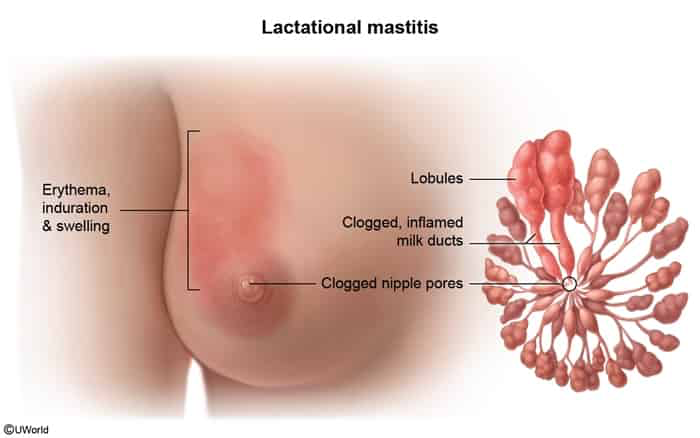
- Lactational Mastitis
- Pathophysiology: Milk stasis leading to bacterial infection (S. aureus > S. epidermidis).
- Clinical Features: Unilateral, wedge-shaped erythema/induration, high fever (> 38.3°C), chills, myalgias.
- Management:
- Antibiotics (10-14 days): Dicloxacillin or Cephalexin (Clindamycin or TMP-SMX for MRSA risk/PCN allergy).
- CONTINUE breastfeeding/pumping on affected side q2-3h (empty breast prevents abscess).
- Breast Abscess
- Etiology: Suspect when mastitis fails to improve after 48-72 hours of antibiotics.
- Clinical Features: Unilateral, persistent fever + fluctuant, tender, palpable mass with overlying erythema.
- Diagnosis: Ultrasound (fluid-filled collection).
- Management: US-guided needle aspiration + IV/PO antibiotics (cover MRSA, e.g., Vancomycin or Clindamycin); continue breastfeeding/pumping.
- Galactocele
- Pathophysiology: Retention cyst from lactiferous duct occlusion (often during weaning).
- Clinical Features: Soft, mobile, non-tender breast mass; no erythema, warmth, or fever.
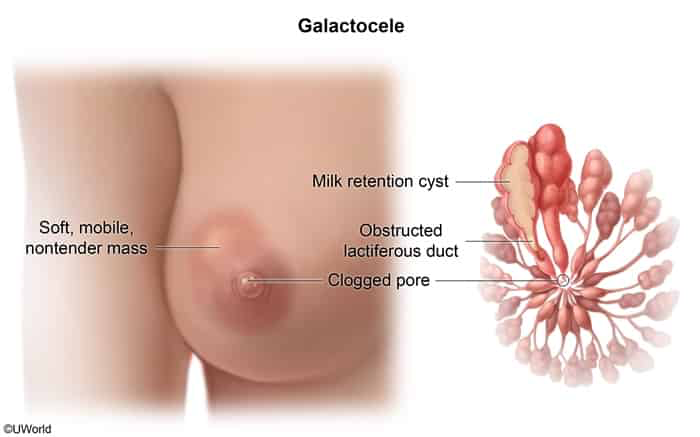
- Diagnosis & Treatment: Aspiration (diagnostic & therapeutic yields milky fluid).
- Nipple Trauma & Candida Infection
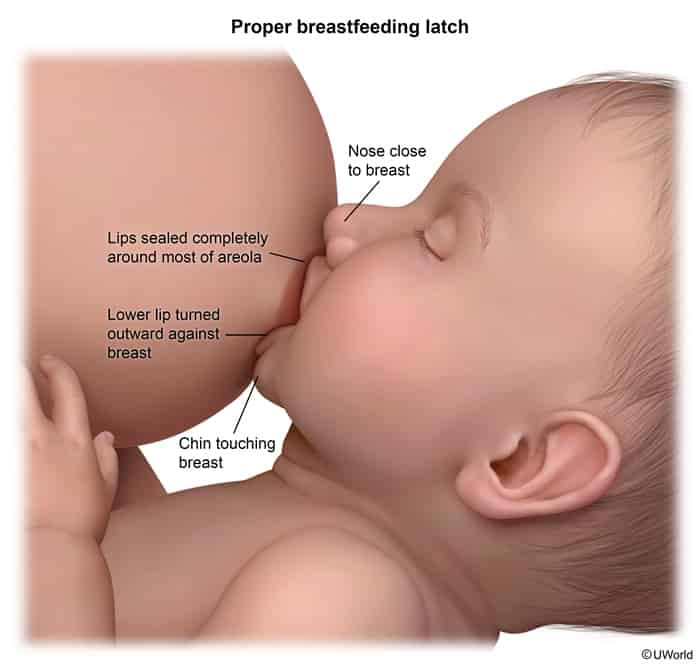
- Nipple Trauma: Severe pain, fissuring/cracks due to improper latch -> Lactation consultation for positioning, topically applied expressed milk/lanolin; continue feeds. c
- Candida (Thrush): Sharp, shooting breast pain radiating deep post-feed + red, shiny, flaking nipples -> Treat mother (topical miconazole/clotrimazole) AND infant (oral nystatin) simultaneously.
- Nipple Trauma: Severe pain, fissuring/cracks due to improper latch -> Lactation consultation for positioning, topically applied expressed milk/lanolin; continue feeds. c
Contraindications
- Absolute Contraindications (Developed Countries/US):
- Maternal HIV: Recommendation in developed nations is to use formula (due to low risk of water contamination). (Note: WHO allows breastfeeding in resource-poor areas where water is unsafe).
- Active untreated tuberculosis: Temporary separation required. Infant can receive pumped/expressed milk. Resume direct feeding after 2 weeks of maternal anti-TB therapy and conversion to non-infectious state.
- Active varicella infection: Separate if maternal infection develops 5 days before to 2 days after delivery. Pumped milk is safe.
- Active HSV lesions on breast/nipple: Safe to feed from unaffected breast; express and discard milk from affected side.
- Maternal illicit drug use: Cocaine, amphetamines, PCP, hazardous alcohol use.
- Note: Supervised methadone or buprenorphine maintenance therapy for opioid use disorder is not a contraindication to breastfeeding c
- Maternal chemotherapy/radiotherapy: Discontinue breastfeeding due to toxicity.
- Infant Galactosemia: Absolute contraindication (infant lacks galactose-1-phosphate uridylyltransferase).
- Not Contraindicated (Highly Tested):
- Hepatitis B: Safe after infant receives HBV vaccine and HBIG at birth.
- Hepatitis C: Safe unless nipples are cracked/bleeding.
- Mastitis/Engorgement: Continued nursing is recommended to drain the breast and prevent abscess.
- Maternal smoking: Encouraged to quit, but not a contraindication (advise smoking outside/away from infant).
- CMV: Safe for term infants (maternal antibodies are protective); caution in extremely low birth weight preemies.
Formula Feeding
- Standard Formula: Cow’s milk-based, iron-fortified. Modified to resemble human milk (e.g., ↑ whey:casein ratio). Should be used for all non-breastfed infants until age 1.
- Specialized Formulas:
- Soy-based: For galactosemia or hereditary lactase deficiency.
- Hydrolyzed (predigested): For infants with cow’s milk protein allergy or malabsorption.
Micronutrient Supplementation
- Vitamin D:
- All infants (breastfed & formula-fed): Start 400 IU/day of vitamin D shortly after birth.
- Rationale: Prevents rickets. Breast milk is low in Vit D. Formula-fed infants who drink <1 L/day may not get enough.
- Iron:
- Breastfed infants: Start iron supplementation (1 mg/kg/day) at age 4 months until iron-containing solid foods are introduced.
- Preterm infants: Require higher iron supplementation (2-4 mg/kg/day) starting by 1 month of age.
- Formula-fed infants: Receive adequate iron from iron-fortified formula.
- Vitamin K: All newborns receive an IM injection of Vitamin K at birth to prevent hemorrhagic disease of the newborn.
- Fluoride: Not recommended before 6 months of age. After 6 months, may be needed if local water supply is deficient.
Introduction of Complementary Foods (“Solids”)
- When: Around 6 months of age. Signs of readiness include good head control, sitting up with support, and loss of the tongue-thrust reflex.
- What:
- Start with iron-fortified infant cereal (rice, oatmeal).
- Introduce single-ingredient pureed foods one at a time (every 3-5 days) to monitor for allergies.
- Highly allergenic foods (e.g., peanuts, eggs) can be introduced around 6 months. Early introduction may ↓ allergy risk.
- Foods to Avoid in the First Year:
- Cow’s milk: Until age 1 year (can cause iron-deficiency anemia from GI bleeding).
- Honey: Until age 1 year (risk of infant botulism).
- Choking hazards: Hot dogs, whole grapes, nuts, hard candy, popcorn.
- Excess juice or sugary drinks.
Mnemonic
支离破碎(汁泥末碎) 汁2-3、泥4-6、末7-9、碎10-12
- 出生后1-3个月开始添加新鲜果汁,鱼肝油——增强补充维生素D。
- 出生后4-6个月开始添加泥状食物,如米粉、蛋黄。
- 出生后7-9个月开始添加末状食物,如肉末、肝泥,
- 出生后10-12个月开始添加碎状食物,如碎菜、碎肉。
Key Growth & Intake Facts
- Weight:
- Initial loss of 5-10% of birth weight is normal; regained by 10-14 days.
- Weight doubles by ~4-6 months.
- Weight triples by 1 year.
- Caloric Needs: Approx. 100-110 kcal/kg/day for the first few months.