Pathophysiology
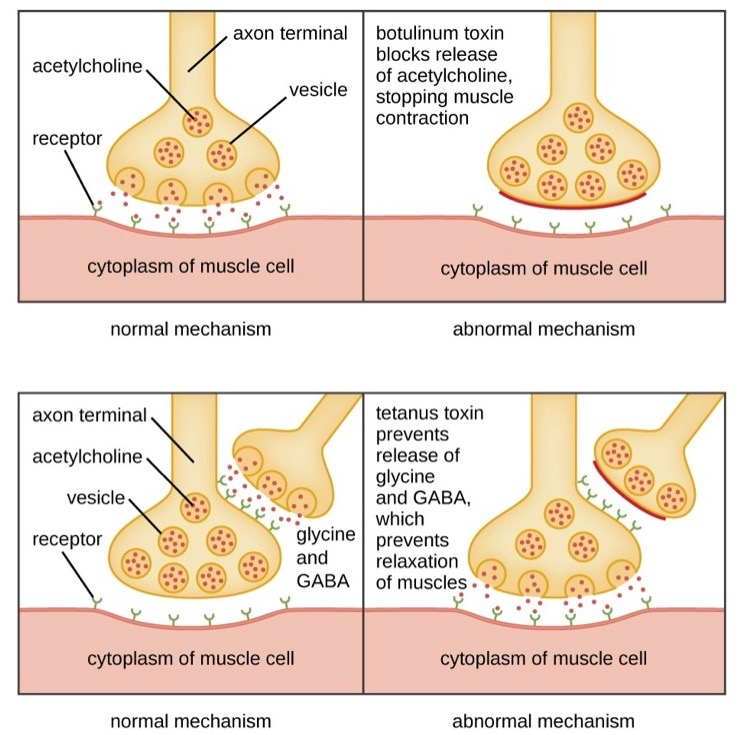
Botulinum toxin: protease that cleaves SNARE proteins and prevents fusion of transmitter-containing vesicles with the presynaptic membrane → inhibition of acetylcholine release from the presynaptic axon terminals
Tetanus vs botulism
Both work on SNARE proteins
Clinical features
- Classic Triad: Symmetric descending flaccid paralysis + Bulbar palsies + Autonomic dysfunction.
- Cranial Nerve / Bulbar Palsies (Earliest signs):
- “4 Ds”: Diplopia, Dysarthria, Dysphagia, Dysphonia.
- Ptosis, blurred vision, impaired extraocular movements, sluggish/fixed dilated pupils.
- Skeletal Muscle Manifestations:
- Symmetric descending motor weakness: CNs Upper extremities Trunk/respiratory muscles Lower extremities.
- Hyporeflexia or areflexia.
- Normal sensory exam and intact sensorium/cognition.
- Autonomic Dysfunction: c2
- Mydriasis, dry mouth (xerostomia), orthostatic hypotension, urinary retention, severe constipation / paralytic ileus.
- Infant Botulism Presentation (“Floppy Baby”):
- Constipation (most common early sign, often precedes motor deficits by days/weeks).
- Weak suck, poor feeding, weak/feeble cry, loss of head control, diffuse hypotonia, ptosis, decreased gag reflex.
Differential Diagnostics
- Guillain-Barré Syndrome (GBS):
- Differentiating features: Ascending paralysis (starts in legs), sensory symptoms/paresthesias common, CSF shows albuminocytologic dissociation (↑ protein, normal WBC).
- Myasthenia Gravis (MG):
- Differentiating features: Fatigable weakness (worse with repetitive use, improves with rest), normal pupillary responses, no autonomic dysfunction; (+) anti-AChR or anti-MuSK antibodies; decremental response on EMG.
- Lambert-Eaton Myasthenic Syndrome (LEMS):
- Differentiating features: Weakness improves with exercise (post-exercise facilitation), lower extremity proximal weakness first, deep tendon reflexes reduced/absent; associated with SCLC; (+) anti-VGCC antibodies.
- Tick Paralysis:
- Differentiating features: Rapidly ascending flaccid paralysis; pupils and autonomic function typically normal; resolves rapidly within hours of tick identification and removal.
- Spinal Muscular Atrophy (Type 1 - Werdnig-Hoffmann):
- Differentiating features: Progressive, symmetric weakness in infants with tongue fasciculations, normal ocular movements, genetic testing shows SMN1 gene deletion.
Foodborne botulism
- Etiology
- Ingestion of preformed botulinum toxin via contaminated foods
- The anaerobic spores survive in poorly pasteurized canned foods (e.g., vegetables with soil contact, meat, home-fermented tofu)
- Germination of the spores produces dangerous toxins (botulinum toxins = enterotoxins A-F) and gas → bulging cans
- Ingestion of preformed botulinum toxin via contaminated foods
Infant botulism
- Etiology: ingestion of spores
- Spores may be present in honey, juice, and contaminated soil.
- Germination of the spores in intestinal tract → synthesis of botulinum toxin
- A mature immune system destroys spores before they can colonize the intestinal tract. Because the immune system is underdeveloped in the first year of life, the bacteria are able to colonize and produce the toxin inside an infant’s intestinal tract following ingestion.
- Incubation period: days to 4 weeks
- Clinical features: Infants may present with infantile hypotonia
- Age <12 months
- Constipation, poor feeding, hypotonia
- Oculobulbar palsies (eg, absent gag reflex, ptosis)
- Symmetric, descending paralysis