Epidemiology
- Most common pediatric bacterial infection; peak incidence age 6–24 months.
- Etiology (Bacterial):
- Streptococcus pneumoniae (most common overall).
- Nontypeable Haemophilus influenzae.
- Moraxella catarrhalis.
- Etiology (Viral): RSV, Rhinovirus, Influenza (frequently precedes bacterial infection).
- Risk Factors:
- Daycare attendance.
- Passive exposure to tobacco smoke.
- Lack of breastfeeding / bottle feeding while supine.
- Pacifier use > 6 months of age.
- Craniofacial anomalies (e.g., cleft palate, Down syndrome).
- Young age (short, horizontal Eustachian tubes).
Etiology
Tip
- Acute Otitis Media (AOM): Caused by respiratory bacteria following a URI, mainly S. pneumoniae, nontypeable H. influenzae, and M. catarrhalis.
- Otitis Externa (OE): Caused by skin/water flora due to canal moisture/trauma (Swimmer’s Ear), most commonly Pseudomonas aeruginosa and S. aureus.
Pathophysiology
Clinical features
- History:
- Acute onset otalgia (infants present with ear tugging/pulling, irritability, poor sleep/feeding).
- Fever.
- Antecedent viral URTI.
- Physical Exam (Otoscopy):
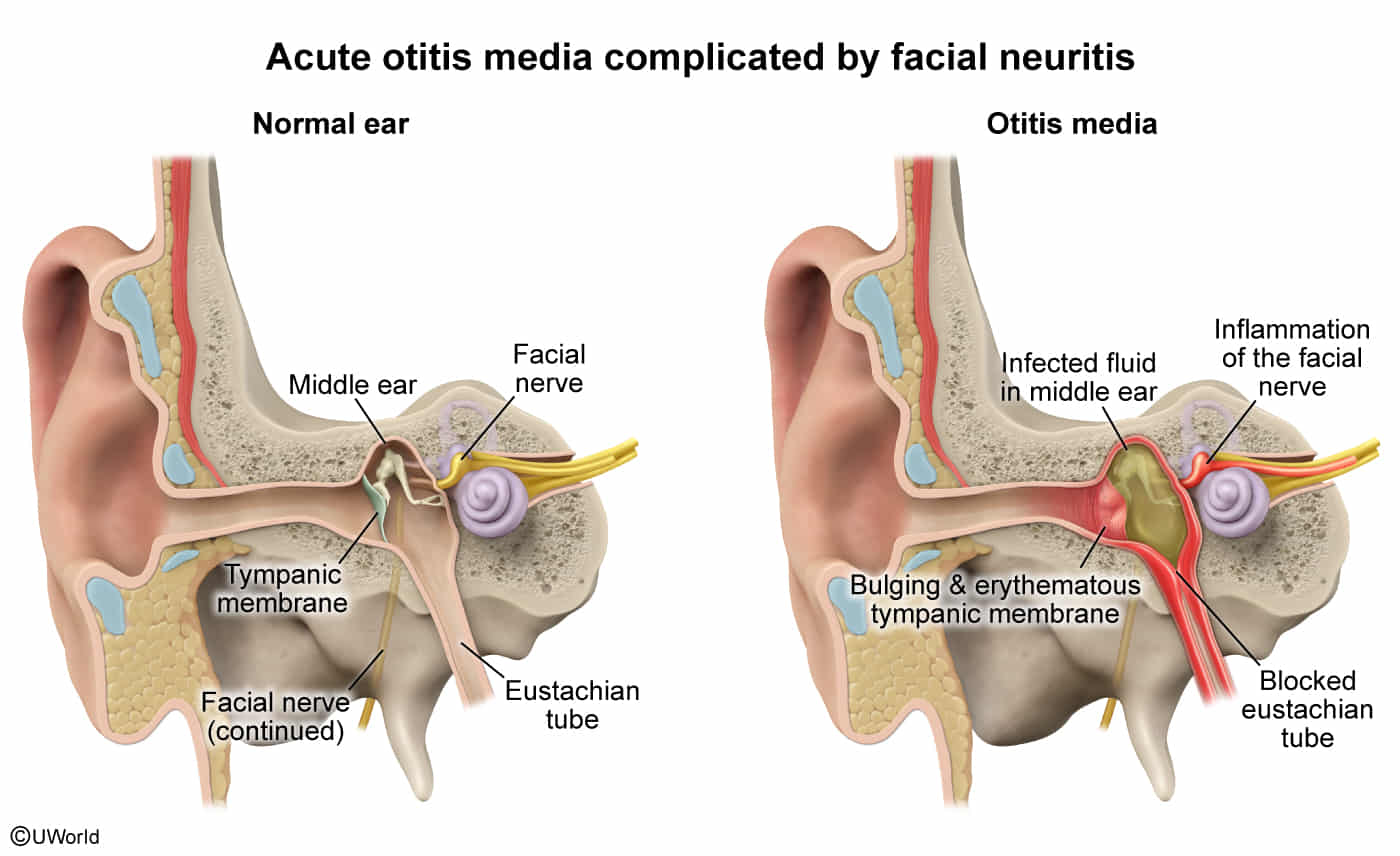
- Bulging tympanic membrane (TM) (most specific diagnostic finding).
- Erythematous TM, loss of landmark light reflex, opacification.
- Decreased TM mobility on pneumatic otoscopy.
- Otorrhea (indicates acute TM perforation).
Diagnostics
Treatment
- Analgesia: First-line for all patients (Oral acetaminophen or ibuprofen).
- Initial Antibiotic Therapy:
- First-line: High-dose Oral Amoxicillin (80-90 mg/kg/day).
- Observation vs Immediate Antibiotics:
- Immediate Antibiotics Required:
- Age < 6 months (regardless of severity).
- Age ≥ 6 months with severe signs/symptoms (high fever ≥ 39°C/102.2°F, severe otalgia, otalgia > 48h).
- Bilateral AOM in children < 2 years.
- AOM with otorrhea.
- Observation (48–72h safety-net prescription): Option for mild, unilateral AOM in children ≥ 6 months.
- Immediate Antibiotics Required:
- Second-Line Therapy:
- Amoxicillin-clavulanate (Augmentin): Indicated if treatment failure after 48-72h of amoxicillin, recent amoxicillin use within 30 days, or concurrent purulent conjunctivitis.
- Penicillin Allergy:
- Non-severe allergy: Oral 2nd/3rd gen cephalosporin (e.g., Cefdinir, Cefuroxime, Cefpodoxime).
- Severe allergy (anaphylaxis): Azithromycin, Clarithromycin, or IM Ceftriaxone.
- Recurrent AOM:
- Definition: ≥ 3 episodes in 6 months OR ≥ 4 episodes in 12 months (with ≥1 in past 6 months).
- Management: Tympanostomy tube placement (myringotomy with tube insertion).
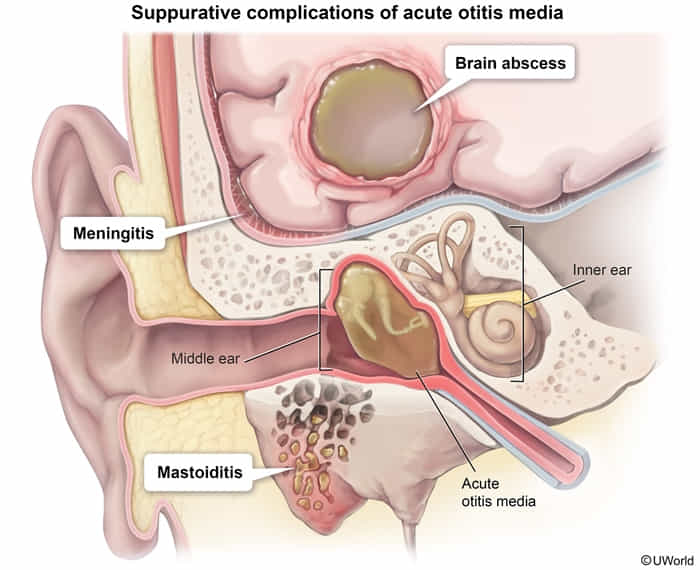
Complications
- Inflammation/erosion can cause ipsilateral peripheral facial nerve palsy.
Otogenic abscess
Temporal lobe abscess