Epidemiology


Etiology


  • Idiopathic (most common cause of peripheral facial nerve palsy): Acute idiopathic peripheral facial palsy is also known as Bell palsy.
  • Secondary
    • Trauma (e.g., temporal bone fracture)
    • Infection
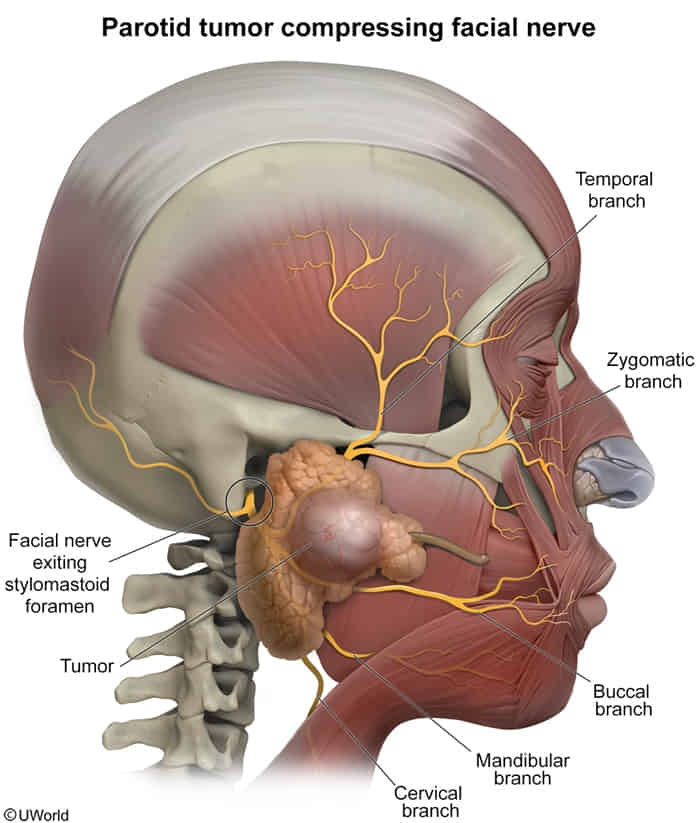
    • Tumors (parotid gland tumors, acoustic neuroma)
      • This nerve exits the skull through the stylomastoid foramen and courses within the substance of the parotid gland.
      • Facial sensation won’t be affected, since CNV follows a deep course and is unlikely to be damaged by a tumor of the parotid gland.
    • Diabetes mellitus
    • Sarcoidosis (Heerfordt syndrome)

Pathophysiology


Functions of facial nerve

  • Sensory
    • Taste: anterior ⅔ of the tongue (chorda tympani)
    • Innervation of:
      • Tympanic membrane (chorda tympani)
      • Skin behind the ear (posterior auricular branch)
  • Motor (somatic)
    • Facial expression
    • Eyelid closing: orbicularis oculi muscle
    • Efferent limb of the corneal reflex (temporal branch, bilaterally)
    • Jaw opening: posterior belly of the digastric muscle
    • Hyoid elevation: stylohyoid muscle
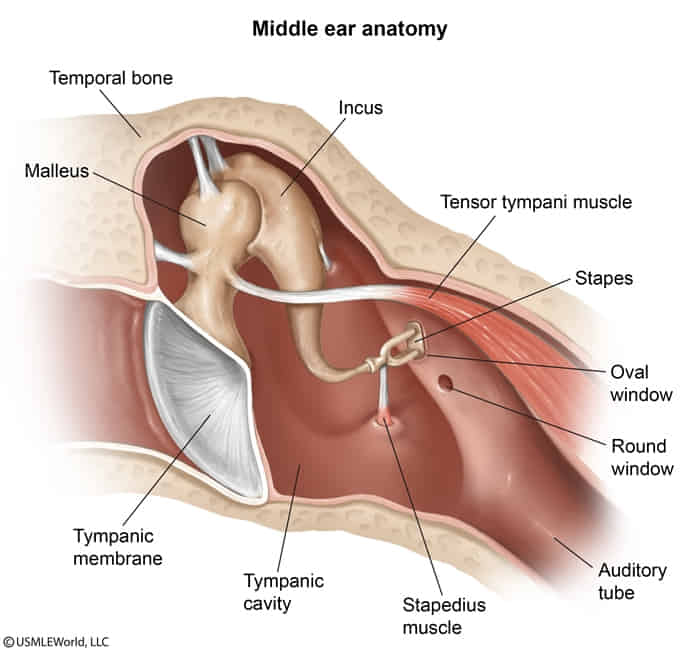
    • Efferent limb of the acoustic reflex (stapedius muscle) → auditory volume modulation
      • The stapedius muscle dampens transmission of loud noises to the inner ear (acoustic or stapedial reflex). Stapedius weakness (e.g., due to Bell palsy) can result in hyperacusis (increased sensitivity to environmental sounds, which can also result from ear trauma or middle/inner ear infection)
  • Motor (parasympathetic)
    • Salivation: submandibular and sublingual glands
    • Lacrimation: lacrimal gland
    • Efferent limb of the lacrimation reflex

Clinical features


  • Lower Motor Neuron (LMN) vs. Upper Motor Neuron (UMN): c
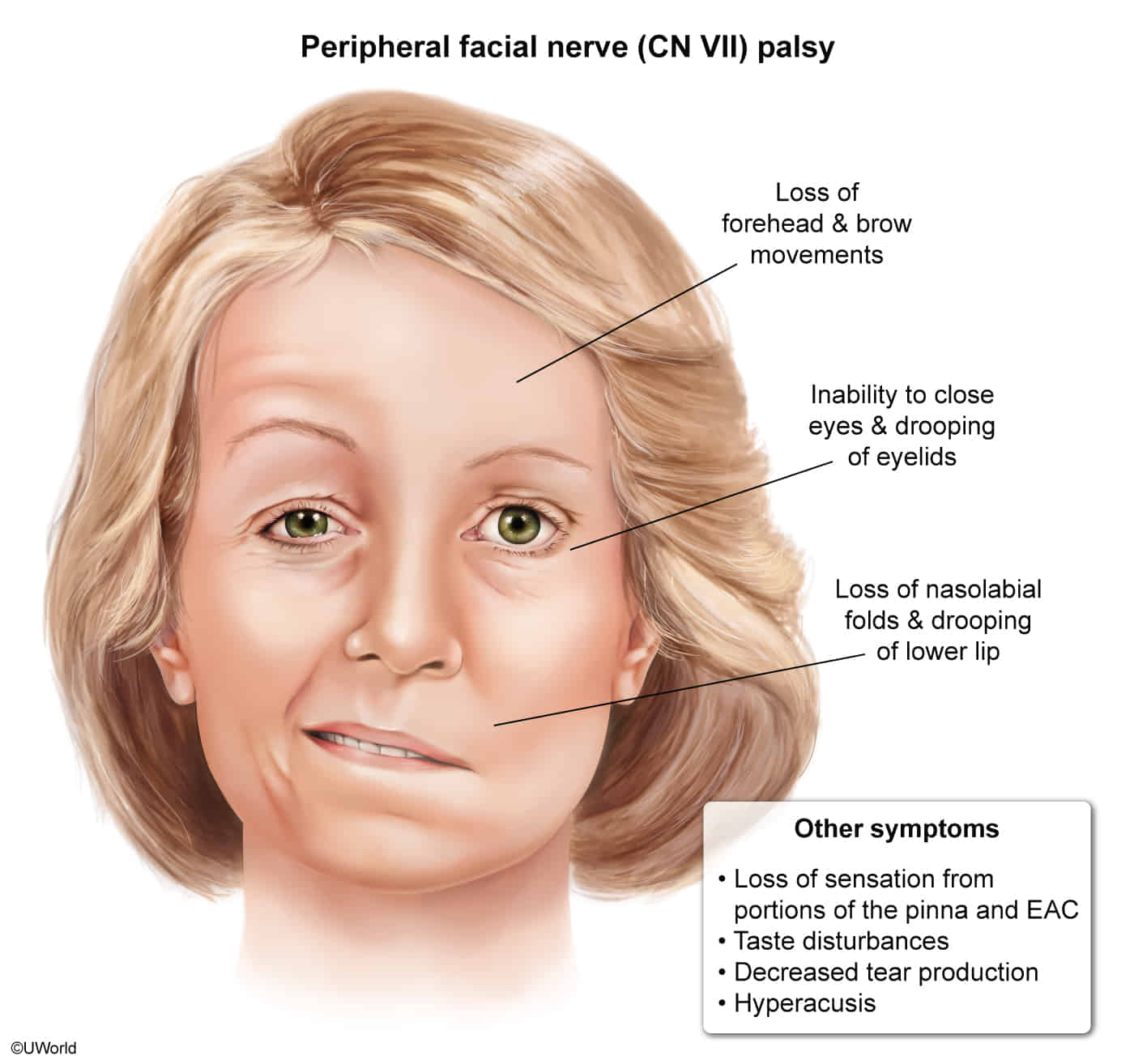
    • LMN Lesion (CN VII nucleus/nerve - e.g., Bell Palsy): Forehead is involved -> Inability to raise eyebrow or wrinkle forehead + inability to close eye (lagophthalmos) + loss of nasolabial fold + drooping of mouth angle.
    • UMN Lesion (e.g., Stroke): Forehead and eye is spared (receives bilateral corticobulbar innervation) -> Only contralateral lower facial weakness.
  • Associated CN VII Deficits:
    • Hyperacusis: Due to stapedius muscle paralysis (loss of stapedius reflex).
    • Dysgeusia: Loss of taste sensation on the anterior 2/3 of tongue (chorda tympani).
    • Autonomic dysfunction: Decreased lacrimation (dry eye) or overflow tearing (epiphora from lower lid laxity); decreased salivation.
    • Retroauricular / Mastoid pain: Frequently precedes weakness by 24-48 hours.
  • Syndrome-Specific Findings:
    • Ramsay Hunt Syndrome: Vesicles on external auditory canal/concha/pinna, severe otalgia, vertigo, tinnitus, hearing loss (CN VIII involvement).
    • Sarcoidosis: Bilateral facial palsy + uveitis + parotid enlargement (Heerfordt syndrome).

Diagnostics


Treatment

  • First-line (Bell Palsy):
    1. Oral Glucocorticoids: Prednisone (e.g., 60-80 mg daily for 7-10 days), ideally started within 72 hours of symptom onset (accelerates recovery, reduces synkinesis). c
    2. Eye Care (High-Yield / Critical Step):
      • Daytime: Lubricating artificial tears every 1-2 hours.
      • Nighttime: Ophthalmic ointment + eye taping closed to prevent exposure keratitis.
    3. Antivirals (Valacyclovir/Acyclovir): Added to steroids only in severe paralysis (House-Brackmann grade IV-VI); no proven benefit as monotherapy.
  • Etiology-Specific Management:
    • Ramsay Hunt: Oral Prednisone + oral Valacyclovir/Acyclovir.
    • Lyme Disease: Oral Doxycycline (avoid steroids alone).
    • Bacterial Mastoiditis/Otitis: Broad-spectrum IV antibiotics + surgical drainage (myringotomy/mastoidectomy).
  • Refractory / Long-term:
    • Physical therapy / neuromuscular retraining.
    • Botulinum toxin injections for synkinesis or facial spasm.
    • Permanent lagophthalmos: Tarsorrhaphy or gold weight eyelid implant to protect cornea.