Epidemiology
- Pathogen: Borrelia burgdorferi (spirochete).
- Vector: Ixodes scapularis (blacklegged tick).
- Tick attachment must last >=36 hours for transmission to occur.
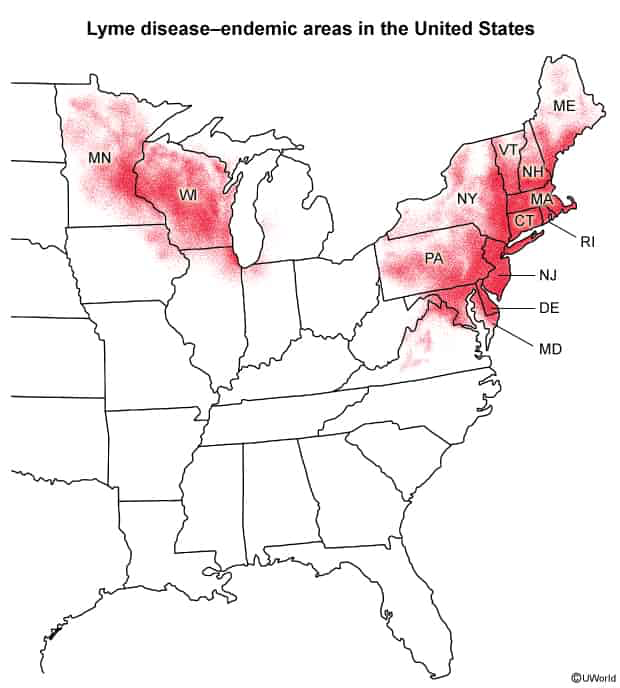
- Geographic distribution: Highly endemic in Northeast and upper Midwest US. c
- Seasonality: Peak incidence in late spring and summer.
Etiology
Pathophysiology
Clinical features
- Stage 1: Early Localized (days to 1 month)
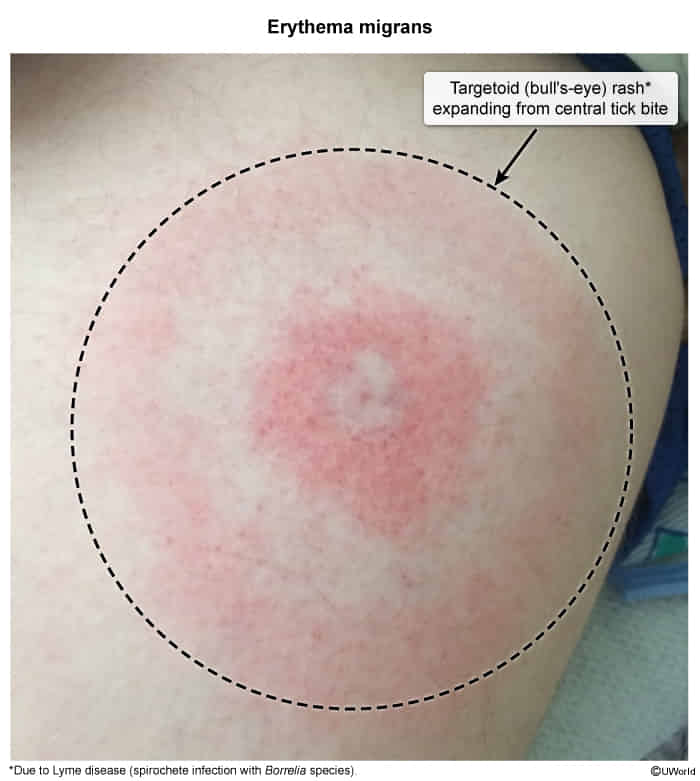
- Erythema migrans (“bull’s-eye” rash): Slowly expanding red rash with central clearing at the bite site (occurs in ~80%).
- Flu-like symptoms: Fever, malaise, fatigue, myalgias, headache.
- Stage 2: Early Disseminated (weeks to months)
- Neurologic: Unilateral or bilateral facial nerve (CN VII) palsy is pathognomonic. Aseptic meningitis, radiculopathy.
- Cardiac: AV block (1st, 2nd, or 3rd degree), myocarditis.
- Musculoskeletal: Migratory arthralgias. c
- Multiple smaller erythema migrans lesions.
- Stage 3: Late Disseminated (months to years)
- Musculoskeletal: Asymmetric oligoarthritis, typically affecting large joints like the knee.
- Neurologic: Encephalopathy (memory loss, mood changes), peripheral neuropathy.
Diagnostics
- Stage 1 (Early Localized): Clinical diagnosis. Do NOT order serology (highly insensitive in early stages; false negatives are common). c
- Stage 2 & 3 (Disseminated): Two-step serologic testing.
- Step 1 (Initial): ELISA or immunofluorescence assay (IFA).
- Step 2 (Confirmatory): Western blot (performed only if ELISA/IFA is positive or equivocal).
- Carditis/Meningitis:
- ECG to assess for PR interval prolongation (AV block).
- LP shows lymphocytic pleocytosis, elevated protein, normal glucose, and positive intrathecal antibody production.
- Arthritis:
- Synovial fluid analysis shows inflammatory profile (WBC 10,000–25,000/mm³, mostly PMNs).
- Synovial fluid PCR for B. burgdorferi DNA.
Treatment