ToRCHHeS
| Feature | Toxoplasma gondii | Rubella | Cytomegalovirus (CMV) | HIV | HSV-2 | Syphilis | GBS |
|---|---|---|---|---|---|---|---|
| Pathogen Type | Parasite | Virus | Virus (Herpesvirus) | Virus (Retrovirus) | Virus (Herpesvirus) | Bacterium (Treponema pallidum) | Bacterium (Streptococcus agalactiae) |
| Classic Triad/Presentation | Chorioretinitis, hydrocephalus, diffuse intracranial calcifications c | Cataracts, heart defects, sensorineural hearing loss | No classic triad, but periventricular calcifications, microcephaly, and SNHL are characteristic. c | No classic triad; failure to thrive, recurrent infections, and developmental delay are common | No classic triad; skin/mucous membrane lesions, encephalitis, or disseminated infection characterize. | Early: “Snuffles,” rash, bone lesions, lymphadenopathy and hepatosplenomegaly; Late: Hutchinson teeth, interstitial keratitis, saddle nose, saber shins | Early-onset: Respiratory distress, sepsis, pneumonia, meningitis (within first week, usually <24 hrs); Late-onset: Bacteremia, meningitis (after first week) |
| Other Key Differentiators | Often asymptomatic at birth, later chorioretinitis. Linked to cat feces/undercooked meat. | ”Blueberry muffin” rash, often mild maternal illness. Preventable by MMR vaccine. | Most common congenital viral infection. Hearing loss can be late-onset. | Opportunistic infections are a hallmark. ART is crucial for prevention. | Vesicular lesions (but not always present). Often acquired during birth. | Multisystem; early/late manifestations differ. Penicillin is treatment. | Leading cause of neonatal sepsis/meningitis. Maternal colonization is key risk factor. Intrapartum antibiotics prevent early-onset disease. |
| Transmission | Transplacental, ingestion | Transplacental, respiratory | Transplacental, body fluids | Transplacental, birth, breastfeeding | Primarily during birth | Transplacental, birth | Vertical transmission during birth (primarily), ascending infection, rarely nosocomial/community-acquired (late-onset) |
Tip
All TORCH infections can cause blueberry muffin rash, except GBS.
Congenital rubella infection
Clinical features
- Classic Triad: c2
- Sensorineural hearing loss (SNHL): Most common finding overall.
- Cataracts: Often bilateral, presents with leukocoria (white pupillary reflex). May also show microphthalmia, glaucoma, or “salt-and-pepper” retinopathy.
- Cardiac defects: Patent ductus arteriosus (PDA) (continuous machine-like murmur) or peripheral pulmonary artery stenosis.
- Neonatal Systemic Signs:
- “Blueberry muffin” rash: Dermal extramedullary hematopoiesis (purpuric macules/papules).
- Intrauterine growth restriction (IUGR) & low birth weight.
- Microcephaly, anterior fontanelle fullness.
- Hepatosplenomegaly, jaundice, thrombocytopenia.
- Radiolucent bone lesions: “Celery stalk” appearance in long bones.
Mnemonic
CCC-Triad of congenital rubella syndrome: Cataracts, Cochlear defects, Cardiac abnormality
- Prevention
- Maternal preconception immunization with live attenuated rubella vaccine
Congenital syphilis
Pathogen
Treponema pallidum
Transmission
- Fetus: transplacental transmission from infected mother
- Neonate: perinatal transmission during birth
Clinical features
- Early Presentation (< 2 years of age):
- “Snuffles”: Copious, persistent mucopurulent or bloody rhinitis. c
- Maculopapular rash: Desquamating or vesiculobullous rash involving palms and soles. c
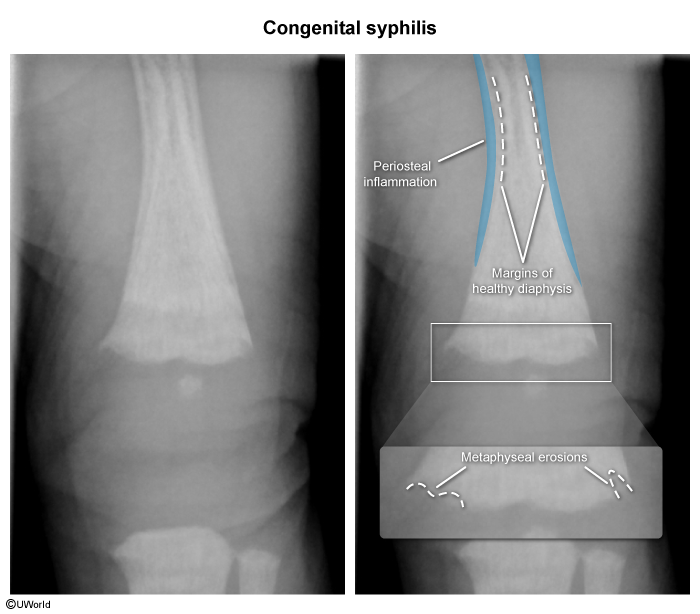
- Bone changes: Periostitis, Wimberger sign (metaphyseal erosion of medial proximal tibia), pseudoparalysis of Parrot (refusal to move painful limb). c
- Systemic: HSM, jaundice, generalized lymphadenopathy, hydrops fetalis, IUGR.
- Late Presentation (> 2 years of age):
- Hutchinson Triad:
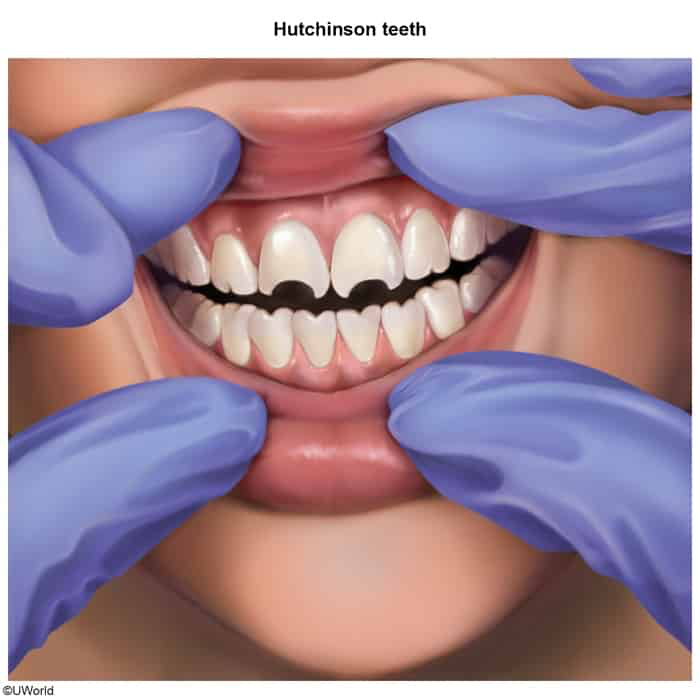
- Hutchinson teeth (notched, peg-shaped central incisors).
- Interstitial keratitis (can lead to blindness).
- Sensorineural hearing loss (CN VIII deficit).
- Hutchinson teeth (notched, peg-shaped central incisors).
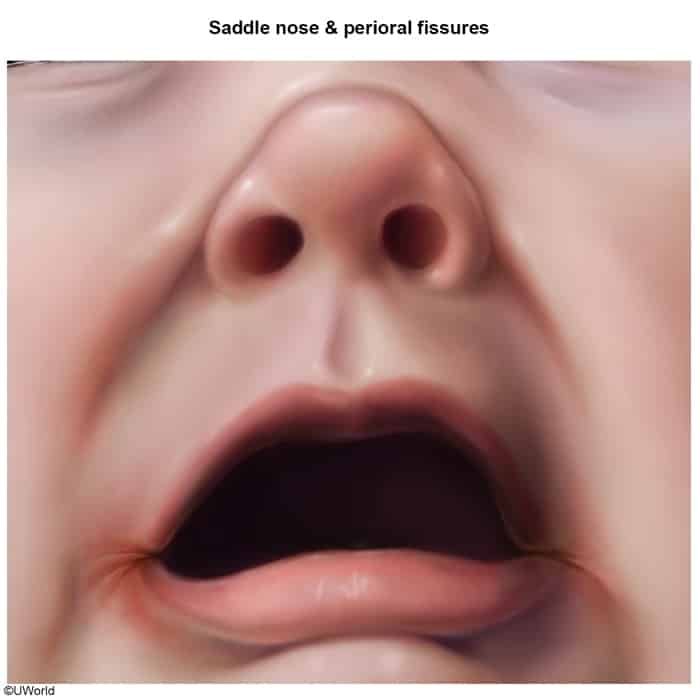
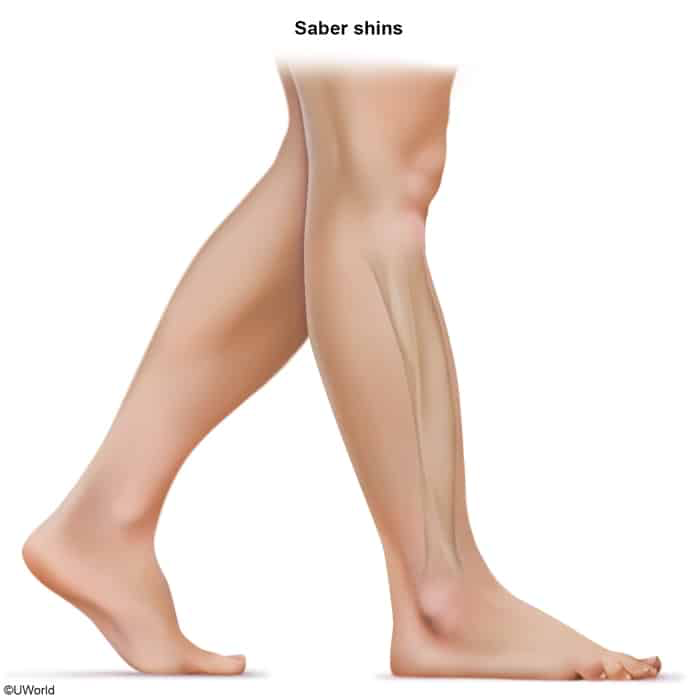
- Facial/Skeletal: Saddle nose, saber shins (anterior tibial bowing), frontal bossing, Mulberry molars, Clutton joints (painless bilateral knee effusions).
- Hutchinson Triad: