Station (Obstetrics)

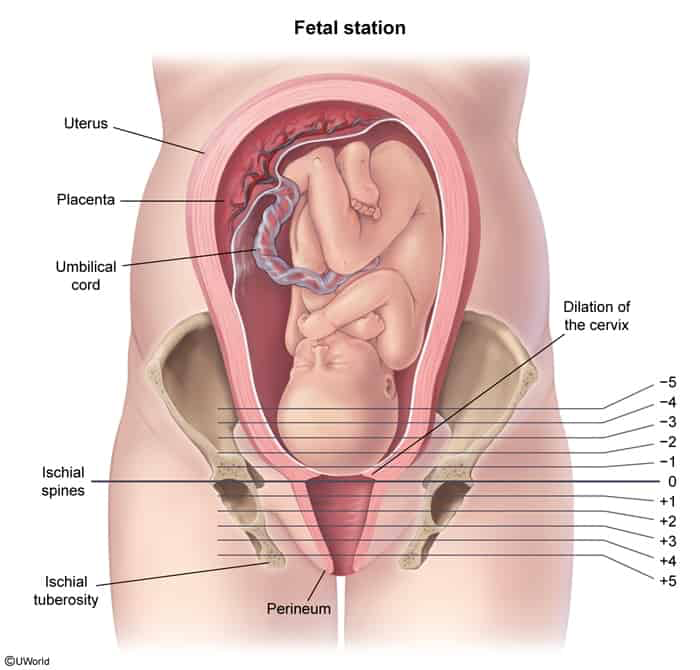
  • Definition: Fetal head level relative to ischial spines (IS).
  • Station Scale:
    • Station 0: Fetal head at IS = Engaged (biparietal diameter passed pelvic inlet).
    • Negative (-5 to -1 cm): Above IS (unengaged).
    • Positive (+1 to +5 cm): Below IS (+3 to +5 = crowning).
  • High-Yield Management Rules:
    • AROM contraindicated if station < 0: Risk of umbilical cord prolapse.
    • Operative Vaginal Delivery (Forceps/Vacuum): Requires station ≥ 0 (strictly contraindicated if unengaged).
    • Caput Succedaneum: Soft tissue edema crosses suture lines; can misrepresent station. Always palpate bony skull, not soft tissue.
    • Failure to engage + adequate contractions (≥ 200 MVUs) = CPD Tx: C-section.

Intrapartum fetal monitoring

  • Fetal Heart Rate (FHR) Basics:
    • Baseline: Normal 110–160 bpm.
      • Tachycardia (>160 bpm): Most commonly intraamniotic infection (chorioamnionitis); also maternal fever, beta-agonists, fetal anemia.
      • Bradycardia (<110 bpm): Maternal hypotension (post-epidural), cord prolapse/compression, maternal SLE (anti-SSA/Ro congenital heart block).
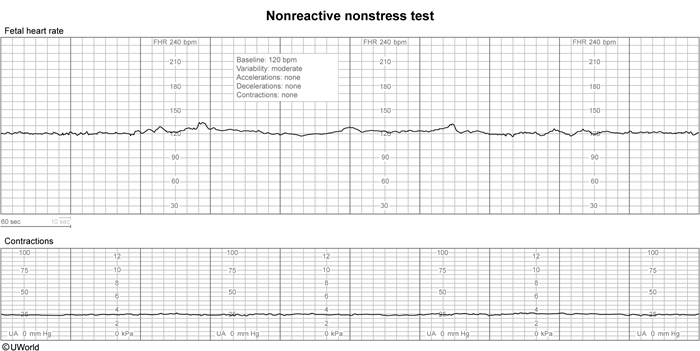
    • Moderate variability (6–25 bpm): Normal, rules out fetal acidemia.
    • Minimal/Absent variability: Fetal sleep cycle (normal), opioids/sedatives, or fetal hypoxia/acidemia. c
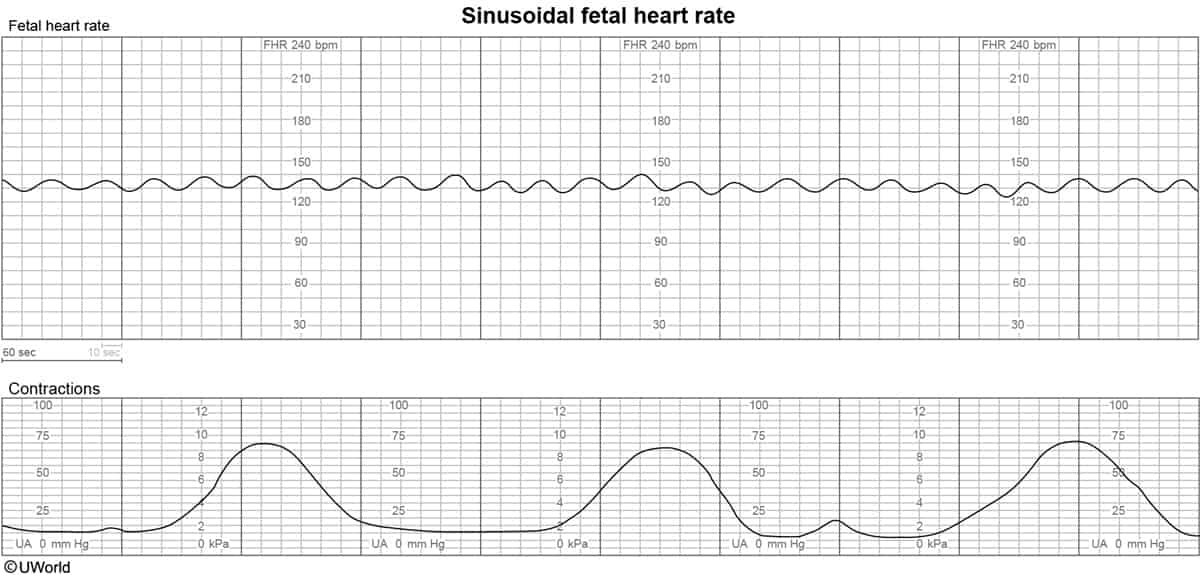
    • Sinusoidal pattern: Smooth wave-like trace = Severe fetal anemia (Rh alloimmunization, vasa previa) → Emergency C-section. c
      • Profound tissue hypoxia () causes ischemic disruption of the medullary autonomic centers failure of sympathetic/parasympathetic balance undamped oscillating sine wave.
  • Deceleration Patterns (VEAL CHOP):
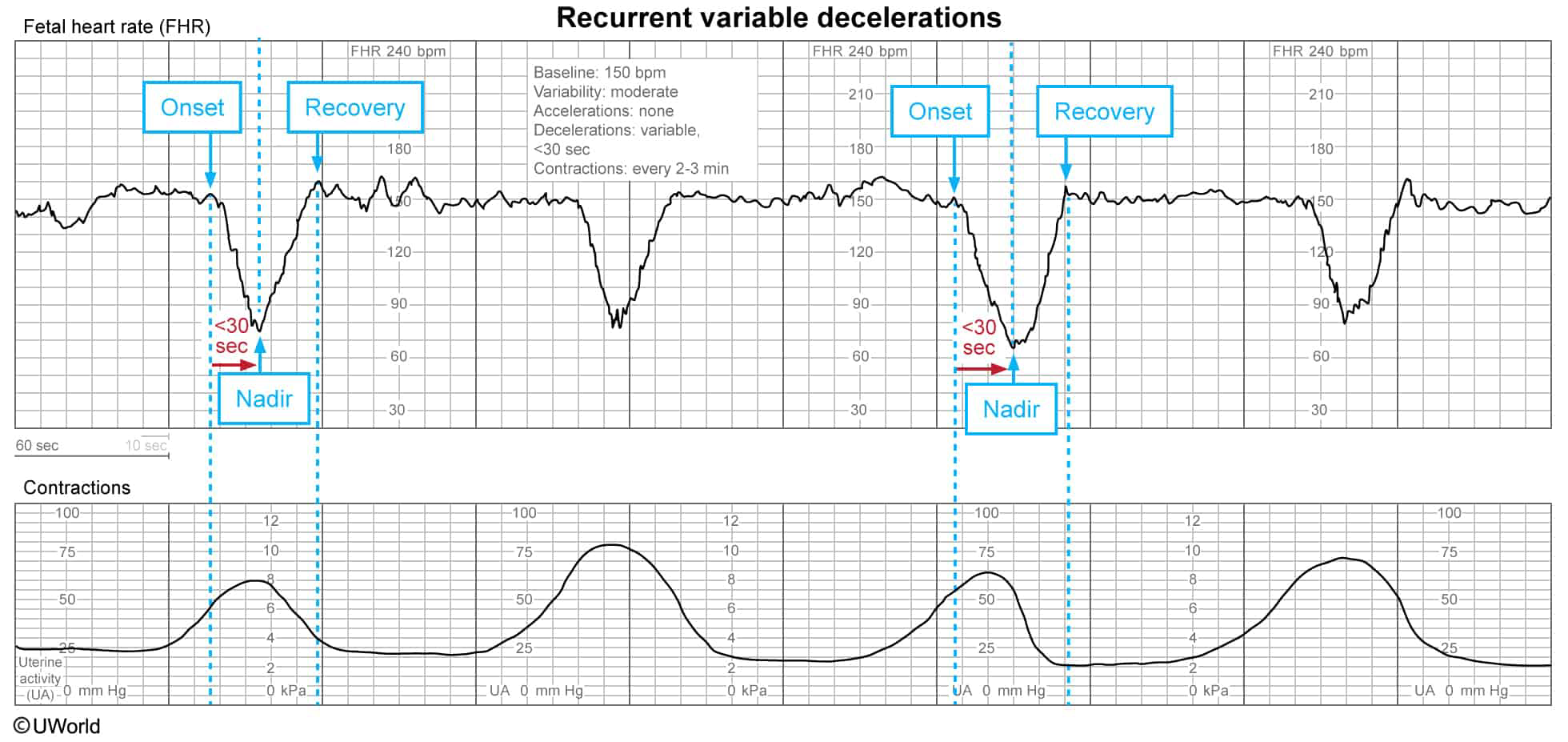
    • Variable = Cord compression (abrupt drop, variable timing) → Maternal repositioning; if persistent → Amnioinfusion. c
      • Variable: Cord can be compressed intermittently by fetal limbs, body turns, or oligohydramnios; compression does not rely purely on peak contraction intensity.
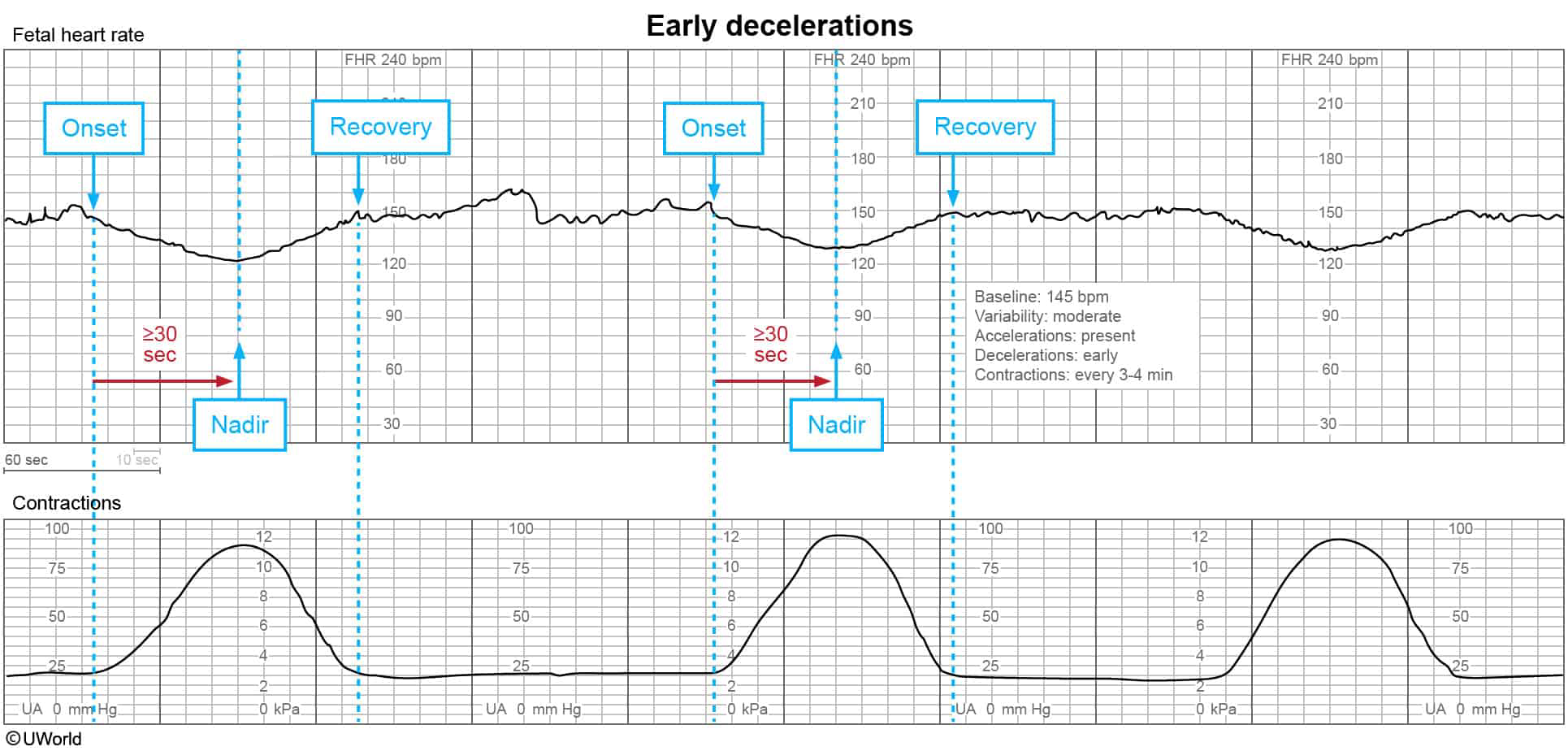
    • Early = Head compression (nadir at contraction peak) → Benign, continue monitoring.
      • Contraction compresses fetal skull transient ↑ ICP central vagal reflex slows SA node.
    • Accelerations = Oxygenated (≥15 bpm for ≥15 sec if ≥32 wks) → Normal, rules out acidemia.
      • Fetal movement intact brainstem triggers sympathetic burst transient HR.
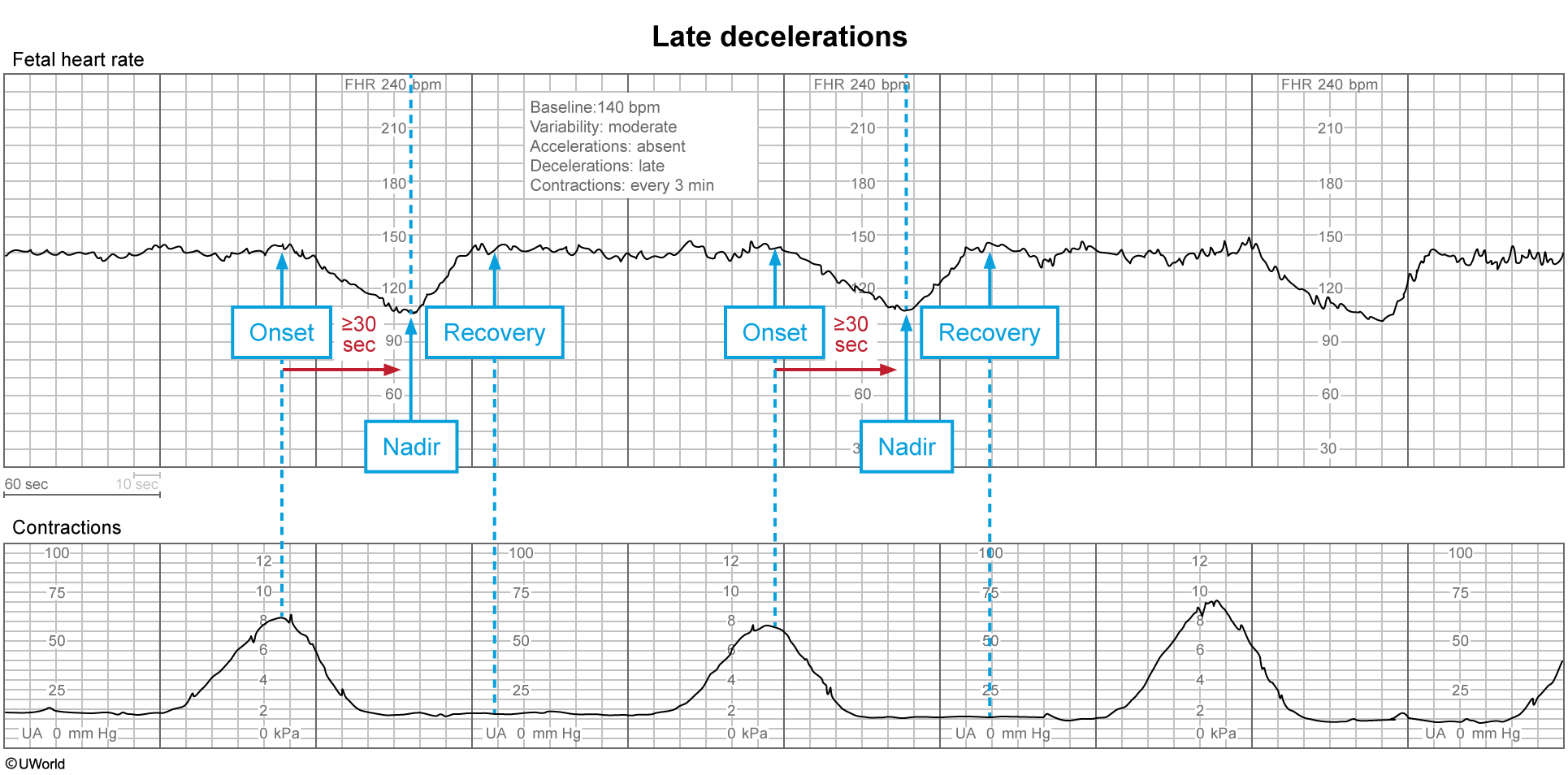
    • Late = Placental insufficiency (nadir after contraction peak) → Intrauterine resuscitation.
      • Contraction cuts off maternal blood flow compromised placenta drops fetal chemoreceptors trigger vasoconstriction HTN causes secondary vagal reflex.
      • Timing: Nadir lags after peak because fetal takes time to fall below threshold and re-equilibrate. (Indicates hypoxemia).
  • Three-Tier Classification:
    • Category I: Normal baseline + Moderate variability + No late/variable decels → Routine care.
    • Category II: Indeterminate (e.g., minimal variability, late decels w/ mod variability) → Intrauterine resuscitation + Fetal scalp stimulation (acceleration rules out acidemia).
    • Category III: Absent variability + recurrent late/variable decels/bradycardia OR Sinusoidal → Emergency delivery (C-section/Operative delivery).
  • Intrauterine Resuscitation Protocol (Next step for Cat II/III or Late Decels):
    • Left lateral position (relieves IVC compression).
    • O2 mask + IV fluid bolus (treats maternal hypotension).
    • Discontinue Oxytocin immediately.
    • Terbutaline (tocolytic) if uterine tachysystole (>5 contractions in 10 min).
  • Fetal Scalp Electrode (FSE) Contraindications:
    • Maternal HIV, HCV, or active genital HSV (risk of vertical transmission).