Epidemiology
- ♀ > ♂ (∼ 5:1)
- Peak incidence: 30–50 years
Etiology
Pathophysiology
Systemic sclerosis (SSc) is a systemic autoimmune disease characterized by vasculopathy and fibrosis of the skin and other organs.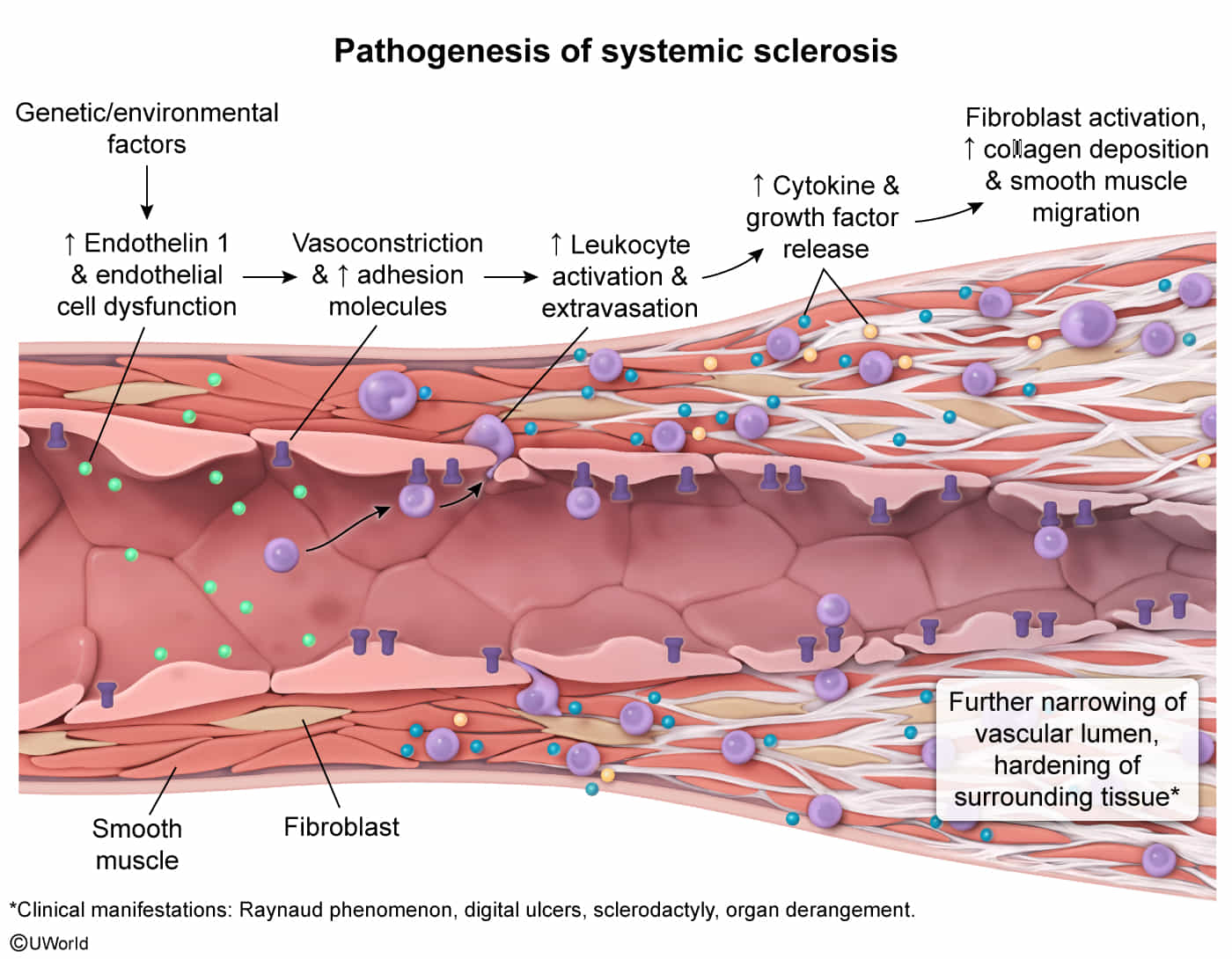
Clinical features
| Category | Limited Cutaneous | Diffuse Cutaneous |
|---|---|---|
| Manifestations | Distal sclerosis (most prominent in the fingers), CREST syndrome | Proximal sclerosis (involves the trunk & proximal extremities) |
| Serology | Anticentromere | Anti–Scl-70 |
| Complications | Pulmonary hypertension, Scleroderma renal crisis | Interstitial lung disease |
Limited Cutaneous Systemic Sclerosis (lcSSc / CREST Syndrome)
CREST syndrome refers to a constellation of symptoms traditionally associated with limited SSc (can also be seen in diffuse SSc).
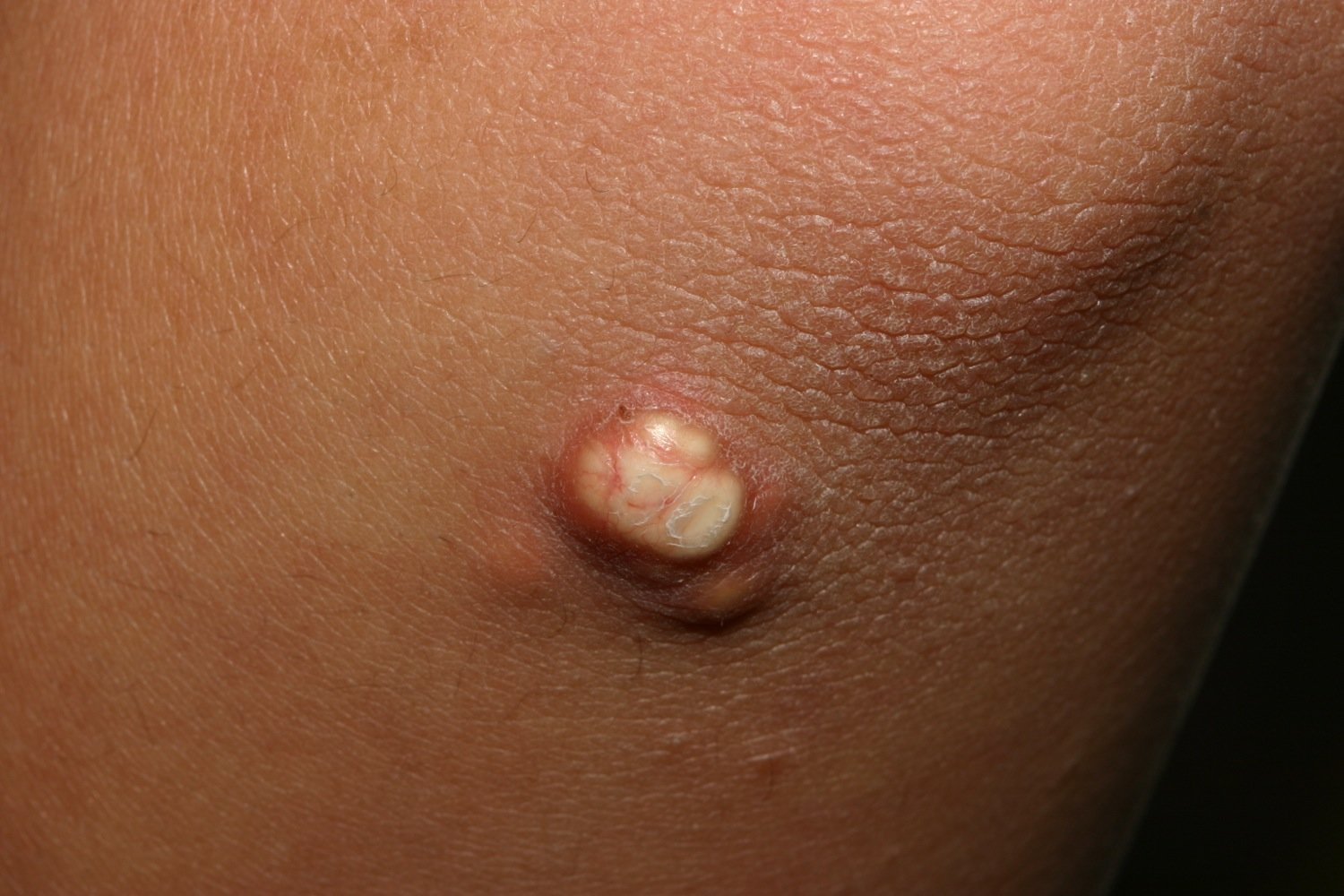
- C: Calcinosis cutis: small white calcium deposits on the pressure points of the extremities (e.g., elbows, knees, fingertips)
- R: Raynaud phenomenon
- E: Esophageal hypomotility (systemic sclerosis): smooth muscle atrophy and fibrosis → esophageal dysmotility and decreased lower esophageal sphincter pressure → dysphagia, gastroesophageal reflux, heartburn → aspiration, Barrett esophagus, stricture. See Esophageal motility disorders
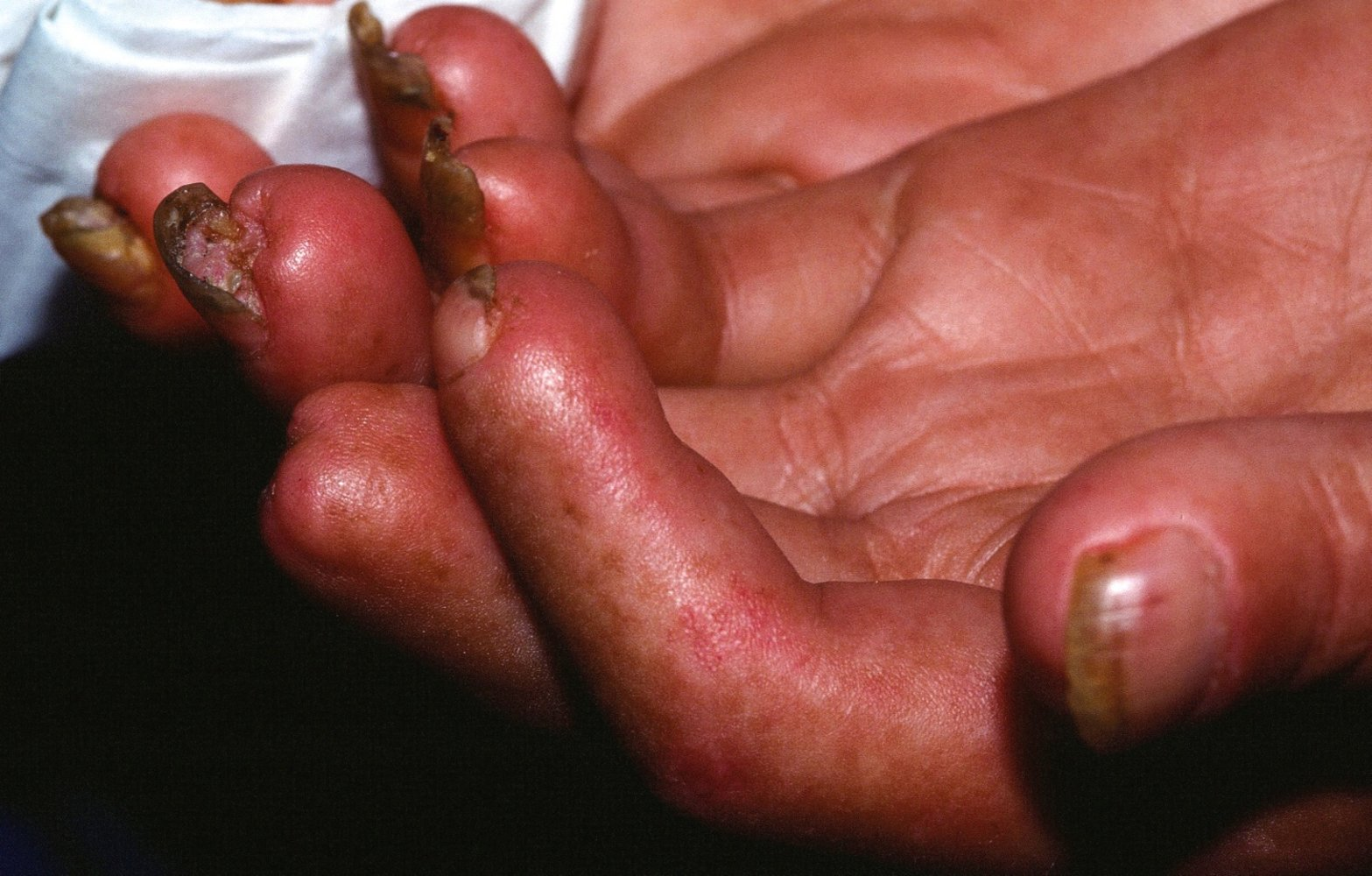
- S: Sclerodactyly
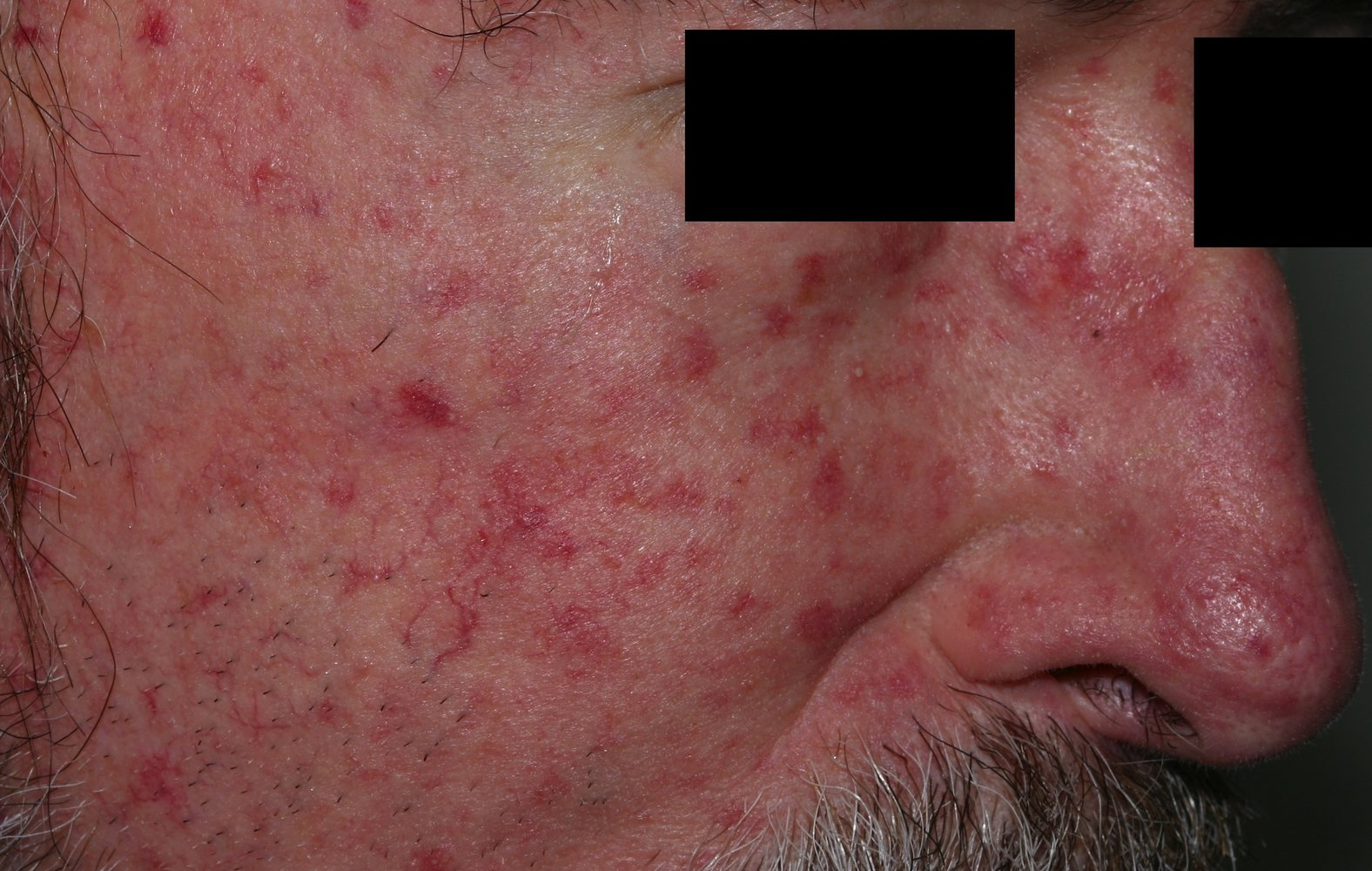
- T: Telangiectasia
Diffuse Cutaneous Systemic Sclerosis (dcSSc)
Cutaneous
- Thickening and hardening of the skin, which appears smooth, shiny, and puffy
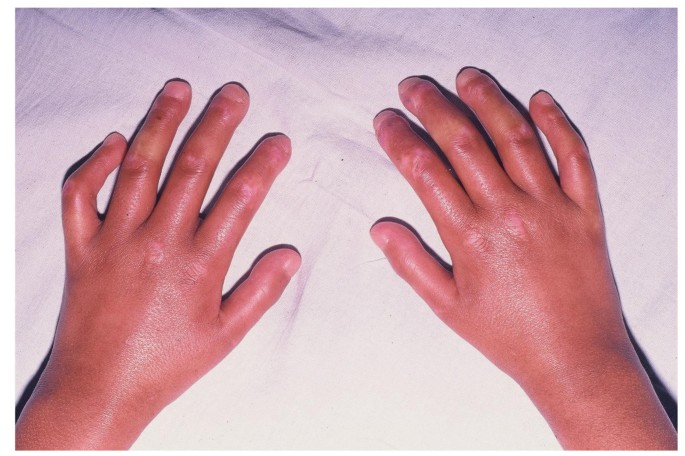
- Sclerodactyly: fibrotic thickening and tightening of the skin on the fingers and hands
- Edema followed by fibrosis that results in a waxy appearance of the skin
- Limited range of motion and possibly flexure contractures and clawing of the digits
- Multiple, painful ischemic digital ulcers with atrophy and necrotic spots
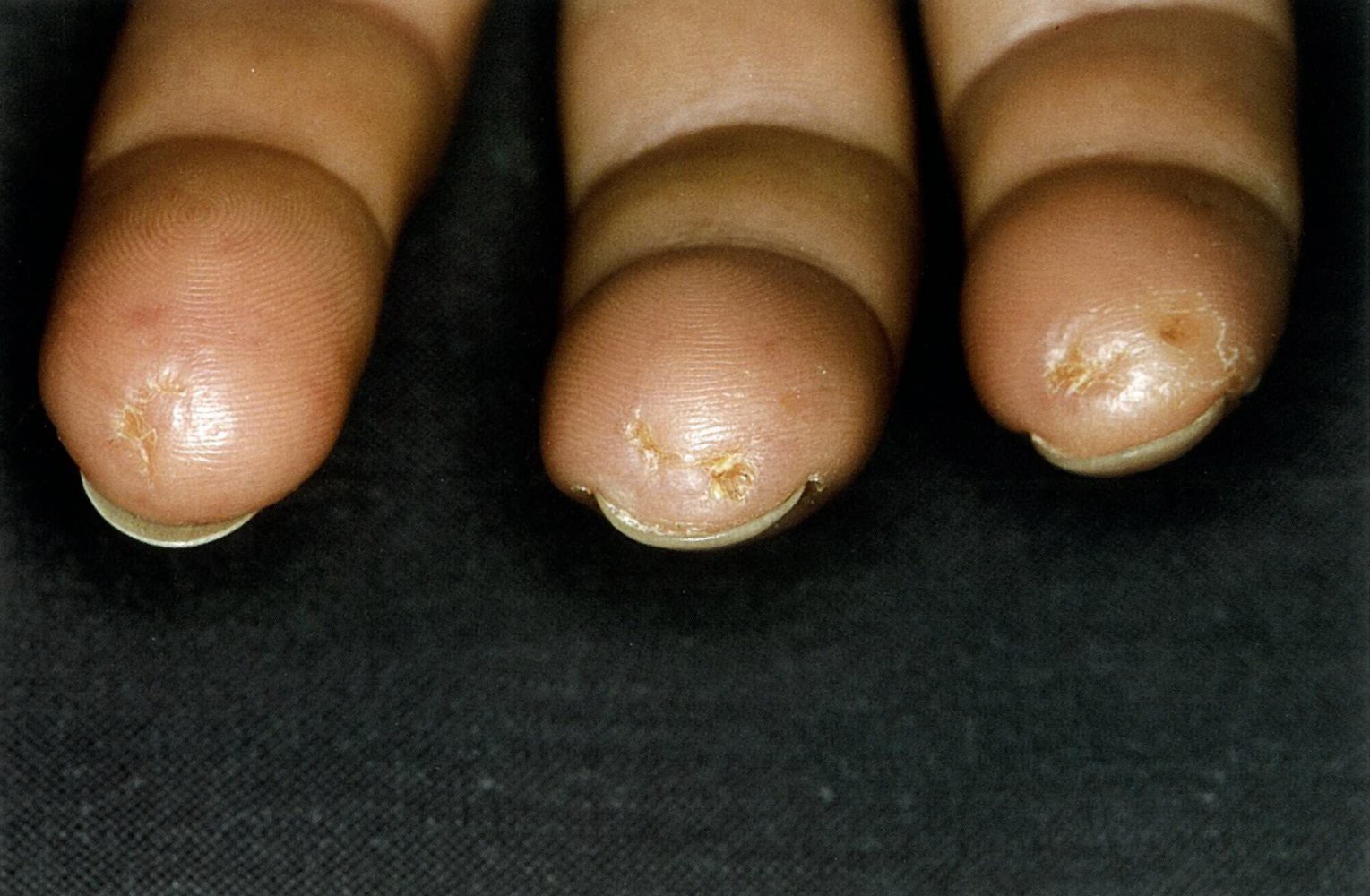
- Digital pitting: hyperkeratotic scarring that most commonly affects the fingertips
- Face changes
- Loss of expression (mask-like facies)
- Smoothing of deep wrinkles
- Microstomia (a disproportionately small mouth) accompanied by characteristic perioral wrinkles
Renal
- Scleroderma renal crisis (SRC)
- Abrupt onset, life threatening
- SRC is caused by immune-mediated injury to small renal vessels that typically spares the glomerular capillaries
- Clinical features of SRC
- Oliguric acute kidney injury, proteinuria, hematuria
- Hypertension with or without symptoms of hypertensive emergency c
- Microangiopathic hemolytic anemia (MAHA) and thrombocytopenia
- Treatment: ACE inhibitors
- Chronic kidney disease: reduced kidney function due to abnormal collagen deposition → thickening of renal arteriolar walls → decreased renal blood flow
Pulmonary
Other extracutaneous
- Gastrointestinal tract
- Esophageal dysmotility → dysphagia and reflux
- Small bowel dysmotility → bloating, gas, constipation, and cramping
- Dysmotility creates an ideal environment for bacterial overgrowth.
- Small intestinal bacterial overgrowth
- Vascular disease
- Raynaud phenomenon
- Thromboembolism
Diagnostics
Warning
Scleroderma renal crisis is a medical emergency with a high mortality rate. Promptly evaluate serum creatinine and urine protein in individuals with SSc who present with an acute rise in blood pressure and start management of SRC.
- Antinuclear antibodies (ANA): present in ∼ 90% of patients
- SSc-specific autoantibodies
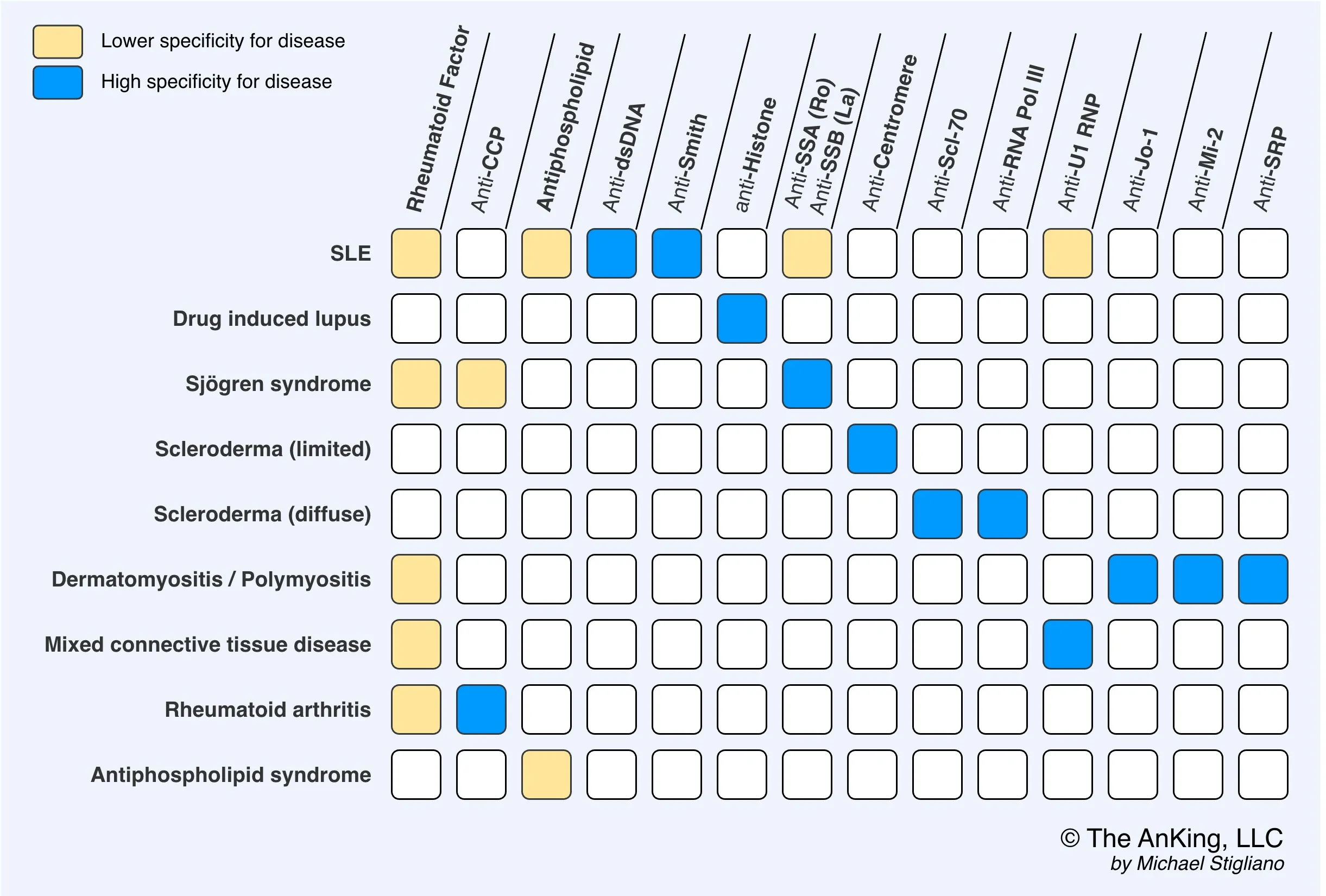
- Anticentromere antibodies: associated with limited SSc, increased risk for vascular complications (e.g., PAH)
- Anti-SCl-70 (anti-topoisomerase I antibody): associated with severe and rapidly progressive diffuse SSc, limited SSc, ILD, digital ulcers c
- Anti-RNA polymerase III: associated with diffuse SSc, scleroderma renal crisis
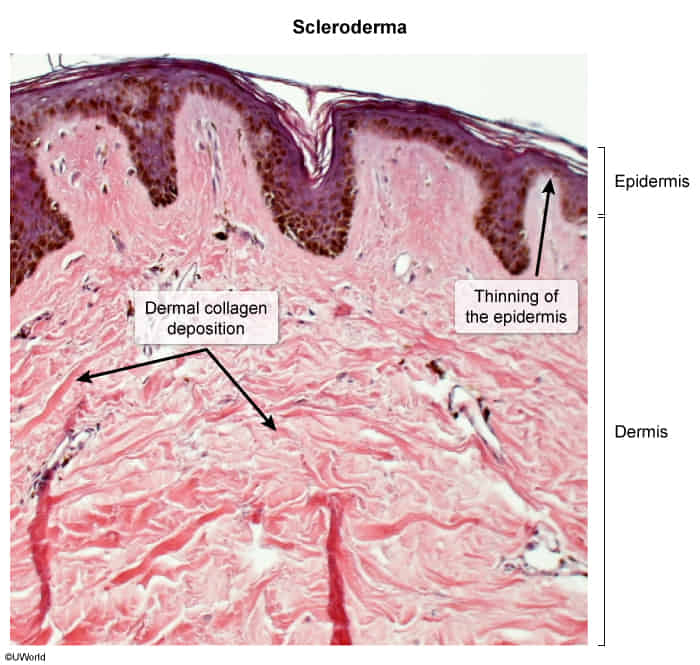
- A characteristic skin biopsy finding is dermal layer expansion due to diffuse deposition of collagen (eosinophilic connective tissue), resulting in atrophy of the intradermal adipose tissue and dermal appendages (ie, hair follicles, glands).
Differential diagnostics
Dermatomyositis vs. Systemic Sclerosis
Link to original
Feature Dermatomyositis (DM) Systemic Sclerosis (SSc) Primary Issue Muscle & skin inflammation (capillary damage) Widespread fibrosis & vasculopathy Key Skin Gottron’s papules, Heliotrope rash, Shawl/V-sign, Mechanic’s hands Skin thickening/tightening (scleroderma), Sclerodactyly, Telangiectasias, Calcinosis, Raynaud’s (often first) Muscle Symmetric proximal weakness (prominent), myalgias Often mild or late; arthralgias/tendon rubs more common Key Organ Interstitial Lung Disease (ILD), dysphagia (skeletal muscle) ILD, Pulmonary Arterial Hypertension (PAH), Esophageal dysmotility (smooth muscle), Scleroderma Renal Crisis Antibodies Anti-Jo-1 (ILD), Anti-Mi-2 (classic skin), Anti-MDA5 (amyopathic, severe ILD), Anti-TIF1-γ (cancer) Anti-Scl-70 (diffuse, ILD), Anti-centromere (limited/CREST, PAH), Anti-RNA Pol III (renal crisis) Malignancy High risk (ovary, lung, etc.) Slight increase (e.g., lung with ILD) Tx Pearl Corticosteroids, immunosuppressants; Cancer screening crucial Organ-based; ACE Inhibitors for Renal Crisis (VITAL!) Subtype/Note Amyopathic DM (skin, no weakness) Limited (CREST) vs. Diffuse variants
Treatment
- General Principle: No curative disease-modifying therapy exists; treatment focuses on organ-specific manifestations. Avoid systemic corticosteroids whenever possible.
- Vascular / Raynaud Phenomenon:
- First-line: Cold avoidance, smoking cessation, and Dihydropyridine CCBs (e.g., Amlodipine, Nifedipine).
- Second-line / Severe digital ulcers: Phosphodiesterase-5 (PDE-5) inhibitors (e.g., Sildenafil), topical Nitroglycerin, or IV Prostacyclin analogs (e.g., Iloprost).
- Gastrointestinal:
- GERD / Dysphagia: High-dose daily PPIs, head-of-bed elevation, small frequent meals.
- Gastroparesis / Dysmotility: Prokinetic agents (e.g., Metoclopramide, Erythromycin).
- Small Intestinal Bacterial Overgrowth (SIBO): Rotating oral broad-spectrum antibiotics (e.g., Rifaximin, Ciprofloxacin, Metronidazole).
- Interstitial Lung Disease (ILD):
- First-line: Immunosuppressants—Mycophenolate mofetil (MMF) or Cyclophosphamide.
- Refractory / Progressive: Antifibrotic therapy (Nintedanib) or IL-6 inhibitor (Tocilizumab); autologous stem cell transplant or lung transplantation in end-stage disease.
- Pulmonary Arterial Hypertension (PAH):
- First-line Combination Therapy: Endothelin receptor antagonists (e.g., Ambrisentan, Bosentan) + PDE-5 inhibitors (e.g., Tadalafil).
- Advanced / Refractory (NYHA Class IV): Continuous IV/SubQ Prostacyclin analogs (e.g., Epoprostenol, Treprostinil).
- Scleroderma Renal Crisis (SRC):
- Emergent First-line: ACE Inhibitors (specifically Captopril due to rapid onset and short half-life). c
- Crucial Rule: Start immediately even if serum creatinine is significantly elevated. Titrate to reduce systolic BP by 10–20 mmHg/day until normalized.
- Refractory / Hypertensive Encephalopathy: Add IV vasodilators (e.g., IV Nitroprusside, Nitroglycerin, or Nicardipine).
- Avoid: High-dose Corticosteroids (Prednisone >15 mg/day) are strictly contraindicated as they precipitate SRC.
- Emergent First-line: ACE Inhibitors (specifically Captopril due to rapid onset and short half-life). c