Epidemiology
Etiology
Pathophysiology
Clinical features
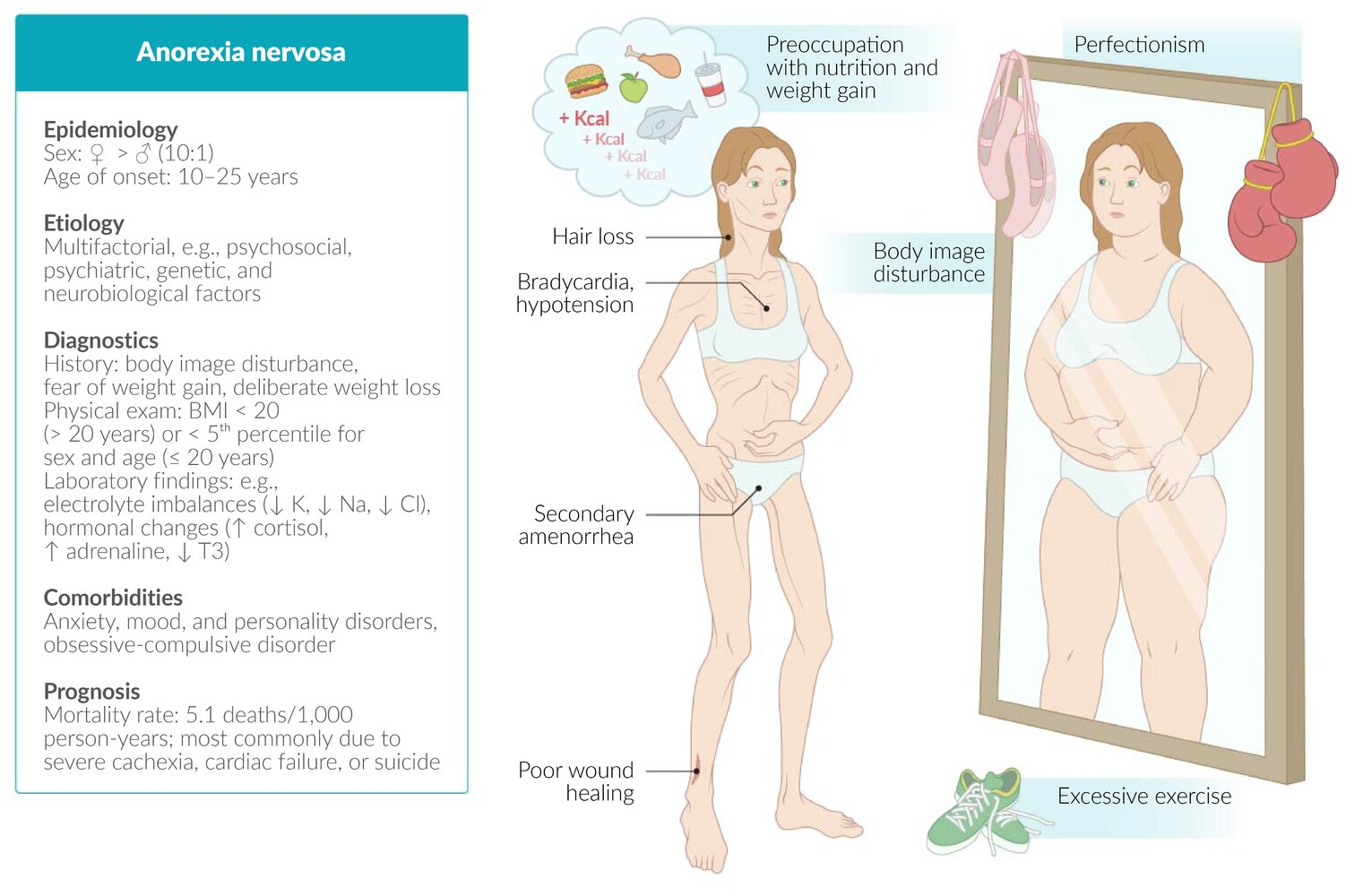
- Most patients present with a low BMI.
Associated features of severe malnutrition
- CNS
- Hypothermia
- This is thought to be caused by a disorder of the hypothalamic thermoregulatory centers.
- Cortical atrophy with associated problems with concentration and reasoning
- Seizures
- As a result of dehydration and electrolyte imbalances
- Depressed mood, fatigue, and poor concentration
- Hypothermia
- Cardiac
- Hypotension
- Cardiac arrhythmia (bradycardia)
- Cardiac atrophy
- Mitral valve prolapse
- Endocrine
- Stress hormones: ↑ cortisol, ↑ adrenaline
- Thyroid: euthyroid sick syndrome
- Secondary amenorrhea (severe weight loss suppresses the hypothalamic-pituitary-gonadal axis → hypogonadotropic hypogonadism)
- Impaired glucose tolerance, hypoglycemia
- GI: Constipation, gastroparesis. t
- Musculoskeletal
- Muscle weakness
- Secondary osteoporosis
- Stress fractures
- Growth retardation in children and adolescents
- Skin and hair
- Dry skin
- Wound healing disorders
- Hair loss
- Lanugo body hair
Diagnostics
Tip
Consider screening the following individuals at increased risk:
- Preteens and adolescents
- At annual adolescent health visits
- Evaluation of weight loss
- Athletes (at annual preparticipation screens)
- Sexual minority, transgender, and gender diverse youth
- Patients with a:
- History of sexual abuse, childhood adversity, or trauma (including bullying)
- Chronic disease requiring dietary management
- Psychiatric disorder and those undergoing an initial psychiatric evaluation
Differential diagnostics
Treatment
- Inpatient Hospitalization Criteria (Urgent Medical Stabilization):
- Hemodynamic instability: HR < 40 bpm, BP < 90/60 mmHg, symptomatic orthostasis (ΔHR > 20 bpm, ΔSBP > 20 mmHg).
- Cardiac complications: QTc > 460 ms, marked dysrhythmias, pericardial effusion.
- Severe electrolyte abnormalities: K⁺ < 3.0 mEq/L, PO₄³⁻ < 2.0 mg/dL, severe hypoglycemia (< 60 mg/dL).
- Extreme low weight: BMI < 15 kg/m² (< 70% of ideal body weight).
- Marked dehydration, acute medical complication (e.g., pancreatitis, hepatic failure), or acute suicidality.
- First-line Treatment:
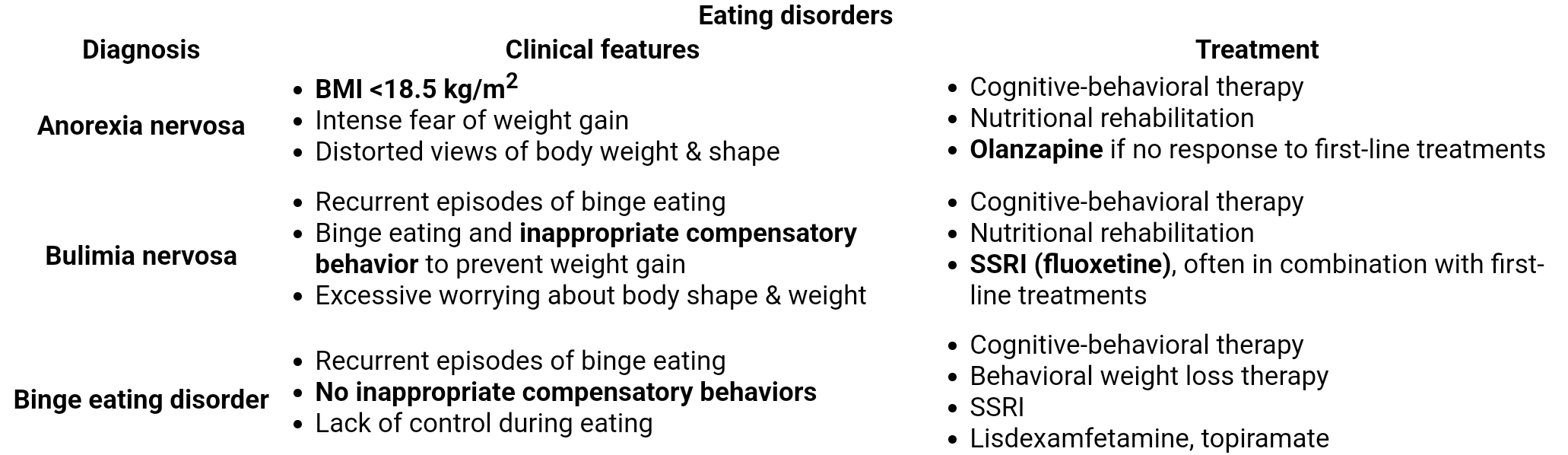
- Nutritional Rehabilitation: Supervised caloric intake with structured meal plans (gradual caloric increase to prevent refeeding syndrome).
- Psychotherapy:
- Family-Based Therapy (FBT / Maudsley approach): First-line for children and adolescents.
- Cognitive Behavioral Therapy (CBT): First-line for adults.
- Second-line / Pharmacotherapy:
- Olanzapine (Atypical Antipsychotic): Indicated if pt fails first-line psychotherapy/nutritional therapy, has severe obsessive food preoccupation, or marked anxiety.
- Note on Antidepressants: SSRIs/SNRIs are ineffective at low body weight and do not promote weight restoration.
- Strict Contraindication:
- Bupropion: Absolutely contraindicated in eating disorders due to significantly lowered seizure threshold.