Epidemiology
Etiology
Pathophysiology
Clinical features
- History:
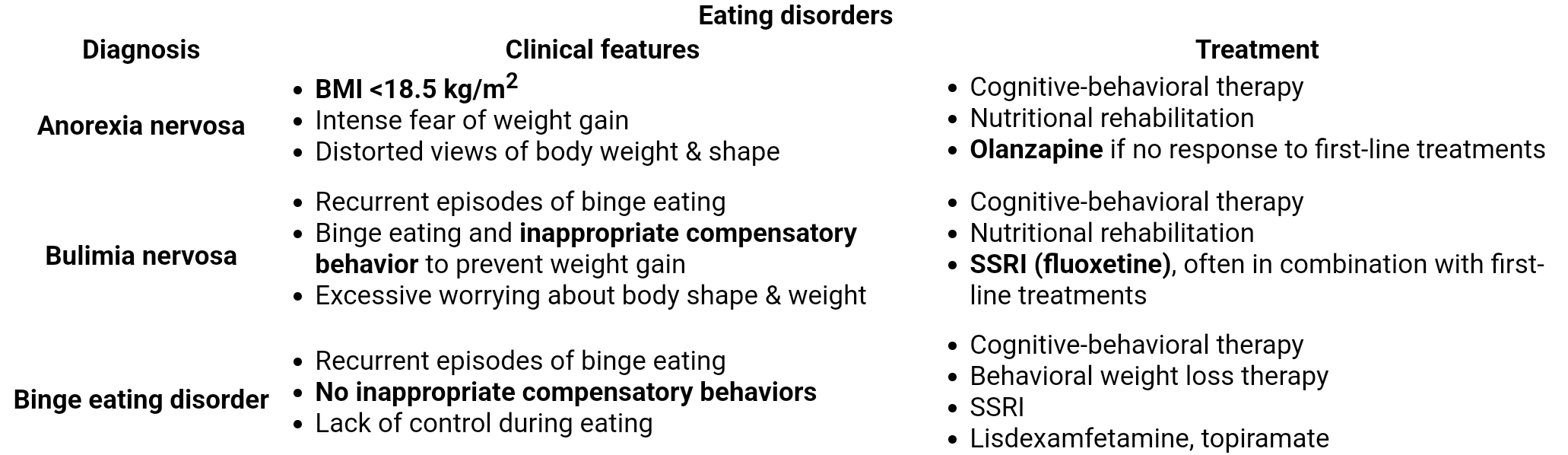
- Recurrent binge eating episodes: Consuming an objectively large amount of food in a discrete period (< 2 hours) with a perceived lack of control.
- Inappropriate compensatory behaviors to prevent weight gain: Self-induced vomiting, misuse of laxatives/diuretics/enemas, fasting, or excessive/driven exercise. c
- Frequency: Episodes occur at least once weekly for ≥ 3 months.
- Excessive preoccupation with body shape and weight dictates self-worth.
- Behaviors typically kept secretive; patients often feel guilt/shame after binges.
- Physical Examination:
- BMI: Typically normal or slightly overweight (BMI ≥ 18.5 kg/m²).
- HEENT: Bilateral parotid gland enlargement (sialadenosis), subconjunctival hemorrhages (from increased intrathoracic pressure during vomiting).
- Oral: Dental erosion (perimylolysis—loss of enamel on lingual surfaces of anterior teeth), extensive dental caries.
- Dermatologic: Russell sign (calluses, abrasions, or scars on dorsal surface of hand/knuckles from manual induction of gag reflex).
- Abdomen: Epigastric tenderness (gastritis, GERD).
Diagnostics
- ↓ Potassium, ↓ sodium, ↓ chloride, and ↓ calcium
- Metabolic alkalosis
- Possible ↑ serum α-amylase
Differential diagnostics
Treatment
- Acute / Stabilization:
- IV normal saline + KCl repletion.
- Hospitalize if: Severe electrolyte derangement (K < 3.0 mEq/L), hemodynamic instability, or cardiac arrhythmias.
- First-Line:
- CBT (most effective psychotherapy) + Fluoxetine (60 mg/day; only FDA-approved SSRI). c
- Second-Line:
- Alternative SSRI (e.g., Sertraline) or Topiramate.
- BLACK BOX / CONTRAINDICATION:
- Bupropion is strictly contraindicated (high seizure risk in purging pts).
Warning
The antidepressant bupropion lowers the seizure threshold and is contraindicated in individuals with a history of anorexia nervosa, bulimia nervosa, or purging behaviors.