Epidemiology

  • Sex: ♂ > ♀ (3:1)

Etiology

  • Mechanism: a sudden and severe rise in the esophageal intraluminal pressure results in tearing of the esophageal mucous membrane, as well as the submucosal arteries and veins
  • Precipitating factors
    • Severe vomiting
  • Predisposing conditions

Pathophysiology


Clinical features

  • May be asymptomatic
  • Epigastric or back pain
  • Hematemesis
    • typically follows a period of severe, bloodless vomiting
  • Possible shock

Diagnostics

EGD

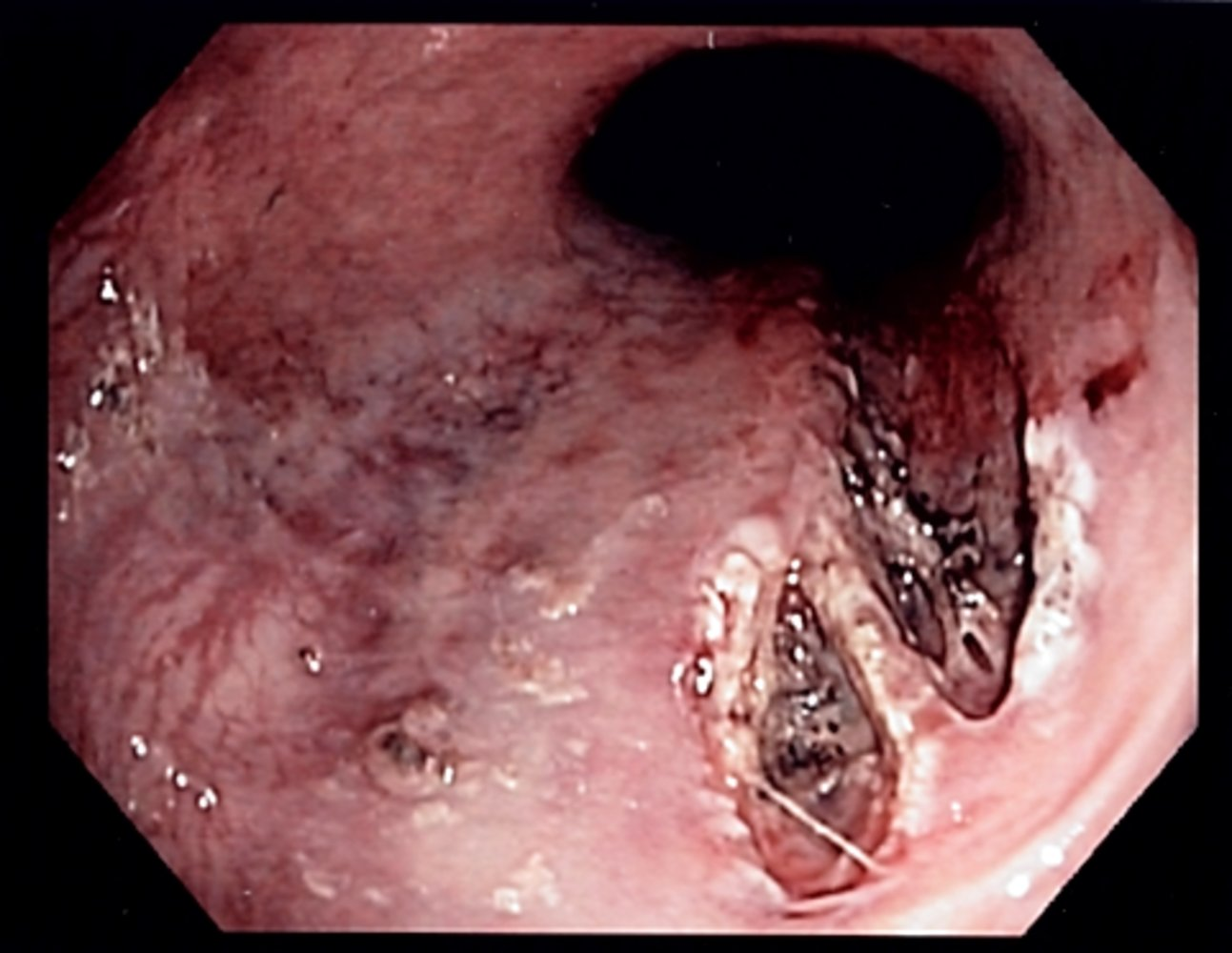
  • Typical findings
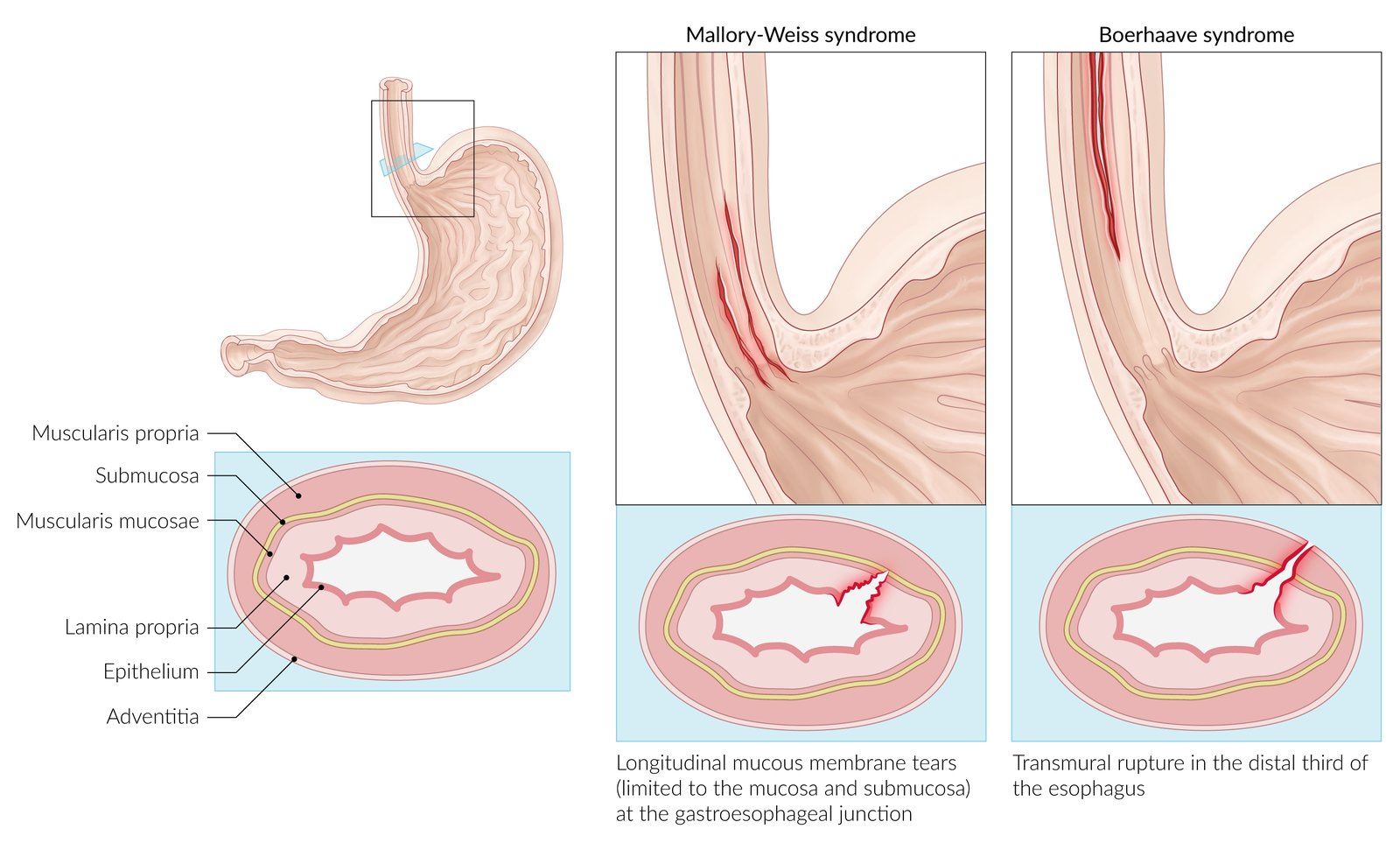
    • Often a single longitudinal tear (but multiple tears are possible) in the mucosa at the gastroesophageal junction or in the cardia of the stomach which are limited to the mucosa and submucosa
    • A fibrin crust over the split, a clot, or active bleeding may be evident.
Differential diagnostics

FeatureMallory-Weiss SyndromeBoerhaave Syndrome
PathophysiologyMucosal & submucosal tear at GEJTransmural rupture of distal esophagus
PresentationPainless hematemesis post-vomiting/retching; epigastric painSevere retrosternal chest pain + fever, shock, subcutaneous emphysema (crepitus)
Key AssociationsAlcohol use, bulimiaAlcohol abuse, overeating
Dx: InitialEGD (visualizes linear tears)CXR (pneumomediastinum, pleural effusion)
Dx: Best/ConfirmatoryEGDGastrografin esophagogram (avoid barium/EGD)
ManagementSupportive (IVF, PPIs, antiemetics); EGD w/ hemoclips/epi if active bleedEmergent surgical repair + IV broad-spectrum Abx + NPO
ComplicationsMinimal (spontaneous resolution in 90%)Mediastinitis, sepsis, empyema, high mortality

Treatment