Approach to headaches
| Migraine | Cluster | Tension | |
|---|---|---|---|
| Sex predilection | Female > male | Male > female | Female > male |
| Family history | Often present | ± | None |
| Onset | Variable | During sleep or similar timing daily | Under stress |
| Location | Often unilateral | Behind one eye | Band-like pattern around the head (bilateral) |
| Character | Pulsatile & throbbing | Excruciating, sharp & steady | Dull, tight & persistent |
| Duration | 4-72 hr | 15-180 min | 30 min to months/years |
| Associated symptoms | Photophobia, phonophobia & nausea, ± aura | Ipsilateral autonomic symptoms: Ipsilateral sweating, facial flushing, nasal congestion, pupillary changes & lacrimation | Muscle tenderness in the head, neck, or shoulders |
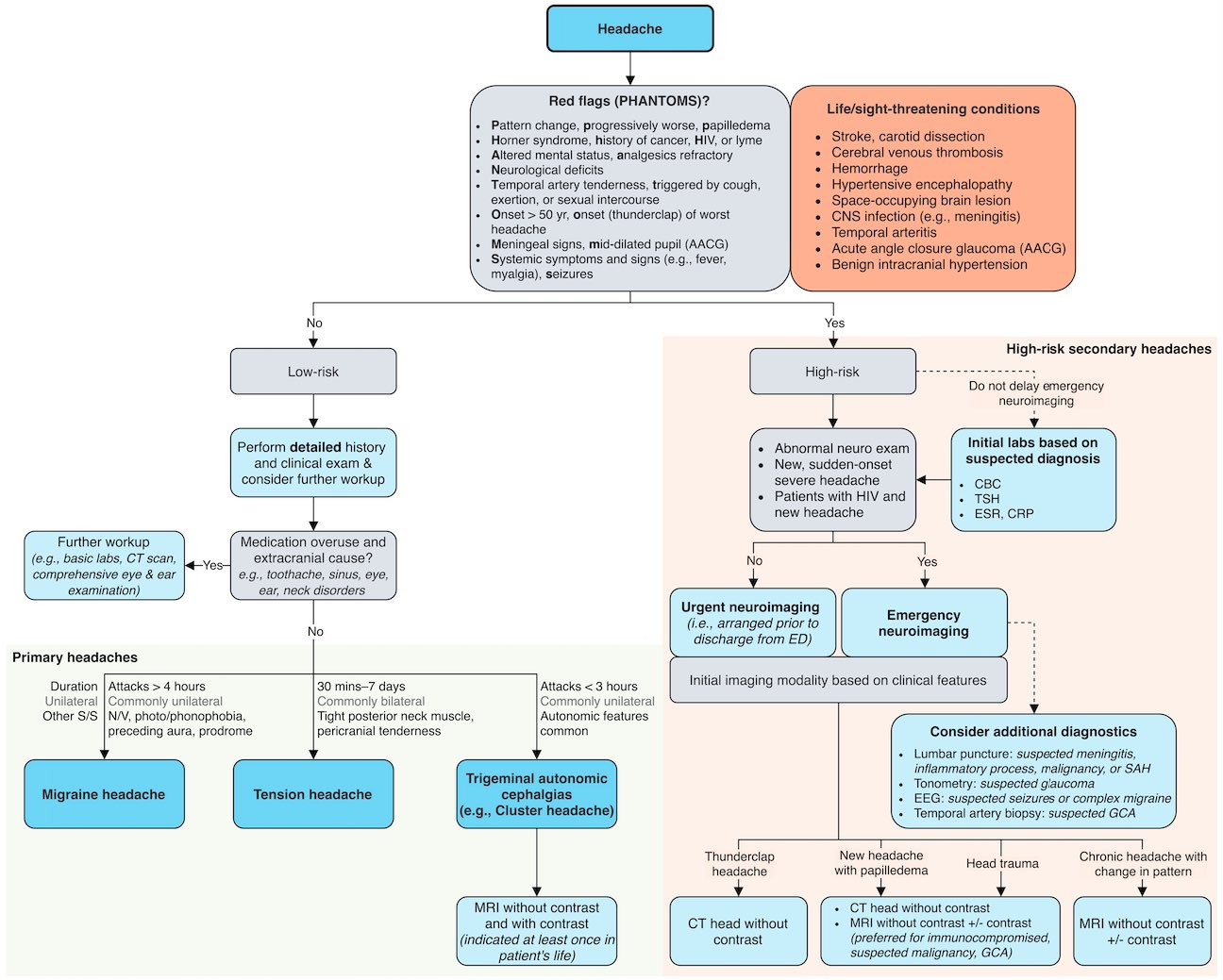
Migraine
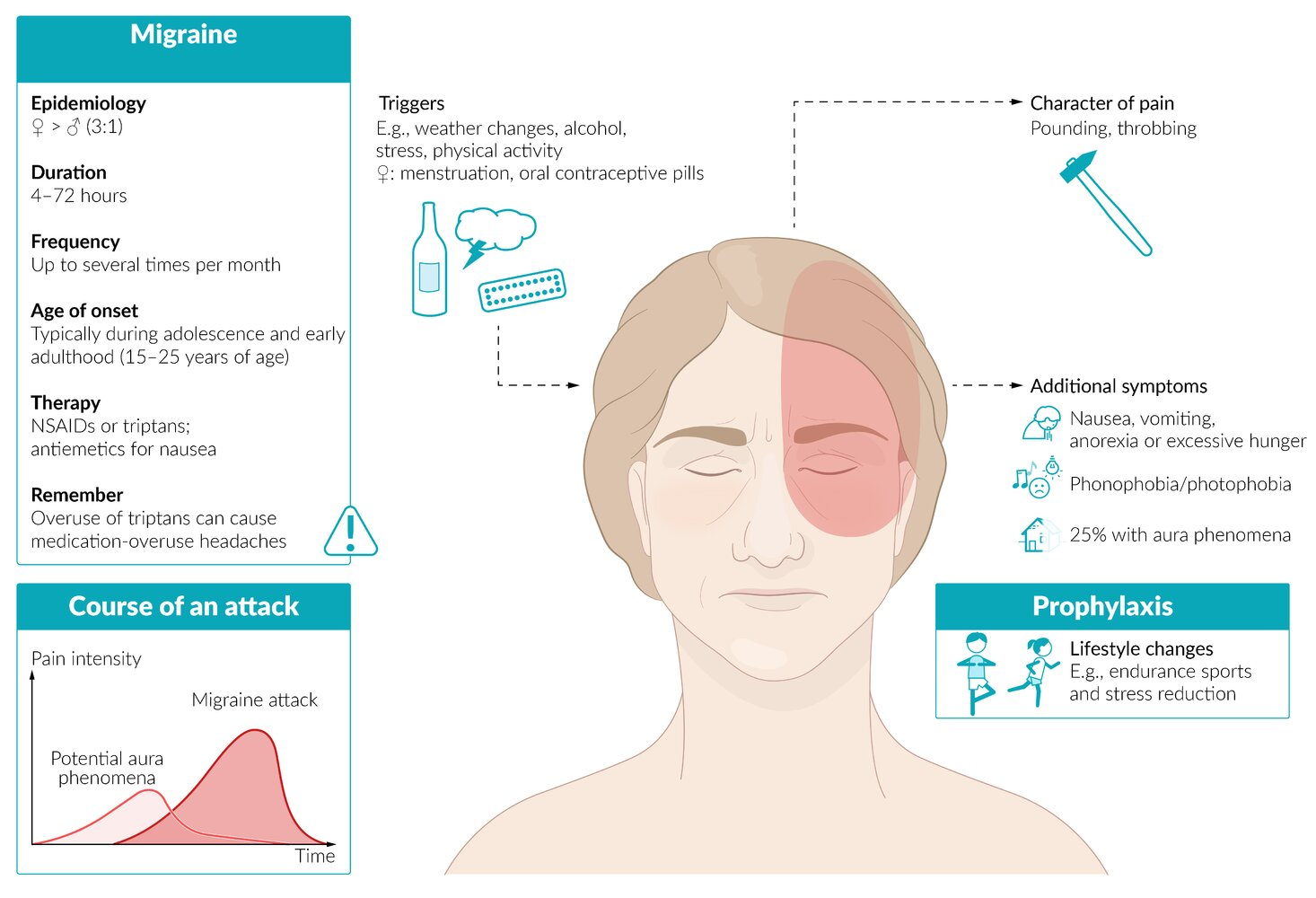
Cluster headache
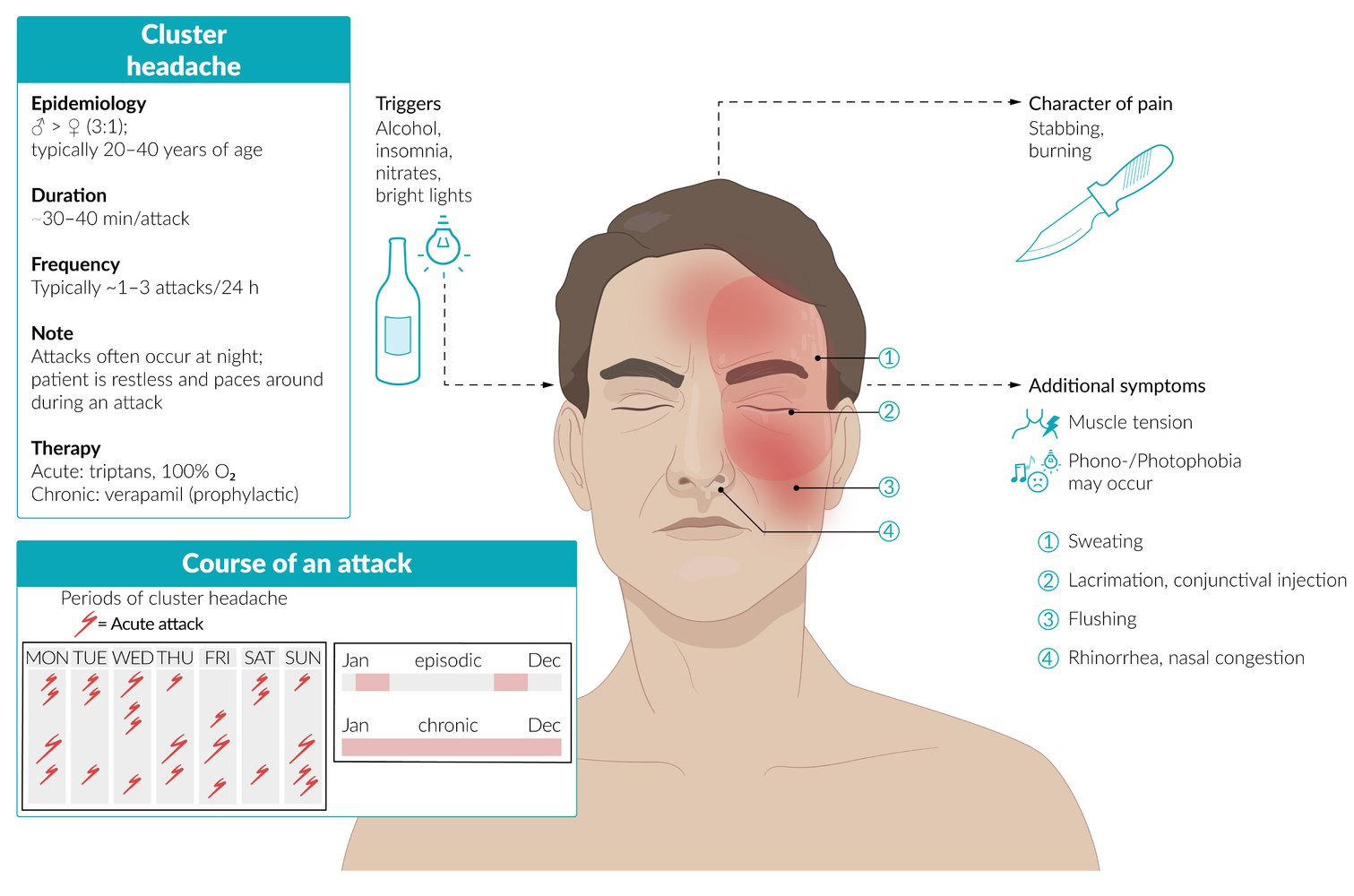
Epidemiology & Risk Factors
- Demographics: Males aged 20–40 yo (M:F ≈ 3:1).
- Risk Factors: Tobacco use / smoking (>80%), heavy alcohol use.
- Triggers: Alcohol ingestion during an active cycle.
- Pattern: Strict circadian rhythmicity (nocturnal attacks waking pt from sleep).
Pathophysiology
- Hypothalamic Dysregulation: Posterior hypothalamic activation disrupts circadian rhythms and autonomic output.
- Trigeminovascular Activation: Trigeminal nerve (V1 branch) stimulation releases vasodilatory neuropeptides (CGRP, Substance P), causing excruciating unilateral periorbital pain.
- Autonomic Dysfunction:
- Parasympathetic hyperactivity: Via the pterygopalatine ganglion → lacrimation, rhinorrhea, nasal congestion.
- Sympathetic impairment: Internal carotid wall edema compresses pericarotid sympathetic plexus → partial Horner syndrome (ptosis, miosis, anhidrosis).
Clinical Features
- Pain: Unilateral, severe, sharp/stabbing periorbital or retro-orbital pain lasting 15–180 min (occurs 1–8x/day in clusters lasting weeks to months).
- Autonomic Signs (Ipsilateral): Lacrimation, conjunctival injection, rhinorrhea, nasal congestion, and ptosis/miosis.
- Behavior: Severe restlessness and agitation (pt rocks/paces; does NOT lie still).
Treatment
- Acute / Abortive Therapy (First-Line):
- 100% High-Flow Oxygen: 12–15 L/min via non-rebreather (NRB) mask for 15–20 minutes (fastest, safest first-line treatment). c
- Subcutaneous (SQ) or Intranasal (IN) Triptans: Sumatriptan (6 mg SQ) or Zolmitriptan (5–10 mg IN). Oral triptans are ineffective due to slow onset.
- Contraindications to Triptans: Coronary artery disease (CAD), Prinzmetal angina, uncontrolled HTN, stroke/TIA history.
- Acute / Abortive Therapy (Second-Line / Adjuncts):
- Intranasal lidocaine, octreotide (SQ), or IV/IN dihydroergotamine (DHE).
- Prophylaxis (Maintenance):
- First-Line: Verapamil (high-dose, titrated upward; requires baseline and periodic ECG monitoring for PR prolongation/heart block).
- Transitional / Bridging Therapy: Short course of oral glucocorticoids (e.g., Prednisone taper) or greater occipital nerve block while titrating maintenance verapamil.
- Refractory Prophylaxis:
- Lithium, topiramate, or galcanezumab (CGRP monoclonal antibody).
Tension-type headache
Tip
- Tension-type headache (TTH) is a primary headache disorder, meaning it is idiopathic and not secondary to hypertension c
- “Tension” means muscle tension: Sustained involuntary contraction and spasm of the pericranial, scalp, and cervical muscles (e.g., frontalis, temporalis, trapezius) producing a tight, band-like constriction.
Epidemiology & Risk Factors
- Most common primary headache.
- F > M; triggered by stress, fatigue, sleep deprivation, poor posture.
Clinical Features
- Bilateral, dull, aching, non-throbbing pain in a “tight band” distribution.
- Differentiating features:
- No nausea/vomiting.
- Not aggravated by routine physical activity.
- Photophobia OR phonophobia (never both).
- PE: Pericranial/cervical muscle tenderness; normal neuro exam.
Diagnosis
- Initial & Confirmatory: Clinical diagnosis (no labs/imaging required).
- Neuroimaging (Brain MRI/CT): Indicated only if “Red Flags” present (focal neuro deficits, onset >50 yo, “thunderclap” onset, systemic signs).
Differential Diagnostics
- Migraine: Unilateral, pulsating, + nausea/vomiting, + photophobia AND phonophobia, aggravated by physical activity.
- Cluster Headache: Unilateral, severe periorbital pain + autonomic signs (lacrimation, rhinorrhea, ptosis/miosis).
- Medication Overuse Headache: Rebound daily HA from analgesic use ≥10–15 days/month for >3 months.
- Giant Cell Arteritis: Age >50, temporal tenderness, jaw claudication, ↑ ESR/CRP.
Management
- Acute / Abortive (First-line): NSAIDs (ibuprofen, naproxen) or APAP.
- Note: Limit to <2–3 days/wk to prevent medication overuse headache. No opioids or triptans.
- Prophylaxis (First-line): Amitriptyline (TCA) if chronic (≥15 days/mo) or disabling + CBT/stress reduction.
Complications
- Medication Overuse Headache (rebound).
- Progression to Chronic TTH (≥15 days/month for >3 months).
Primary stabbing headache
- Overview & Associations:
- Brief, paroxysmal “ice-pick” head pain.
- Highly associated with migraines and cluster headaches.
- F > M.
- Clinical Features:
- Duration: 1–3 seconds (strictly < 1 min).
- Character: Sudden, severe, “ice-pick” sharp stabbing.
- Location: Usually V1 distribution (orbit/temple); characteristically shifts locations.
- Key Negatives:
- No cranial autonomic symptoms (no tearing, eye redness, rhinorrhea).
- No cutaneous trigger zones (touching skin/chewing does not trigger pain).
- Diagnosis:
- Clinical diagnosis.
- Brain MRI or ESR/CRP (if age > 50) reserved for “red flags” or fixed unilateral pain to r/o mass or GCA.
- High-Yield Differentials:
- Trigeminal Neuralgia: V2/V3 distribution, triggered by light touch/chewing, responds to carbamazepine.
- SUNCT/SUNA: Brief stabs accompanied by prominent autonomic signs (conjunctival injection, lacrimation).
- Paroxysmal Hemicrania: Attacks last longer (2–30 min) with autonomic features.
- Management:
- Abortives: Ineffective (attacks resolve too quickly).
- First-line Prophylaxis: Indomethacin (treatment of choice).
- Second-line: Melatonin, Gabapentin, or Topiramate (if indomethacin contraindicated).
- Key Complications:
- Indomethacin toxicity: GI bleeding/ulcers (requires PPI co-prescription), AKI, and worsening HTN.