- Sorbitol and lactose fermenters (except for EHEC, which does not ferment sorbitol)
- Form pink colonies on MacConkey agar
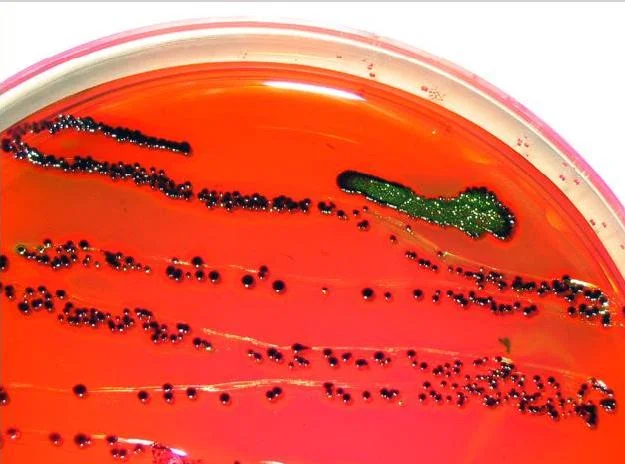
- Form green colonies with a metallic sheen on eosin-methylene blue (EMB) agar t
- Present the enterobacterial common antigen (ECA) on their surface
- Produce beta-galactosidase (cleaves lactose into galactose and glucose)
- Common virulence factors
- Lipopolysaccharide (LPS)
- Activates macrophages → widespread release of IL-1, IL-6 & TNF-α
- Bacteremia & septic shock
- K1 capsular polysaccharide
- Prevents phagocytosis & complement-mediated lysis
- Neonatal meningitis
- Shiga toxin
- Inactivates 60S ribosomal subunit, halting protein synthesis & causing cell death
- Gastroenteritis (bloody)
- Heat-stable/heat-labile enterotoxins
- Promotes fluid & electrolyte secretion from intestinal epithelium
- Gastroenteritis (watery)
- P-fimbriae t
- Allows adhesion to uroepithelium
- Urinary tract infection
- Lipopolysaccharide (LPS)
Key Pathogenic Strains & Associated Diseases
-
Enterohemorrhagic E. coli (EHEC)
- Classic Serotype: O157:H7.
- Source: Undercooked hamburgers, unpasteurized milk/cider, contaminated sprouts or lettuce.
- Presentation: Hemorrhagic colitis (bloody diarrhea, severe abdominal cramps). Minimal or no fever. c
- STEC (Non-Invasive): The bacteria do not physically invade deep into the intestinal mucosal wall or enter the bloodstream. Instead, they adhere to the surface of colonic epithelial cells (using intimin to produce “attaching and effacing” (A/E) lesions) and secrete Shiga toxins (Stx1, Stx2).
- Toxin: Shiga-like toxin (Verotoxin).
- Mechanism: Inactivates the 60S ribosomal subunit, inhibiting protein synthesis and causing cell death.
- Complication: Hemolytic Uremic Syndrome (HUS), especially in children. Triad of:
- Microangiopathic hemolytic anemia (schistocytes on blood smear).
- Thrombocytopenia.
- Acute kidney injury.
- Dx: Does not ferment sorbitol (unlike other E. coli). This is tested on Sorbitol-MacConkey (SMAC) agar, where it forms colorless colonies.
- Tx: Supportive care (hydration) is critical. AVOID ANTIBIOTICS, as they can increase the risk of HUS by inducing toxin release. c
-
Enterotoxigenic E. coli (ETEC)
- Classic Disease: Traveler’s Diarrhea.
- Source: Contaminated food or water (“Montezuma’s Revenge”).
- Presentation: Profuse, watery (non-bloody) diarrhea.
- Toxins:
- Heat-Labile Toxin (LT): Increases cAMP (similar to cholera toxin). (“Labile in the Air”).
- Heat-Stable Toxin (ST): Increases cGMP (“Stable on the Ground”).
- Tx: Supportive care, but antibiotics (e.g., fluoroquinolones, azithromycin) may be used for severe cases to shorten duration.
-
Uropathogenic E. coli (UPEC)
- Diseases: Most common cause of urinary tract infections (UTIs), including cystitis and pyelonephritis.
- Virulence Factor: P fimbriae allow for attachment to the uroepithelium, preventing it from being flushed out by urine.
- Tx: Commonly treated with TMP-SMX, nitrofurantoin, or fluoroquinolones, depending on resistance patterns.
-
Enteroinvasive E. coli (EIEC)
- Presentation: Causes an invasive, dysentery-like illness with fever and bloody, mucoid diarrhea.
- Mechanism: Directly invades the intestinal mucosa, causing inflammation and necrosis. No toxin produced.
- Clinically similar to Shigella.
-
Enteropathogenic E. coli (EPEC)
- Classic Disease: Causes diarrhea, primarily in infants and children (Pediatrics), especially in developing countries. Often involved in nursery outbreaks.
- Mechanism: Adheres to enterocytes and causes effacement (flattening) of microvilli, leading to malabsorption and watery diarrhea.