Cell Wall & Membranes
Gram-Positive (+)
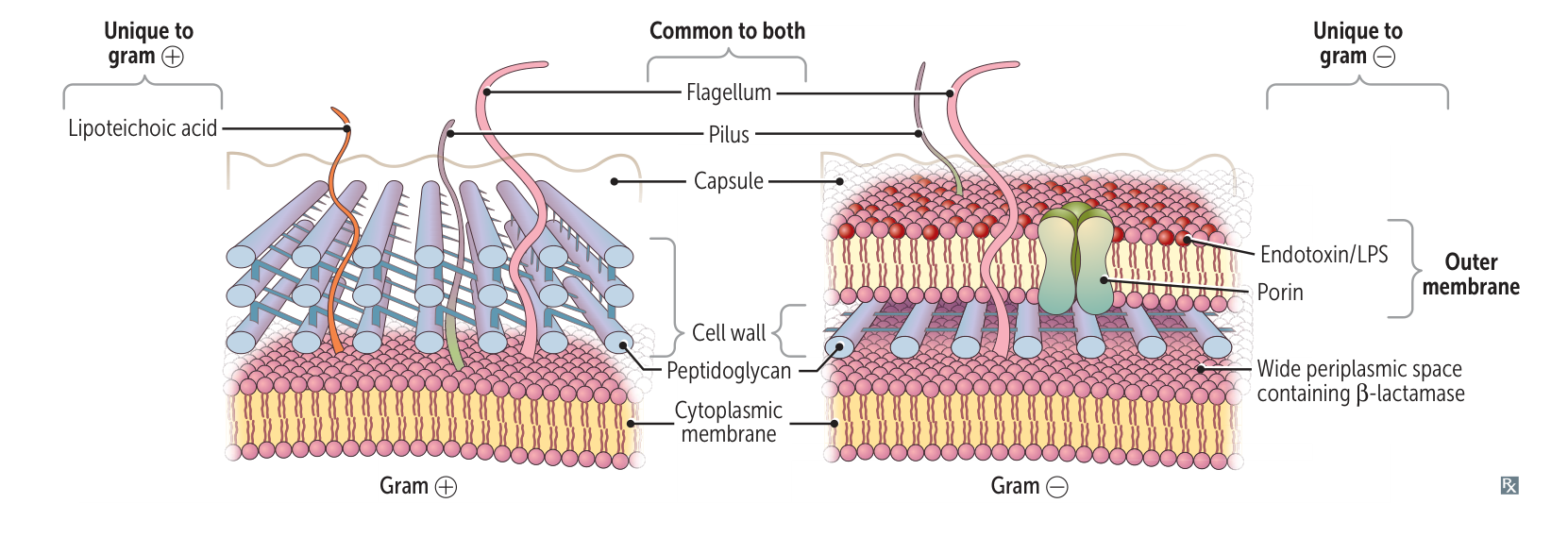
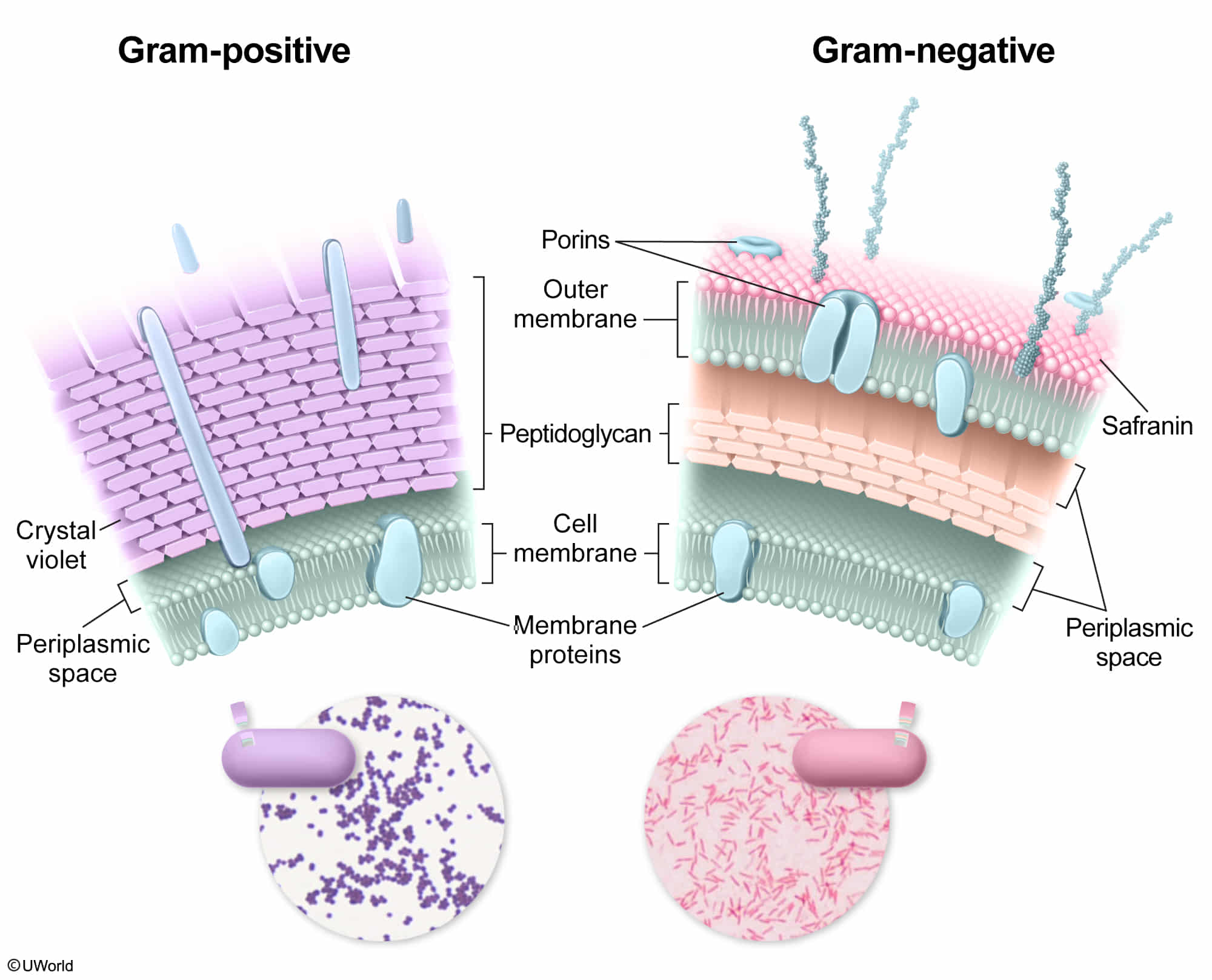
Structure: Thick peptidoglycan layer, single cell membrane. Contains teichoic acid and lipoteichoic acid (LTA). LTA induces TNF-α and IL-1.Analogy: A thick brick wall (peptidoglycan) with reinforcing bars (teichoic acids).Gram Stain: Retains crystal violet, appears purple/blue .Key Features: More susceptible to penicillin.
Gram-Negative (-)
Structure: Thin peptidoglycan layer in the periplasmic space between inner and outer membranes.Analogy: A thin brick wall surrounded by a chain-link security fence (outer membrane).Outer Membrane: Contains endotoxins.
Lipopolysaccharide (LPS): The major endotoxin.
Analogy: The alarm system on the security fence.Lipid A: The siren of the alarm system;DIC ).O-Antigen: The specific model number of the alarm systemE. coli
Lipooligosaccharide (LOS): Found in some species (e.g., Neisseria lacks the O-antigen .
Analogy: A generic, but equally loud, motion-detecting siren that lacks a specific model number. Its structural variability helps evade the immune system.
Atypical Cell Walls
Nontuberculous Mycobacteria :mycolic acid . Do not Gram stain; require acid-fast stain .
Analogy: A waxy, waterproofed wall that repels the purple/pink “paint” of Gram stain.
Mycoplasma: No cell wall . Cell membrane contains sterols .
Analogy: A tent with flexible poles (sterols) instead of rigid walls.
External Structures
Capsule
Patho/Etiology: A well-organized polysaccharide layer.
Mostly polysaccharide (high-yield exception: Bacillus anthracis D-glutamate ) t
Function: Antiphagocytic virulence factor.Analogy: A slippery, invisibility cloak that helps the bacterium evade capture by immune cells.
Glycocalyx (Slime Layer)
Patho/Etiology: A loose, disorganized polysaccharide layer.Function: Mediates adherence and forms biofilms .High-Yield Examples:
S. epidermidis: P. aeruginosa: Non-typeable H. influenzae: Biofilms in otitis media.
Analogy: Sticky glue that helps bacteria clump together and stick to surfaces (like catheters or teeth).
Pili (Fimbriae)
Patho/Etiology: Hair-like proteinaceous appendages.Function: Adhesion to host cells. Sex pilus is used for conjugation .Analogy: Velcro hooks for grabbing onto host cells. The sex pilus is a “tunnel” for passing genetic information.
Flagella
Patho/Etiology: Long, helical filament for motility .Function: Provides movement (chemotaxis). H-antigen.Analogy: A motorboat propeller that drives the bacterium through its environment.
Intracellular Structures
Spores (Endospores)
Patho/Etiology: Dormant, highly resilient structures formed by some gram-positive rods (Bacillus , Clostridium ).Key Components: Core contains dipicolinic acid .Function: Survival in harsh conditions. Resistant to boiling (100°C) and ethanol-based hand sanitizers.t
Clinical Pearl: For C. difficile patients, must use soap and water (mechanical removal) rather than alcohol hand rub, as spores are alcohol-resistant.
Analogy: A survival bunker or panic room that protects the bacterium’s DNA during a disaster, allowing it to reactivate when conditions improve.