General Characteristics

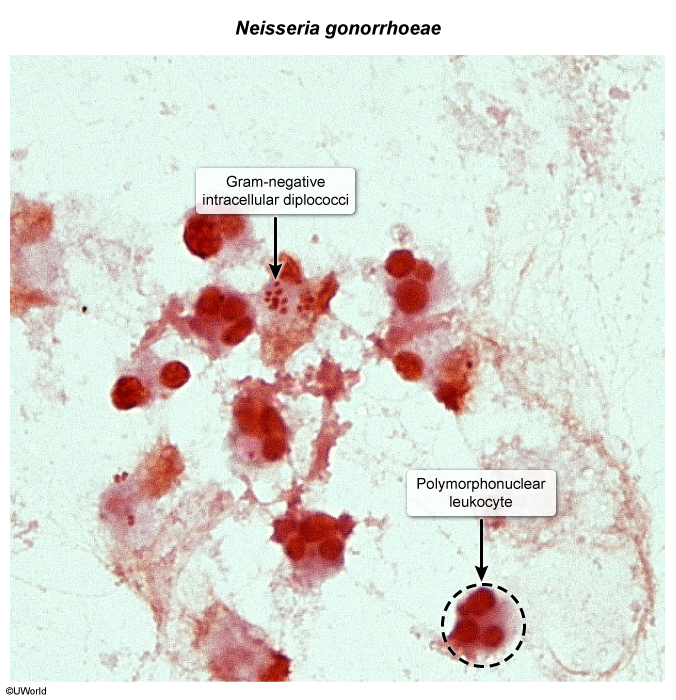
  • Gram stain: Gram-negative diplococci, often intracellular (within neutrophils).
  • Shape: Kidney-bean or coffee-bean shaped.
  • Metabolism: Aerobic.
  • Key enzyme: Oxidase-positive.
  • Culture: Grow on chocolate agar. For selective growth from non-sterile sites (e.g., genital), use Thayer-Martin agar (chocolate agar with Vancomycin, Polymyxin, and Nystatin - “VPN”).
  • Virulence Factor (shared): Pili for attachment, with high antigenic variation. t IgA protease cleaves secretory IgA.

Neisseria gonorrhoeae (“Gonococcus”)

  • Key Differentiator:
    • No polysaccharide capsule. t
    • Ferments glucose only. (Mnemonic: Gonococcus = Glucose).
    • No vaccine due to high antigenic variation of pili.
  • Transmission: Sexual contact, perinatal.
  • Clinical Features
    • Males:
      • Urethritis: Dysuria, copious purulent urethral discharge (thick, yellow-green).
      • Epididymitis: Unilateral testicular pain, swelling, and tenderness.
    • Females:
      • Asymptomatic: Up to 50–80% of infected females exhibit no symptoms.
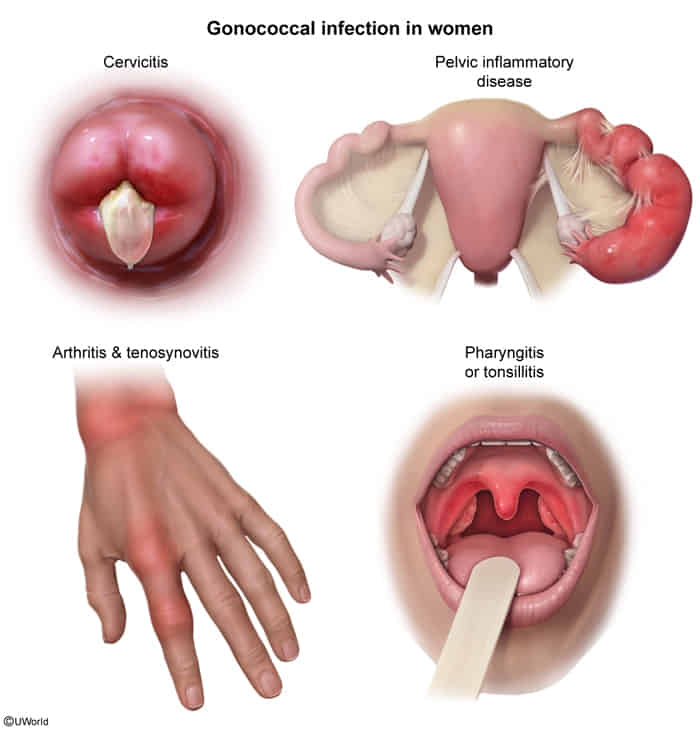
      • Cervicitis: Mucopurulent endocervical discharge, postcoital bleeding, dysuria, and a friable cervix (bleeds easily on contact).
    • Extragenital:
      • Pharyngitis: Sore throat, pharyngeal erythema/exudate (often asymptomatic).
      • Proctitis: Tenesmus, rectal pain, purulent discharge, bleeding.
      • Disseminated Gonococcal Infection (DGI):
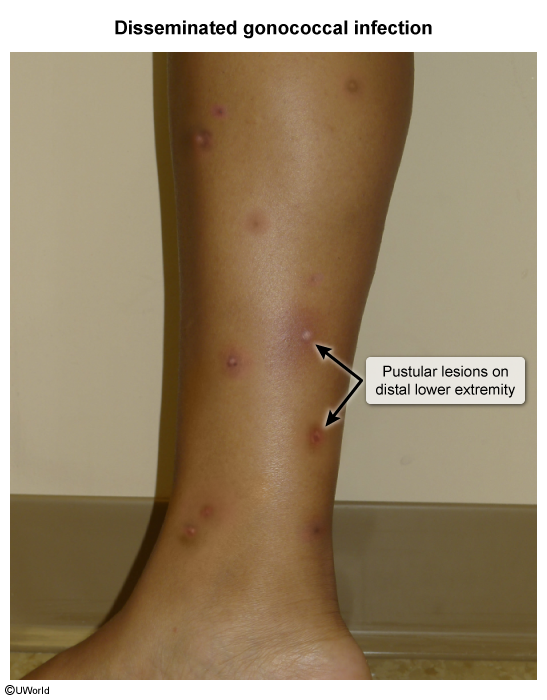
        • Triad: Tenosynovitis (asymmetric), migratory polyarthralgias, and dermatitis (painless pustular or petechial rash on distal extremities).
        • Septic Arthritis: Purulent monoarticular/oligoarticular arthritis (knee most common), joint swelling, limited ROM.
  • Diagnosis: NAAT (Nucleic Acid Amplification Test) is the gold standard.
  • Treatment: Ceftriaxone. Always co-treat for Chlamydia trachomatis (empirically with doxycycline or azithromycin), as co-infection is common.

Neisseria meningitidis (“Meningococcus”)

  • Key Differentiator:
    • Polysaccharide capsule is major virulence factor (antiphagocytic).
    • Ferments glucose AND maltose. (Mnemonic: Meningococcus = Maltose).
    • Vaccine available (targets capsular polysaccharide).
  • Transmission: Respiratory droplets. High-risk in close quarters (dorms, military barracks).
  • Pathophysiology: Colonizes nasopharynx -> invades bloodstream -> meningitis and/or meningococcemia. Septic shock is driven by outer membrane lipooligosaccharide (LOS) endotoxin. t
  • Clinical Features:
    • Meningitis: High fever, headache, nuchal rigidity, photophobia.
    • Meningococcemia: Sepsis, petechial/purpuric rash (can progress to purpura fulminans), DIC.
    • Waterhouse-Friderichsen syndrome
      • Mechanism: Severe bacterial infection → endotoxic shock → Disseminated Intravascular Coagulation (DIC) → bilateral adrenal hemorrhage & infarction → adrenal crisis.
      • Clinical: Septic shock, petechial rash (purpura fulminans), DIC. t
  • Diagnosis: Lumbar puncture (LP) shows CSF with ↑ neutrophils, ↑ protein, ↓ glucose. Gram stain of CSF. Blood cultures.
  • Treatment: Ceftriaxone or Penicillin G.
  • Prophylaxis:
    • For close contacts: Rifampin, ciprofloxacin, or ceftriaxone. t
      • Goal of prophylaxis is to eradicate nasopharyngeal carriage of the bacteria to prevent it from invading the bloodstream or spreading to others.
      • Rifampin can penetrate extremely well into body fluids and tissues, specifically saliva, tears, and nasopharyngeal secretions. Hence its side effect: orange/red discoloration of body fluids
    • Vaccine: Conjugate vaccine against serotypes A, C, Y, W-135. Separate vaccine for serotype B.