Epidemiology
Etiology
- Diet lacking fresh fruits/vegetables (citrus, leafy greens).
- “Tea & toast” elderly, social isolation, poverty.
- Alcoholics & malnourished pts.
- Restrictive diets: autism/psych pts, fad diets, severe anorexia.
- Infants fed exclusively boiled/processed milk (heat destroys vit C).
- Smoking (↑ requirement), dialysis, malabsorption.
Pathophysiology
Vitamin C functions
- Hydrophilic antioxidant
- Conversion of dopamine to norepinephrine: coenzyme in dopamine β-hydroxylase
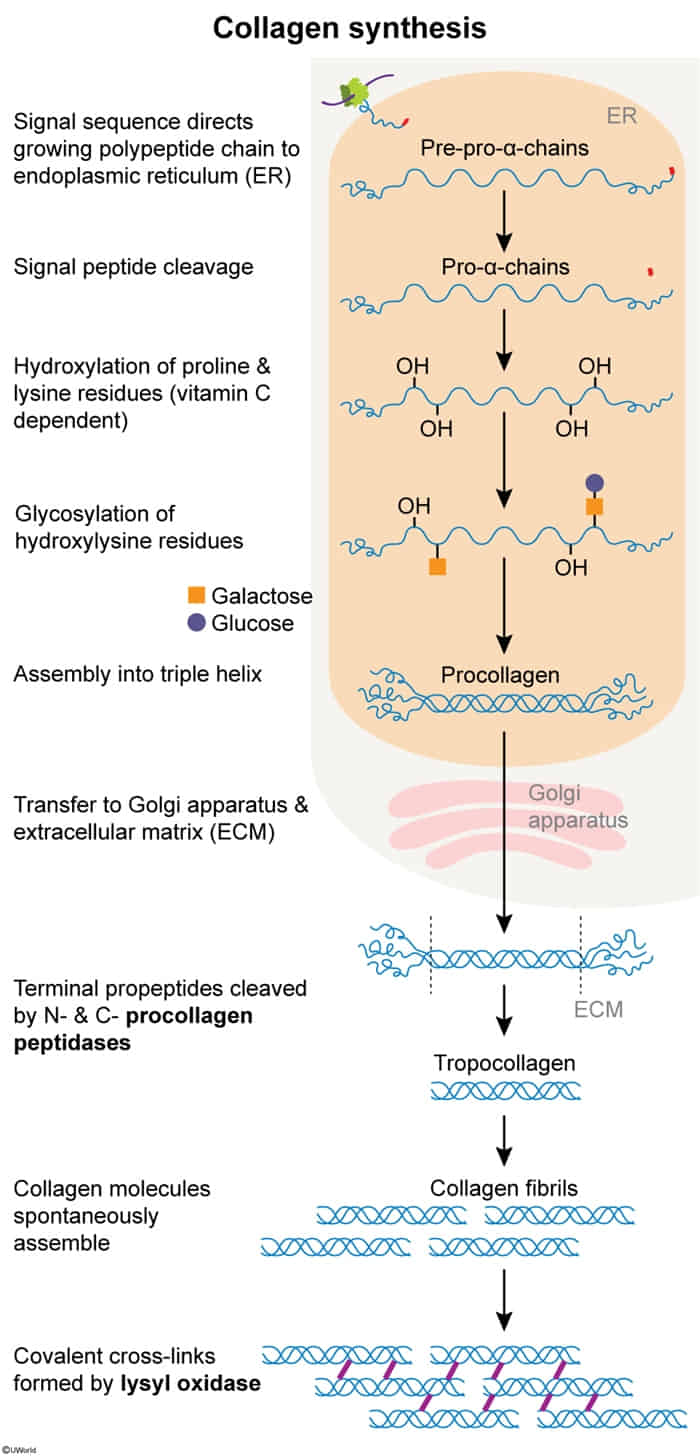
- collagen synthesis: coenzyme in hydroxylation reaction of proline and lysine
Drawing 2026-01-15 21.36.00.excalidraw
⚠ Switch to EXCALIDRAW VIEW in the MORE OPTIONS menu of this document. ⚠ You can decompress Drawing data with the command palette: ‘Decompress current Excalidraw file’. For more info check in plugin settings under ‘Saving’
Excalidraw Data
Text Elements
Vitamin C Deficiency
Osteogenesis Imperfecta
Ehlers-Danlos
Menkes Disease
Embedded Files
58c7f467e25b3598403f962e309bd81ecd1fe2c6: Pasted Image 20260115213631_102.png
Link to original - Facilitates iron absorption (keeps iron in Fe2+ reduced state)
Clinical features
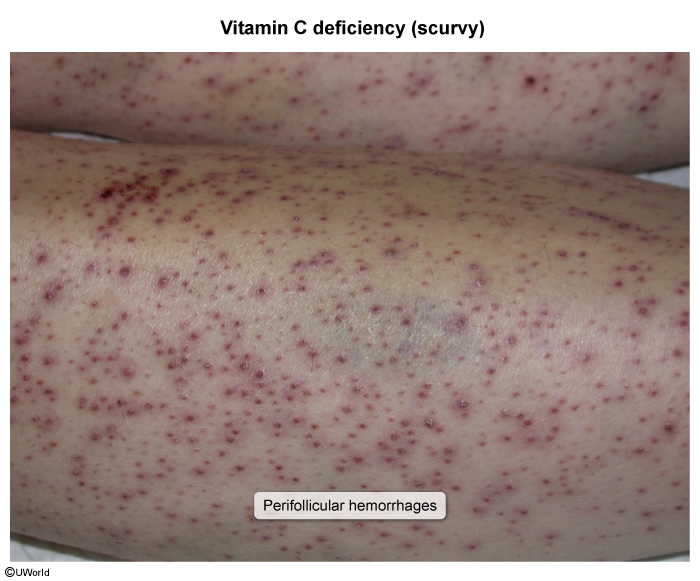
- Perifollicular hemorrhage (highly specific).
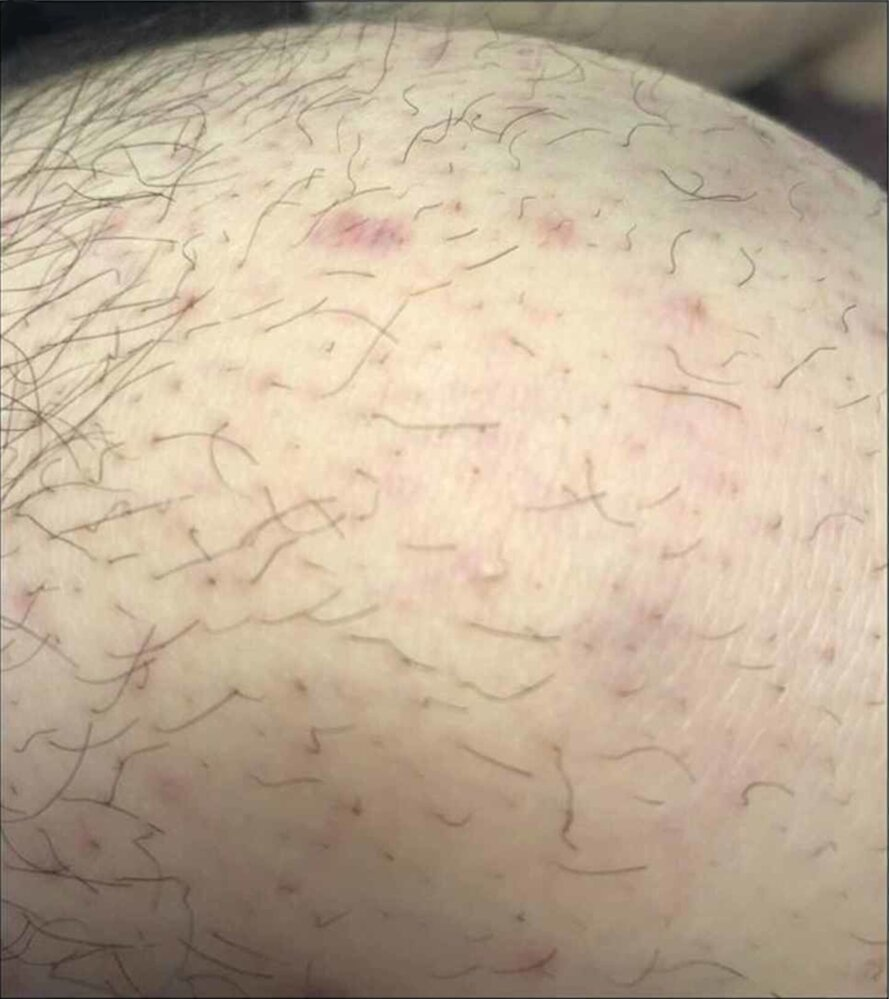
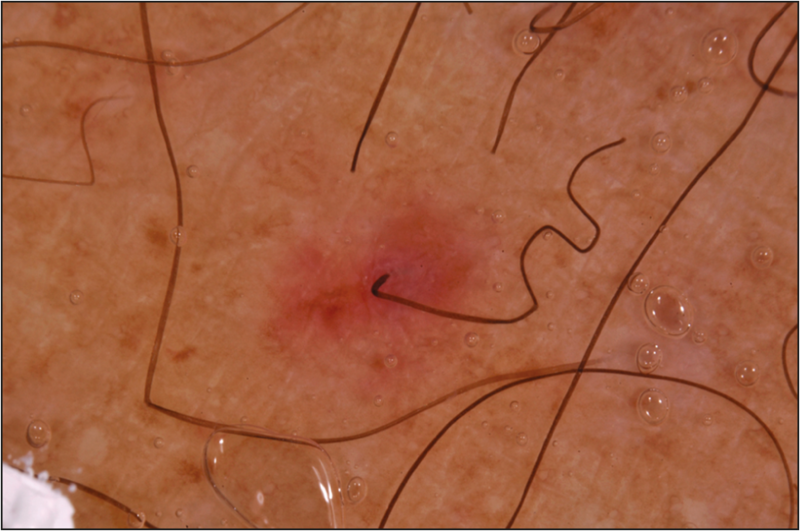
- “Corkscrew” hairs (coiled, fragmented, and fragile body hair).
- Bleeding gums (swollen, spongy, bluish-purple gingiva) and loose teeth.
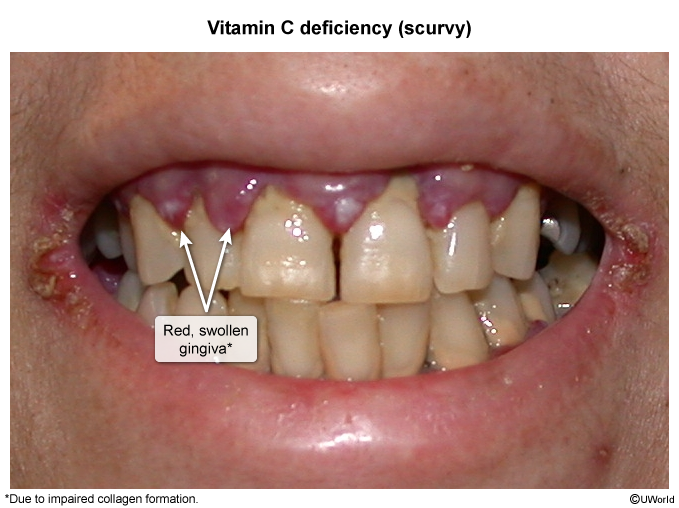
- Petechiae, ecchymoses, and easy bruising.
- Poor wound healing and hyperkeratotic skin papules.
- Hemarthrosis (joint pain, swelling, and hemarthroses). c
- Systemic symptoms: Fatigue, weakness, depression, and apathy.
Tip
Suspect scurvy when the patient is malnourished, with symptoms of corkscrew hair, bleeding, anemia.
Diagnostics
Treatment
Vitamin C toxicity
- Nausea, vomiting
- Diarrhea, bloating
- Fatigue
- ↑ Risk of iron toxicity in transfusion patients and hereditary hemochromatosis due to increased absorption of dietary iron
- Nephrolithiasis due to ↑ calcium oxalate formation
- excess oxalate from vitamin C metabolism