Epidemiology
Etiology
Pathophysiology
- In endometriosis, endometrial tissue occurs outside of the uterus.
- It’s adenomyosis if in uterus.
- Common locations of endometriotic implants include:
- Pelvic organs
- Ovaries: most common site; often affected bilaterally
- Rectouterine pouch
- Fallopian tubes
- Bladder
- Cervix
- Peritoneum
- Extrapelvic organs (e.g., lung or diaphragm): less commonly affected
- Pelvic organs
- Regardless of where the endometrial tissue is located, it reacts to the hormone cycle in much the same way as the endometrium and proliferates under the influence of estrogen.
- Endometriotic implants result in:
- ↑ Production of inflammatory and pain mediators
- Anatomical changes (e.g., pelvic adhesions) → infertility
Clinical features
- Classic Triad (“3 Ds”):
- Dysmenorrhea: Cyclic pelvic pain starting 1-2 days before menses.
- Deep dyspareunia: Pain with deep penetration.
- Dyschezia: Painful defecation (worse during menses).
- Additional symptoms: Chronic pelvic pain (>6 mos), infertility, abnormal uterine bleeding (AUB), cyclic hematuria/dysuria. c
- Physical Exam:
- Fixed, immobile, retroverted uterus.
- Tender nodularity in uterosacral ligaments or posterior cul-de-sac.
- Adnexal mass (endometrioma).
- Cervical motion tenderness (CMT) or lateral displacement of cervix. c
Diagnostics
- Initial Test: Transvaginal Ultrasound (TVUS).
- Evaluates for endometrioma (“ground-glass” appearance, homogenous low-level echoes). c
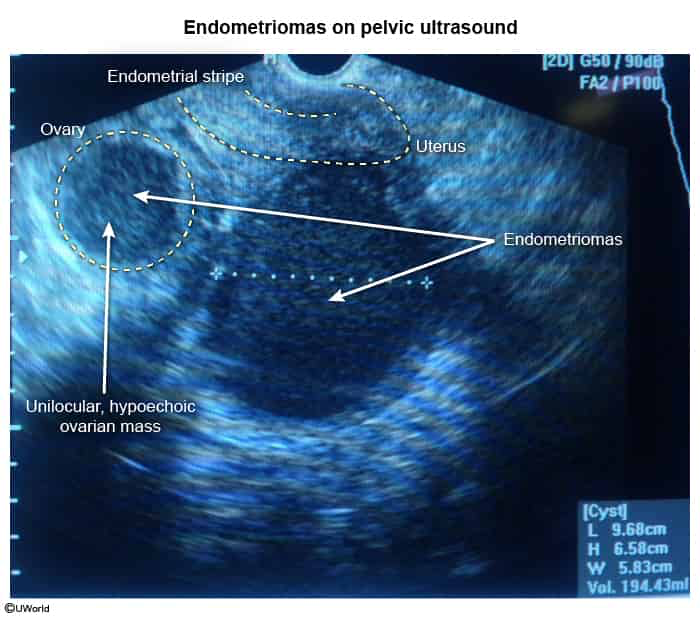
- Normal TVUS does not rule out superficial peritoneal endometriosis.
- Evaluates for endometrioma (“ground-glass” appearance, homogenous low-level echoes). c
- Confirmatory / Gold Standard: Laparoscopy w/ biopsy.
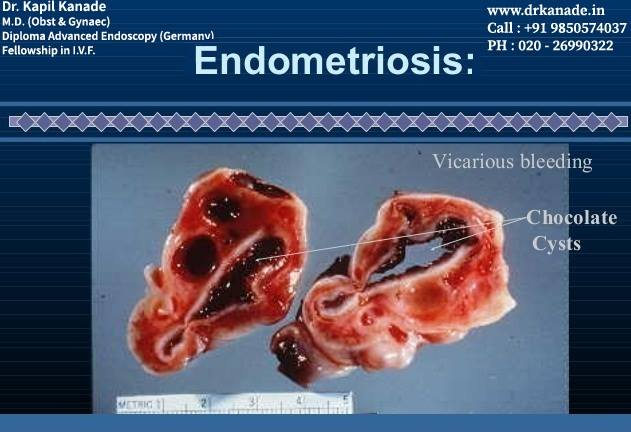
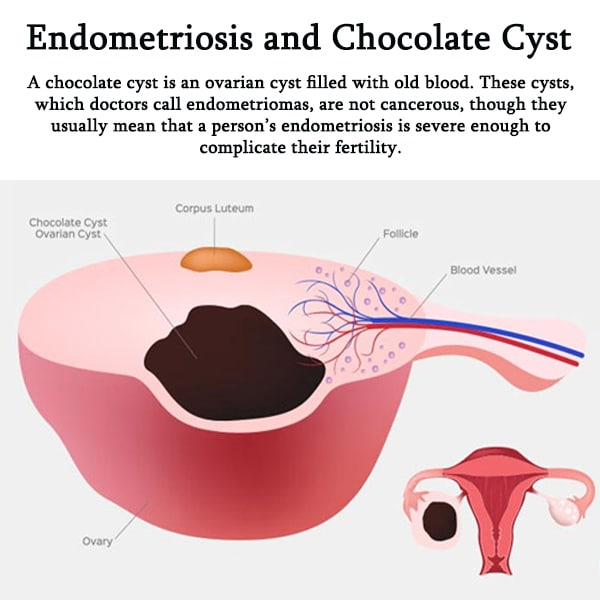
- Visualizes “powder-burn” lesions (blue-black/brown spots), fibrous adhesions, or “chocolate cysts”.
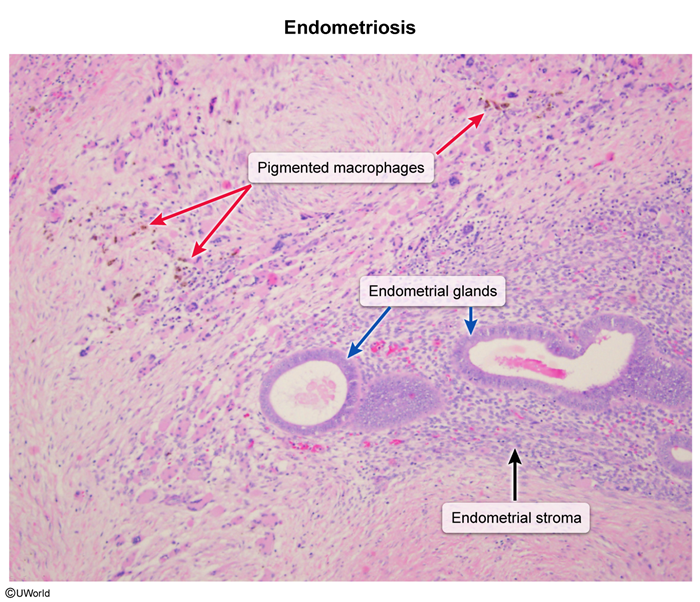
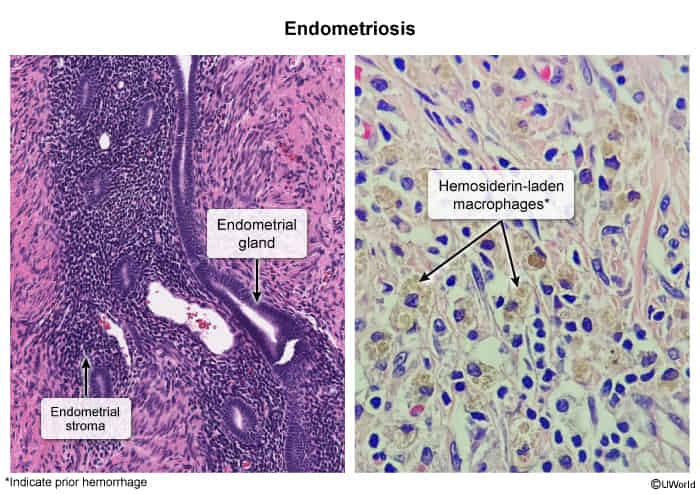
- Histology confirms ≥2 features: Endometrial glands, stroma, hemosiderin-laden macrophages.
- Key Labs: CA-125 may be ↑ (nonspecific, used only for monitoring treatment/recurrence, not for diagnosis).
Pathology
- Normal endometrial glands
- Normal endometrial stroma
- Preponderance of hemosiderin laden macrophages due to cyclic hemorrhages into endometriomas
Differential diagnosis
Adenomyosis
Tip
- Endometriosis: fixed, immobile uterus (due to pelvic adhesion)
- Adenomyosis: enlarged, boggy, tender uterus
- Definition: benign disease characterized by the occurrence of endometrial tissue within the myometrium due to hyperplasia of the endometrial basal layer
- Epidemiology: peak incidence at 35–50 years
- Clinical features
- May be asymptomatic
- Dysmenorrhea
- Abnormal uterine bleeding
- Chronic pelvic pain, aggravated during menses
- Globular, uniformly enlarged uterus that is soft but tender on palpation
- Differ from Uterine leiomyoma, which shows irregularly enlarged, firm uterine
- Diagnostics
- Diagnosis is clinical and may be supported by transvaginal ultrasound and MRI findings
- Asymmetric myometrial wall thickening
- Myometrial cysts
- Diagnosis is clinical and may be supported by transvaginal ultrasound and MRI findings
Pathology
Macroscopic findings
- Ovaries
- Gunshot lesions or powder-burn lesions
- Black, yellow-brown, or bluish nodules or cystic structures
- Seen on the serosal surfaces of the ovaries and peritoneum
- Ovarian endometriomas or chocolate cysts: cyst-like structures that contain blood, fluid, and menstrual debris
- Gunshot lesions or powder-burn lesions
Treatment
Endometriosis
- Asymptomatic / Incidental Finding: No treatment needed.
- First-line (Pain Control & Contraception Desired):
- NSAIDs + Combined Oral Contraceptives (COCPs) OR Progestin-only agents (e.g., levonorgestrel IUD, DMPA).
- Second-line (Refractory to COCPs/NSAIDs):
- GnRH agonists (e.g., leuprolide) or GnRH antagonists (e.g., elagolix) + “add-back” therapy (low-dose estrogen/progestin) to prevent bone mineral density loss and vasomotor symptoms.
- Surgical Management:
- Indications: Refractory medical management, contraindication to meds, or medication-resistant infertility. c
- Conservative Surgery: Laparoscopic excision/ablation of implants + cystectomy for endometriomas (preserves fertility).
- Definitive Surgery: Total hysterectomy + bilateral salpingo-oophorectomy (BSO) (completed childbearing).
- Infertility Management:
- Medical therapy (COCPs, GnRH agonists) does NOT improve fertility.
- First step: Laparoscopic resection of implants to restore normal pelvic anatomy.
- Next step: Assisted Reproductive Technology (ART) / IVF if surgery fails or maternal age is advanced.
Adenomyosis
- Medical: Primarily aimed at symptom control (reducing bleeding/pain).
- Levonorgestrel-releasing IUD (Mirena) is highly effective.
- Combined OCPs or progestin-only therapy can also be used.
- Surgical:
- Hysterectomy is the only definitive treatment.
- Uterine artery embolization is an alternative for those wishing to avoid hysterectomy.