Epidemiology
Prevalence increases with age.
Etiology
- Pathophysiology:
- Urethral hypermobility: Weak pelvic floor musculature/fascial support fails to support the bladder neck and urethra under increased intra-abdominal pressure. c
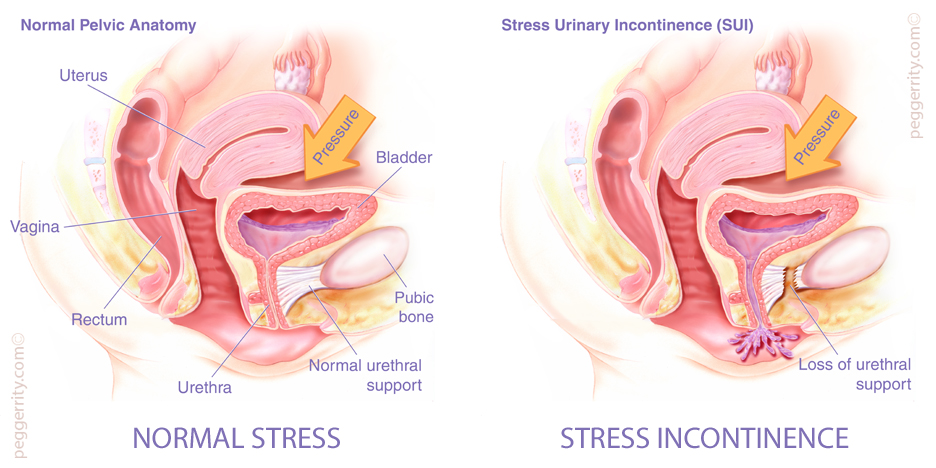
- Intrinsic sphincteric deficiency (ISD): Loss of intrinsic urethral mucosal coaptation/sphincter function (e.g., trauma, multiple pelvic surgeries, pelvic radiation).
- Urethral hypermobility: Weak pelvic floor musculature/fascial support fails to support the bladder neck and urethra under increased intra-abdominal pressure. c
- Risk Factors:
- Multiparity / Vaginal delivery (major risk factor for pelvic floor trauma/nerve stretch injury).
- Obesity (chronically ↑ intra-abdominal pressure).
- Advanced age & Postmenopausal state (hypoestrogenism leads to urogenital atrophy).
- Prior pelvic surgery (e.g., hysterectomy).
- Chronic conditions causing increased abdominal pressure (COPD/chronic cough, chronic constipation).
Clinical features
- History:
- Involuntary, instantaneous loss of urine with exertion or increased intra-abdominal pressure (e.g., coughing, sneezing, laughing, lifting, jumping).
- No preceding urge sensation or sensation of bladder fullness prior to leakage.
- Physical Exam:
- Positive Cough Stress Test: Direct visualization of transurethral urine loss simultaneously with coughing/Valsalva in the lithotomy or standing position.
- Pelvic Exam: May demonstrate concomitant pelvic organ prolapse (POP), such as cystocele, rectocele, or uterine prolapse; vaginal mucosal atrophy. c
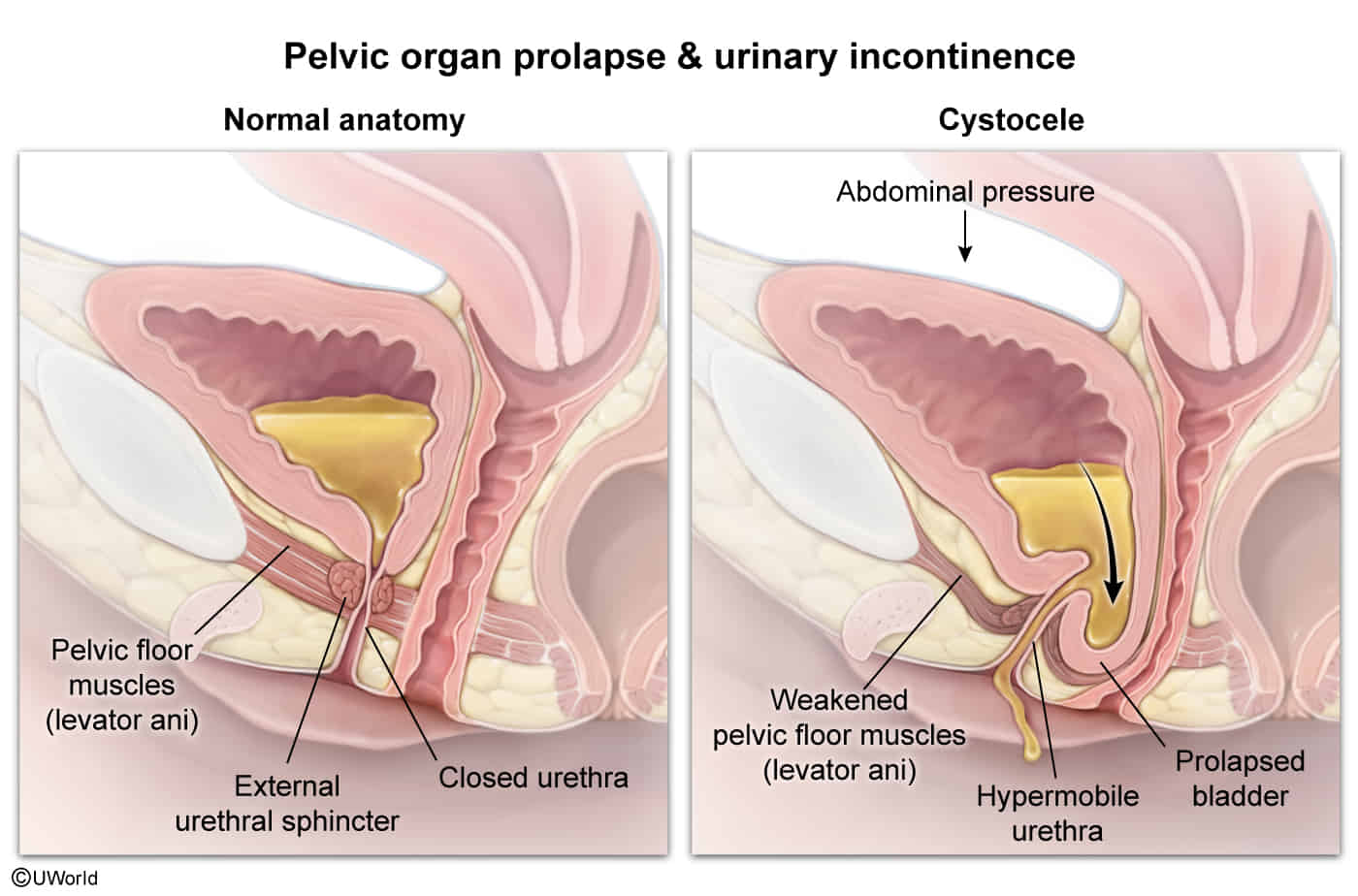
- Q-tip test: Swab deflection > 30 degrees from horizontal with Valsalva indicates urethral hypermobility.
Diagnostics
Treatment
- First-Line (Conservative / Non-invasive):
- Pelvic Floor Muscle Training (PFMT / Kegel exercises): Strengthens levator ani muscles (pubococcygeus); first-line therapy for all patients.
- Lifestyle Modifications: Weight loss (highly effective), fluid management, smoking cessation, optimization of chronic cough and constipation.
- Second-Line (Non-surgical Mechanical Support):
- Pessary (e.g., incontinence dish or ring pessary with knob): Elevates and supports the bladder neck; ideal for patients who decline surgery, are pregnant, or are poor surgical candidates.
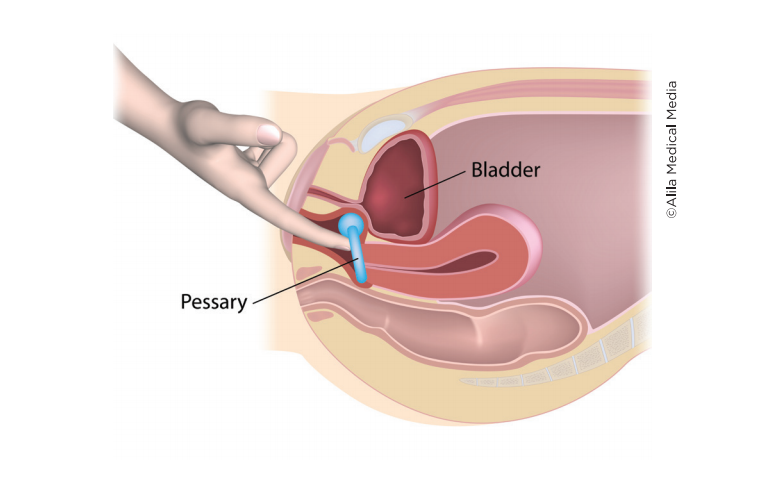
- Vaginal inserts / Urethral plugs: Temporary mechanical support during high-impact activities.
- Pessary (e.g., incontinence dish or ring pessary with knob): Elevates and supports the bladder neck; ideal for patients who decline surgery, are pregnant, or are poor surgical candidates.
- Definitive / Surgical Management (Indicated for severe or refractory symptoms):
- Midurethral Sling (Gold Standard): Placement of a synthetic mesh sling (e.g., tension-free vaginal tape [TVT] or transobturator tape [TOT]) under the mid-urethra to restore backboard support.
- Bladder Neck Suspension (Burch Colposuspension): Open or laparoscopic suspension of the periurethral tissue to Cooper’s ligament.
- Periurethral / Transurethral Bulking Agents: Injection of cross-linked collagen or synthetic gel into the submucosa around the bladder neck; preferred for intrinsic sphincteric deficiency in high-risk surgical patients.
- Note on Pharmacotherapy: Systemic medications (e.g., alpha-agonists, duloxetine) have low efficacy and significant adverse effects; not standard first-line therapy in US guidelines.