• Description: a rare type of hepatic encephalopathy that is associated with aspirin use for viral illness in children < 19 years
  • Etiology: aspirin use in individuals < 19 years of age with a febrile illness
  • Pathophysiology
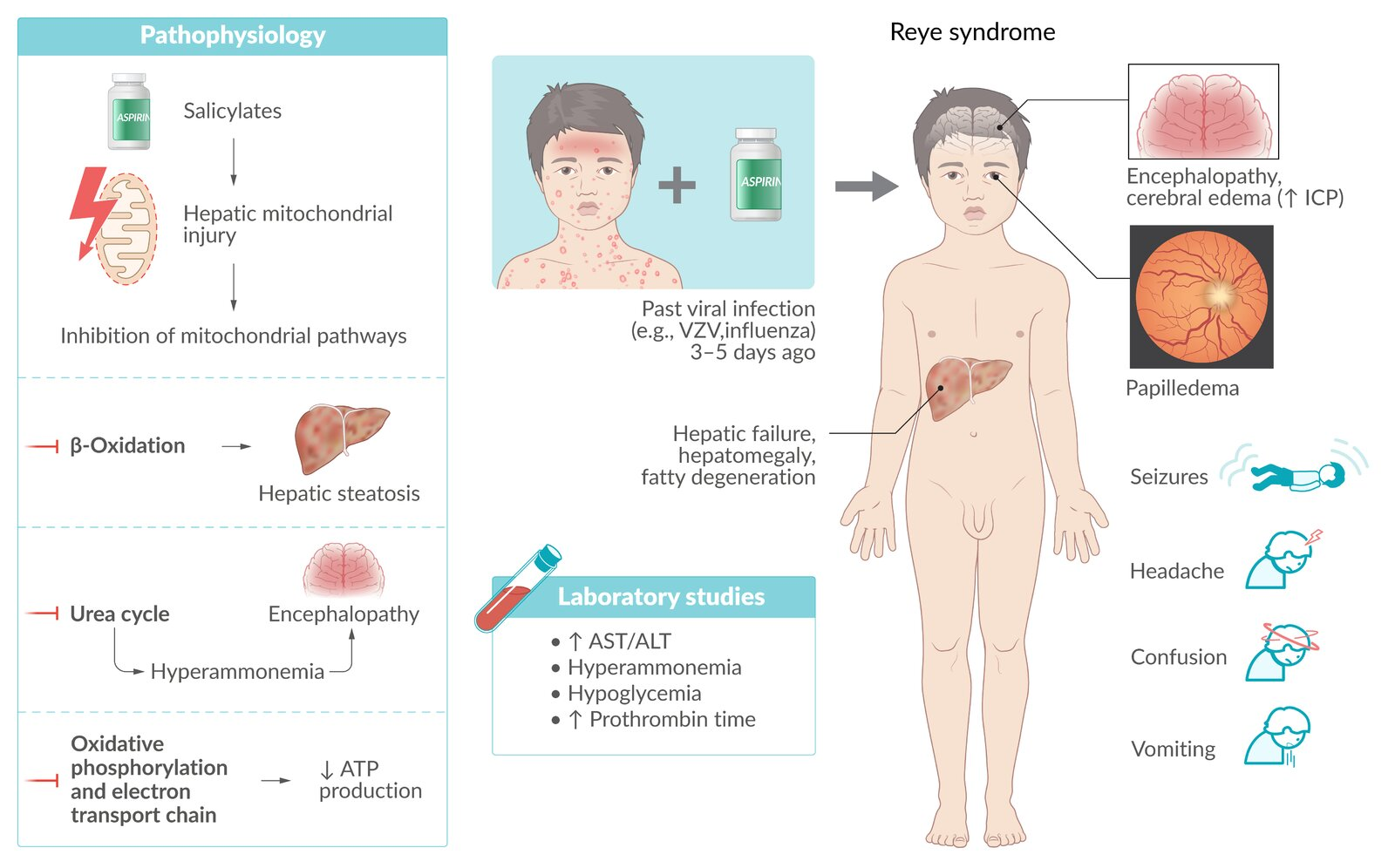
    • Aspirin use in children during viral infection (eg, influenza, varicella)
    • Mitochondrial toxicity → impaired fatty acid metabolism
    • Microvesicular fat deposits in the liver
    • Hepatic dysfunction → hyperammonemia
    • Diffuse astrocyte swelling (ie, cerebral edema)
  • Clinical features
    • Preceding viral infection (e.g., influenza, varicella or viral gastroenteritis): The first symptoms of Reye syndrome usually begin 3–5 days after a viral illness.
    • Encephalopathy: Rapidly progressive; manifests as lethargy, confusion, delirium, seizures, and eventual coma. c
    • Hepatomegaly: Liver is enlarged, smooth, and firm.
    • No jaundice: Scleral icterus and clinical jaundice are characteristically absent despite severe hepatic dysfunction.
    • Hyperreflexia and decerebrate/decorticate posturing in advanced stages.
  • Prevention
    • Aspirin should be avoided in individuals < 19 years of age, especially those with fever.
    • Exception: children with Kawasaki disease

Differential diagnostics


t

FeatureSalicylate (ASA)Acetaminophen (APAP)Reye Syndrome
PathUncouple oxidative phosphorylation (leads to hyperthermia); Direct stimulation of resp center.Glutathione depletion NAPQI centrilobular hepatic necrosis.Mito dysfunction ( -oxidation) Microvesicular fatty change in liver
Hx/TriggerOD; Wintergreen oilOD (esp. w/ CYP inducers/EtOH)Child + Virus + ASA
Key SxTinnitus, Hyperthermia, TachypneaRUQ pain, Fulminant liver failureEncephalopathy, Vomiting
Labs/PathMixed Resp Alk + Met AcidosisZone 3 Necrosis, AST/ALTMicrovesicular fatty liver, Glucose, Ammonia
TxNaHCO3 (Alkalinize urine), DialysisN-acetylcysteine (restore glutathione)Supportive
Link to original