Epidemiology
Etiology
Pathophysiology
- Unknown etiology; likely immune-mediated vasculitis triggered by infection
- Medium-vessel vasculitis affecting coronary arteries primarily
- Risk of coronary artery aneurysms (CAA) if untreated
Clinical features
- Fever ≥ 5 days; Usually > 39°C
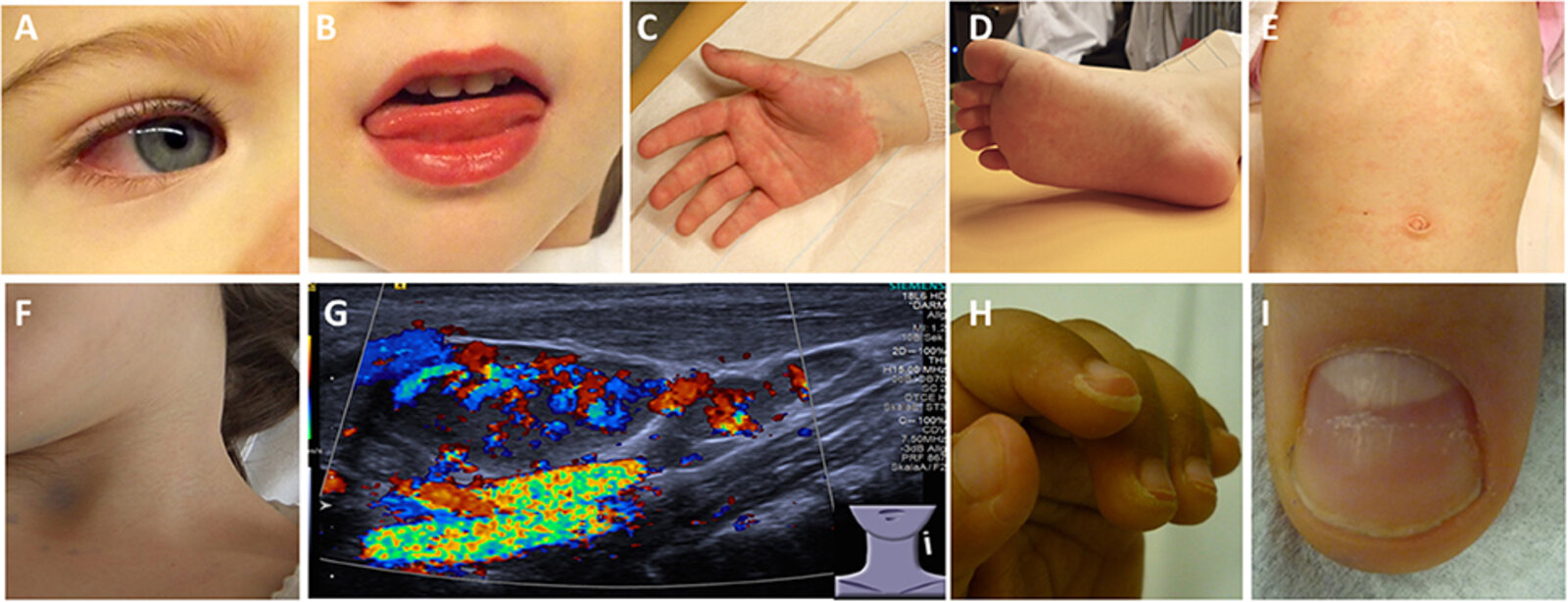
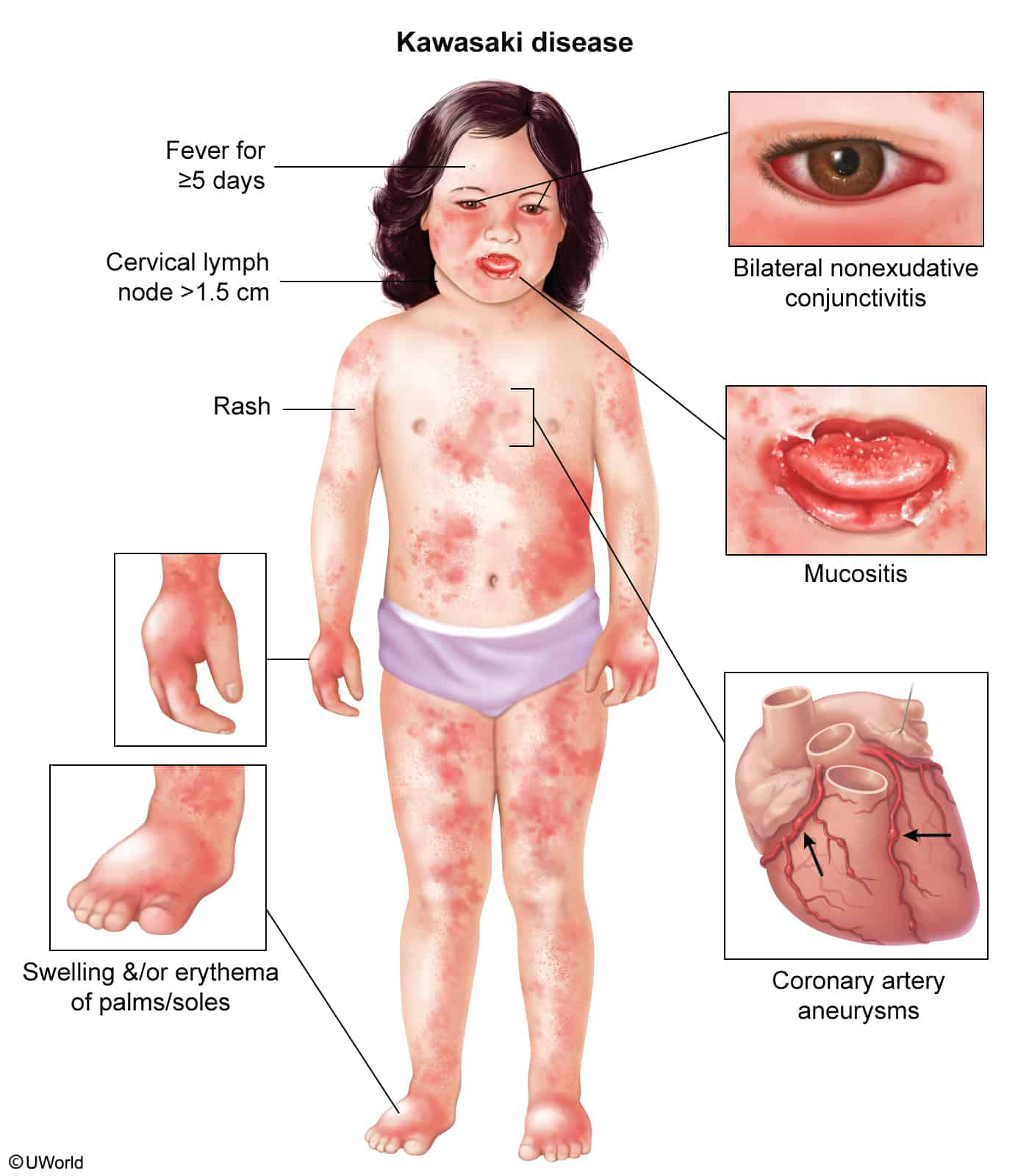
- Core Requirement: Fever ≥ 5 consecutive days (high-spiking, minimally responsive to antipyretics) PLUS at least 4 of the 5 “CRASH” criteria:
- Conjunctivitis: Bilateral, non-exudative bulbar conjunctival injection with characteristic limbic sparing; painless.
- Rash: Polymorphous rash (maculopapular, erythema multiforme-like, or scarlatiniform); accentuated in the perineal/groin region; non-vesicular.
- Adenopathy: Cervical lymphadenopathy, typically unilateral, ≥ 1.5 cm, firm, non-tender, non-fluctuant.
- Strawberry tongue / Oral changes: Erythema and cracking of lips (cheilitis), strawberry tongue, diffuse erythema of the oral and pharyngeal mucosa (no exudates or ulcers).
- Hands & feet:
- Acute phase: Painful erythema and brawny edema of palms and soles. c
- Convalescent phase (2–3 weeks): Periungual desquamation of fingers and toes.
- Associated / Incomplete Features:
- Extreme irritability (secondary to aseptic meningitis).
- GI: Vomiting, diarrhea, abdominal pain, hydrops of the gallbladder (transient RUQ mass/jaundice).
- MSK: Polyarthritis or arthralgias.
- GU: Sterile pyuria (urethritis).
Tip
Always consider Kawasaki disease in small children with a rash and high fever unresponsive to antibiotics.
Diagnostics
- Initial/Screening: Clinical criteria (Fever ≥ 5d + ≥ 4/5 criteria, or incomplete/atypical if infant + fever ≥ 7d + elevated inflammatory markers).
- Key Labs:
- ↑ ESR and ↑ CRP (markedly elevated in acute phase).
- Thrombocytosis (platelets often > 450,000–1,000,000/μL; peaks in week 2–3).
- CBC: Leukocytosis w/ neutrophilic left shift, normocytic normochromic anemia.
- UA: Sterile pyuria (WBCs present w/ negative urine culture, due to non-bacterial urethritis).
- LFTs: Mild transaminitis, hypoalbuminemia.
- Imaging: Transthoracic Echocardiogram (TTE) at baseline (diagnosis) and repeated at 6–8 weeks to evaluate for Coronary Artery Aneurysms (CAA). c
- Confirmatory/Gold Standard: Clinical diagnosis (no specific laboratory test or biopsy indicated).
- Key Labs:
Treatment
- High-dose IVIG (2 g/kg single infusion) + High-dose aspirin (80-100 mg/kg/day)
- Must be given within 10 days of fever onset to reduce CAA risk
- After fever resolves: Switch to low-dose aspirin (3-5 mg/kg/day) for antiplatelet effect; continue 6-8 weeks if no CAA, indefinitely if CAA present
- Refractory cases: Consider corticosteroids or infliximab
Complications
- Coronary artery aneurysm
- The risk of developing coronary artery aneurysm in untreated patients is 15–25%
- Peak occurrence at 2–4 weeks
- Rupture or thrombosis of the aneurysm can be lethal.
- Myocardial infarction
- Myocarditis
- Ventricular dysfunction