Benign Paroxysmal Positional Vertigo (BPPV): Most common; peak age 50–70; risk factors include head trauma, prior labyrinthitis/vestibular neuritis, prolonged bed rest.
Ménière Disease: Age 20–50; risk factors include family Hx, autoimmune disease.
Vestibular Neuritis/Labyrinthitis: Reactivation of HSV-1, preceding viral URI.
Onset: Gradual or sudden (if vascular), constant, less severe nausea.
Nystagmus: Pure vertical (upbeat/downbeat), rotatory, or direction-changing; not inhibited by visual fixation.
Associated Sxs: Severe postural instability/gait ataxia (unable to walk/stand), focal neurologic deficits (dysarthria, dysphagia, diplopia, dysmetria, Horner syndrome).
Diagnosis
Initial / Bedside Testing:
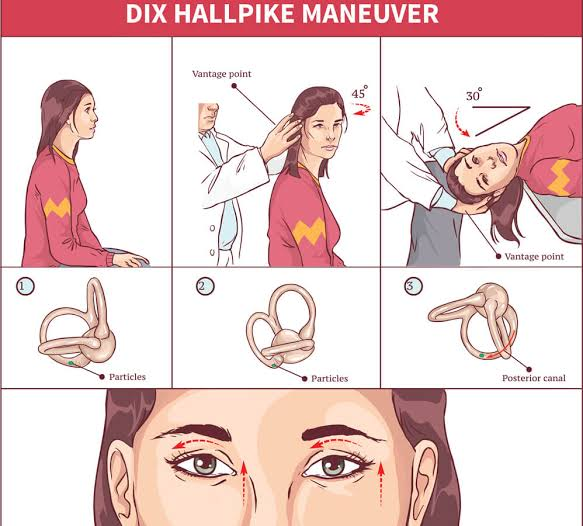
Dix-Hallpike Maneuver: Diagnostic for BPPV (canalithiasis of posterior semicircular canal).
Positive: Latency of 2–20 sec followed by transient, fatiguable torsional/upbeating nystagmus toward lower ear.
HINTS Exam (Head-Impulse, Nystagmus, Test of Skew) — differentiates central stroke from acute peripheral vestibulopathy:
Central Vertigo features: Normal Head Impulse Test (no corrective saccade), Direction-changing nystagmus, Skew deviation present (vertical ocular misalignment).
Peripheral Vertigo features: Abnormal Head Impulse Test (corrective saccade present), Unidirectional nystagmus, No skew deviation.
Key Labs: Electrolytes, glucose, CBC (routine workup to rule out systemic mimickers).
Imaging:
MRI Brain with DWI / IAC protocol: Gold standard to evaluate posterior fossa stroke, MS plaques, or CPA tumors (vestibular schwannoma).
Indicated if: Central signs/symptoms, abnormal HINTS exam, older pt with vascular risk factors, asymmetric SNHL, or lack of improvement.
Note: CT head has very poor sensitivity for posterior fossa ischemic strokes.
Audiometry:
Indicated in persistent/fluctuating hearing loss, tinnitus, or suspected Ménière disease (low-frequency SNHL).
Differential Diagnostics
BPPV:
Diff: Recurrent brief episodes (< 1 min) triggered specifically by head position changes (e.g., rolling in bed, looking up); no hearing loss or tinnitus; fatiguable nystagmus on Dix-Hallpike.
Ménière Disease (Endolymphatic Hydrops):
Diff: Triad of episodic vertigo (lasts 20 min to hours), fluctuating low-frequency SNHL, and tinnitus / aural fullness.
Vestibular Neuritis:
Diff: Acute, prolonged, continuous vertigo (lasting days), severe nausea/vomiting, gait instability, post-viral; auditory function preserved.
Labyrinthitis:
Diff: Identical presentation to vestibular neuritis (continuous vertigo for days) PLUS unilateral acute SNHL and tinnitus.
Vestibular Schwannoma (Acoustic Neuroma):
Diff: Progressive unilateral SNHL, continuous mild imbalance/tinnitus, rarely acute spinning vertigo; loss of corneal reflex (CN V involvement).
Diff: Episodic vertigo in pts with migraine history; associated with photophobia, phonophobia, visual aura (headache may or may not be present concurrently).