Epidemiology
Etiology
Pathophysiology
All patients with Meniere disease have impaired endolymph resorption that results in endolymph hydrops.
- Endolymph hydrops: accumulation of fluid in the endolymphatic sac.
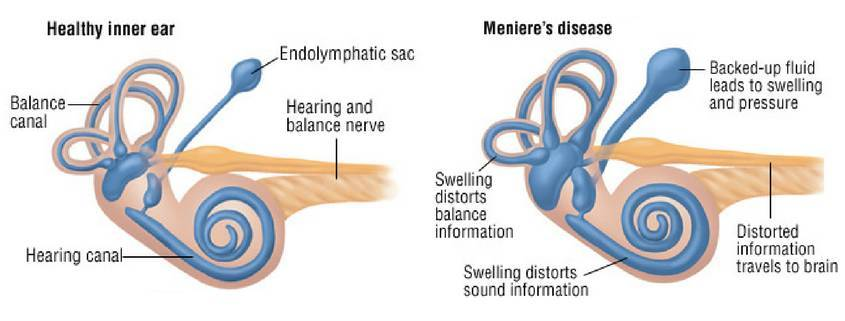
- Rupture theory: fluid accumulation in the endolymphatic sac → tear in the Reissner membrane → increased perilymphatic potassium → depolarization of the afferent acoustic nerve fibers → symptom onset
- Compression theory: impaired endolymph resorption → compression of the semicircular canals → symptom onset
Clinical features
Meniere disease characteristically manifests as recurrent episodes of acute, unilateral symptoms that last from minutes to hours.
Meniere triad
- Episodic vertigo: True rotational vertigo lasting 20 minutes to 24 hours (typically 2–4 hours).
- Tinnitus
- Asymmetric fluctuating sensorineural hearing loss (SNHL)
BPPV vs Ménière disease
- BPPV
- Recurrent, brief episodes (seconds)
- Positional, Dix-Hallpike (+)
- Only vertigo, without cochlear (e.g., hearing loss or tinnitus) or neurological symptoms.
- Ménière disease
- Recurrent episodes (minutes–hours)
- Vertigo, ear fullness/pain, unilateral hearing loss & tinnitus
Diagnostics
Treatment
- Acute Attacks (Symptomatic Relief):
- First-line:
- Vestibular suppressants: Meclizine, dimenhydrinate, or benzodiazepines (e.g., diazepam, lorazepam).
- Antiemetics: Ondansetron, prochlorperazine, or promethazine.
- First-line:
- Maintenance / Prophylaxis (Frequency & Severity Reduction):
- First-line:
- Dietary/Lifestyle modifications: Low-sodium diet (<2,000 mg/day); avoidance of caffeine, alcohol, and nicotine; stress management.
- The inner ear microenvironment is extremely sensitive to systemic shifts in osmolality, fluid balance, and microvascular perfusion.
- Diuretics: Oral Hydrochlorothiazide (HCTZ) or Triamterene/HCTZ (or acetazolamide) to decrease endolymph volume.
- Dietary/Lifestyle modifications: Low-sodium diet (<2,000 mg/day); avoidance of caffeine, alcohol, and nicotine; stress management.
- Second-line:
- Intratympanic corticosteroid injections (e.g., dexamethasone).
- Oral short-course steroids for acute hearing drops.
- First-line:
- Refractory / Debilitating Disease:
- Chemical Labyrinthectomy: Intratympanic gentamicin (ablates vestibular hair cells; carries risk of worsening SNHL).
- Surgical Interventions:
- Endolymphatic sac decompression or shunting (hearing-sparing).
- Vestibular nerve section (hearing-sparing).
- Surgical labyrinthectomy (definitive relief of vertigo; causes total, permanent ipsilateral hearing loss; reserved for patients with non-serviceable hearing).