Epidemiology
Etiology
Parkinson disease
- Idiopathic
- Contributing genetic factors include:
- α-Synuclein (SNCA)
- α-Synuclein constitutes the major component of Lewy bodies. In addition to mutations, duplication/triplication of the wild-type gene can also cause PD (due to increased production of the normal protein).
- α-Synuclein (SNCA)
Pathophysiology
Mnemonic
PArkinson’s Disease = doPAmine Down Alzheimer Disease = Acetylcholine Down
- Progressive dopaminergic neuron degeneration in the substantia nigra (part of the basal ganglia) and the locus coeruleus → dopamine deficiency at the respective receptors of the striatum with interrupted transmission to the thalamus and motor cortex → motor symptoms of PD
- Serotonin and noradrenaline depletion (in the raphe nuclei): likely cause of depressive symptoms
- Acetylcholine surplus (in the nucleus basalis of Meynert): likely cause of dyskinesia
Clinical features
- Cardinal Motor Signs (TRAP - asymmetric onset):
- T - Tremor: Resting tremor (4–6 Hz, “pill-rolling”), improves with voluntary movement.
- Often the initial presenting sign and can remain the only symptom for years (ie, tremor-dominant PD) c
- R - Rigidity: Cogwheel or lead-pipe resistance.
- A - Akinesia/Bradykinesia: Micrographia, masked facies, shuffling gait with ↓ arm swing.
- P - Postural Instability: Late feature; impaired balance, positive pull test, frequent falls.
- T - Tremor: Resting tremor (4–6 Hz, “pill-rolling”), improves with voluntary movement.
- Non-Motor Signs: REM sleep behavior disorder (RBD), anosmia, severe constipation, orthostatic hypotension, depression c , dementia.
Diagnostics
Pathology
- Lewy bodies
- Aggregates of misfolded α-synuclein and other proteins, such as ubiquitin and neurofilament protein within the neural cell bodies
- Appear histologically as intracellular hyaline eosinophilic globules
- May be found in brainstem, substantia nigra, and cortex
- Also seen in Lewy body dementia
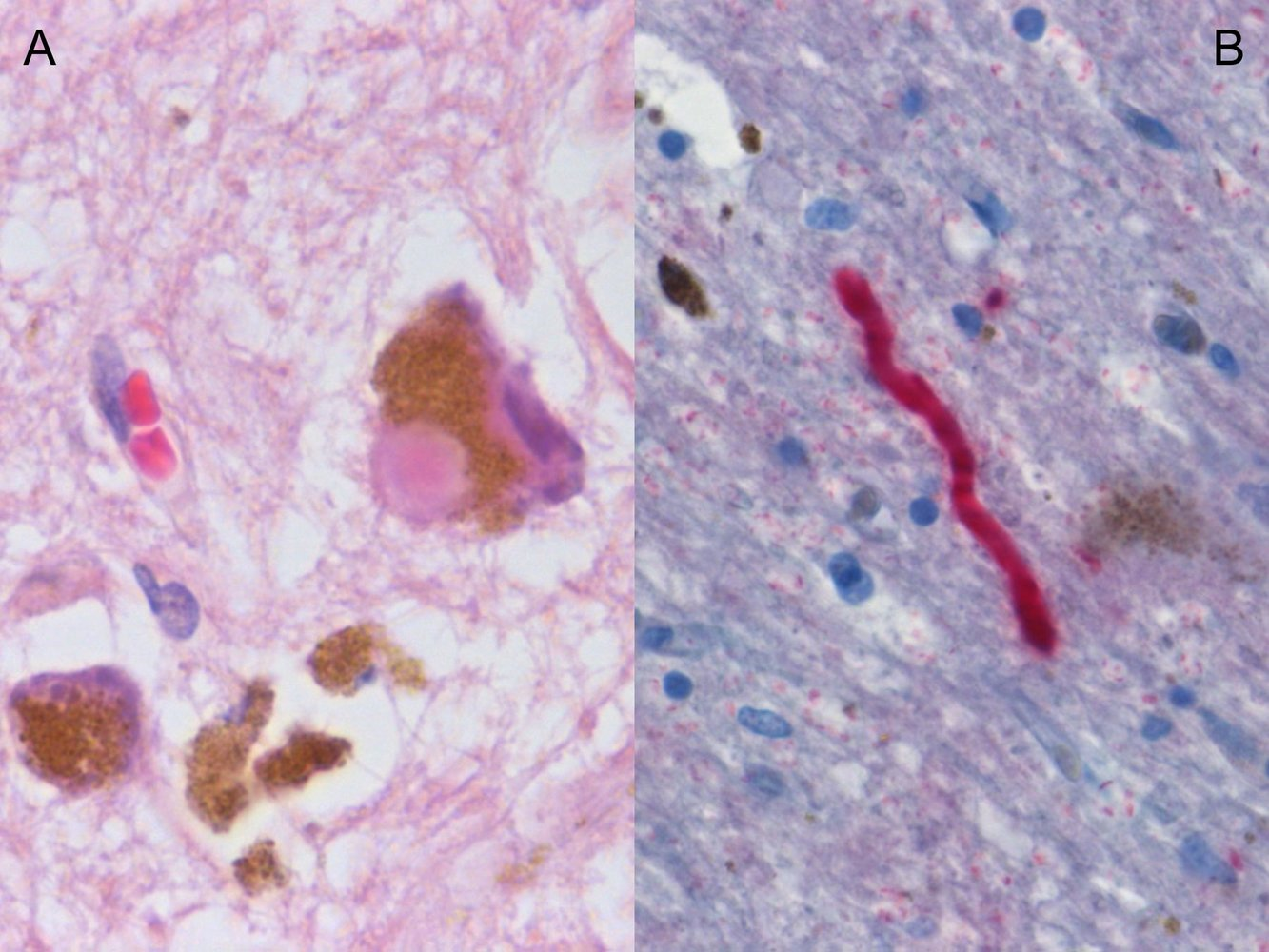
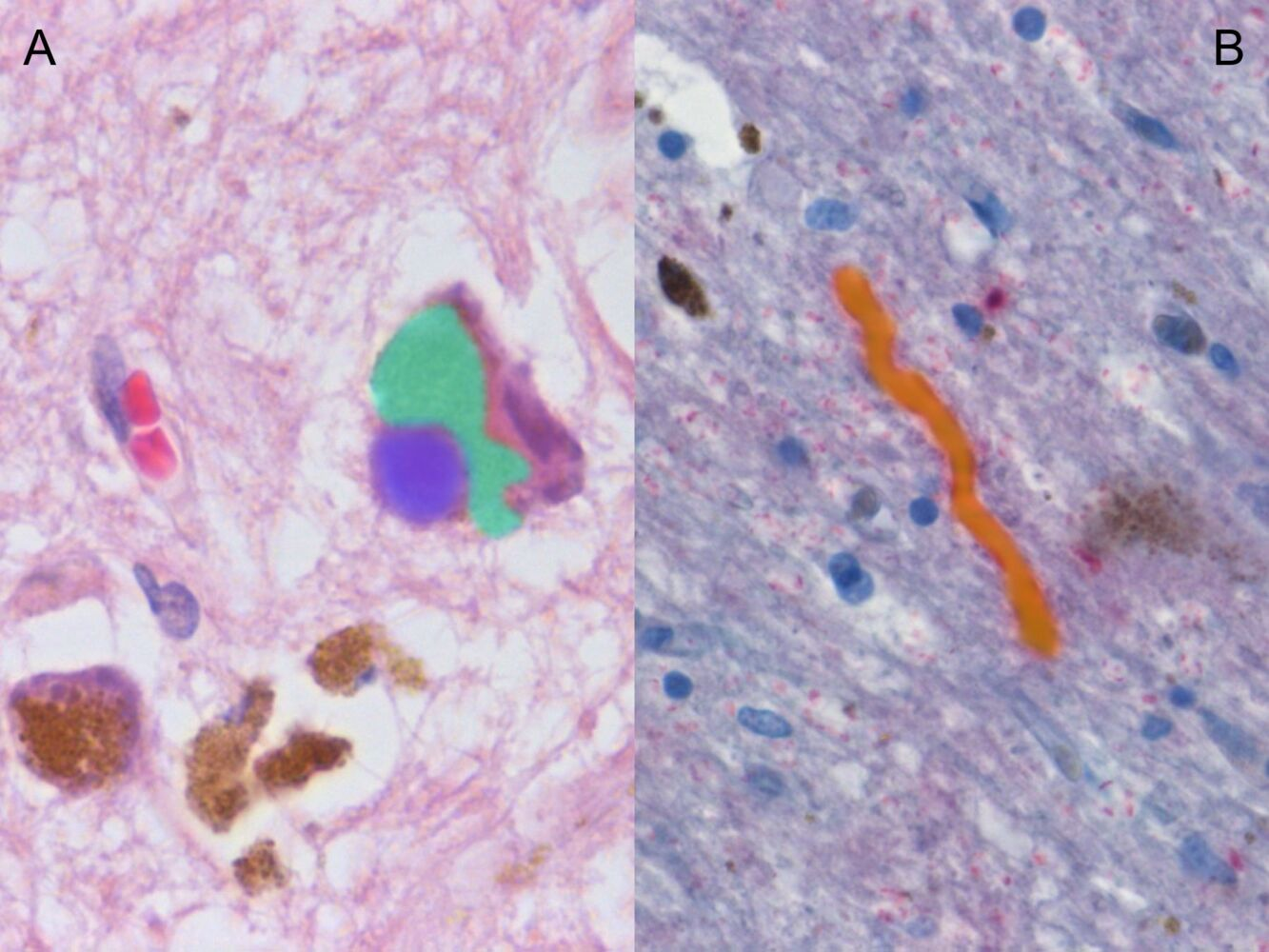
- Image A: An eosinophilic cytoplasmic inclusion (Lewy body; blue overlay) is visible inside a neuron. There is a large accumulation of neuromelanin (brown granules; green overlay).
- Image B: A neurite staining positive for α-synuclein is visible in the center of the image (Lewy neurite; yellow overlay).
Differential diagnostics
- Drug-Induced Parkinsonism (DIP):
- Diff by history of D2 receptor blockers (typical/atypical antipsychotics, Metoclopramide, Prochlorperazine); typically symmetric, rapid onset, lack of tremor; unresponsive to levodopa; Tx: discontinue offending agent, switch to low-D2 drug (e.g., Quetiapine), or use Benztropine. c
Treatment
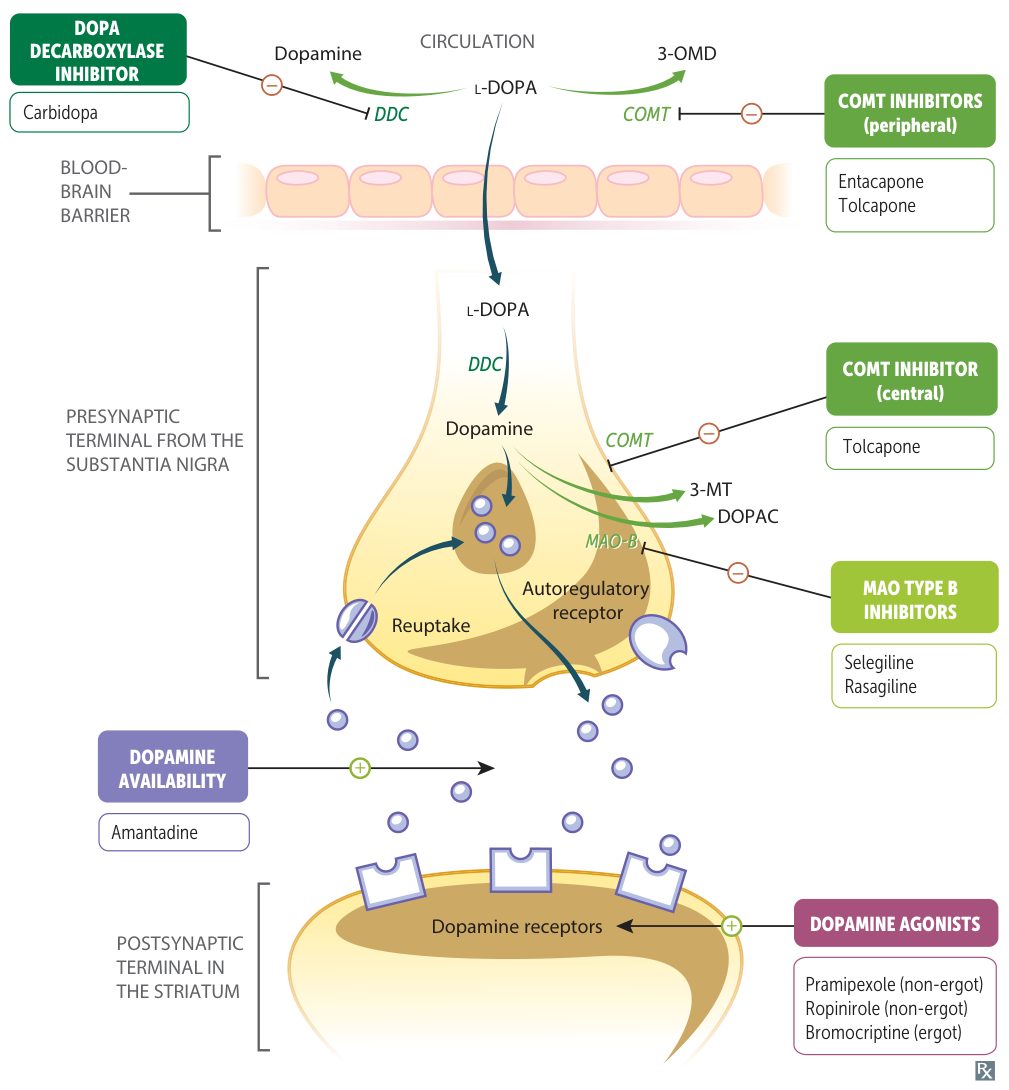
- Initial Pharmacotherapy (Motor Symptoms):
- Age yo OR Severe functional impairment:
- First-line: Carbidopa-Levodopa (most potent agent).
- Mechanism: Levodopa crosses blood-brain barrier (BBB) and converts to DA; Carbidopa is a peripheral DOPA decarboxylase inhibitor that prevents peripheral conversion (reduces nausea, vomiting, orthostasis, and cardiac arrhythmias).
- Age yo AND Mild/Moderate symptoms:
- First-line: Dopamine Agonists (Pramipexole, Ropinirole) to delay long-term motor complications of levodopa.
- Side effects: Excessive daytime sleepiness, impulse control disorders (pathological gambling, hypersexuality, compulsive shopping).
- Younger patients with Tremor-predominant disease:
- Anticholinergics: Trihexyphenidyl or Benztropine.
- Caution: Strictly avoid in elderly or cognitively impaired pts due to risk of delirium, urinary retention, and glaucoma.
- Mild, early symptoms:
- MAO-B Inhibitors: Selegiline, Rasagiline (inhibits central DA breakdown).
- Age yo OR Severe functional impairment:
- Management of Treatment Complications:
- “Wearing-off” Phenomenon / Motor Fluctuations:
- Add COMT inhibitors (Entacapone, Tolcapone) to prolong Levodopa half-life.
- Add long-acting DA agonists or MAO-B inhibitors; fractionate Levodopa dosing (smaller, more frequent doses).
- Peak-Dose Dyskinesia (choreiform movements):
- Reduce individual Levodopa doses.
- Add Amantadine (NMDA receptor antagonist; watch for livedo reticularis and peripheral edema).
- “Wearing-off” Phenomenon / Motor Fluctuations:
- Management of Non-Motor Complications:
- Psychosis / Visual Hallucinations:
- First step: Reduce antiparkinsonian medications in step-wise fashion (anticholinergics amantadine MAO-B inhibitors DA agonists levodopa).
- Second step (if persistent): Pimavanserin (5-HT2A inverse agonist; no D2 blockade) or low-dose Quetiapine / Clozapine. c
- PD Dementia (PDD):
- Cholinesterase inhibitors (Rivastigmine, Donepezil).
- REM Sleep Behavior Disorder (RBD):
- Melatonin (first-line) or low-dose Clonazepam.
- Orthostatic Hypotension:
- Conservative measures (compression stockings, hydration); if refractory: Fludrocortisone, Midodrine, or Droxidopa.
- Psychosis / Visual Hallucinations:
- Refractory / Advanced Disease:
- Deep Brain Stimulation (DBS):
- Targets: Subthalamic Nucleus (STN) or Globus Pallidus internus (GPi).
- Indication: Severe motor fluctuations or medication-induced dyskinesias refractory to medical optimization in pts without cognitive impairment/dementia.
- Continuous Levodopa-Carbidopa Enteral Suspension (LCIG): Via percutaneous endoscopic gastrojejunostomy (PEG-J).
- Deep Brain Stimulation (DBS):
Tip
- Ergot dopamine agonists (cabergoline and bromocriptine) are not recommended in Parkinson disease or restless leg syndrome, but are first-line treatment in Prolactinoma and Hyperprolactinemia.
- Primarily due to a higher risk of serious side effects, specifically fibrotic reactions affecting the heart valves and lungs.
- The doses used for Prolactinoma and Hyperprolactinemia are generally lower than for Parkinson’s, leading to a lower risk of fibrotic side effects, making the benefit-risk balance more favorable.
Deep brain stimulation (DBS)
- In PD, the lack of dopamine leads to overactivity in the indirect pathway. Key players here are the STN and the GPi.
- Indications
- Severe motor symptoms or refractory tremor
- Decrease in dosage of medication because of adverse effects
- Procedure
- Stereotactic implantation of stimulating electrode(s) targeting the subthalamic nucleus or internal globus pallidus
- Controlled remotely
Complications
- Aspiration Pneumonia: Leading cause of death (oropharyngeal dysphagia).
- Major Depressive Disorder (MDD): Affects up to 40–50% of pts; often underdiagnosed due to symptom overlap with psychomotor retardation and masked facies; Tx: SSRIs, SNRIs, or dopamine agonists (Pramipexole). c
- Traumatic Falls: Hip fractures and subdural hematomas secondary to postural instability.
- Parkinsonism-Hyperpyrexia Syndrome: Life-threatening condition caused by abrupt cessation of dopaminergic therapy (mimics NMS).
Parkinson-plus syndromes
Epidemiology & Risk Factors
- Age > 50 yo; rapid progression and short survival vs idiopathic PD.
- Pathologic classification:
- -Synucleinopathies: Multiple System Atrophy (MSA), Dementia with Lewy Bodies (DLB).
- Tauopathies: Progressive Supranuclear Palsy (PSP), Corticobasal Degeneration (CBD).
Clinical Features
- Hallmark Shared Feature: Parkinsonism w/ poor or absent response to L-DOPA and absence of classic resting tremor.
- Multiple System Atrophy (MSA):
- Autonomic failure: Severe orthostatic hypotension, urinary incontinence/retention. c
- Motor subtypes: Cerebellar ataxia (MSA-C) or symmetric parkinsonism (MSA-P).
- Key sign: Laryngeal stridor (vocal cord paresis).
- Progressive Supranuclear Palsy (PSP):
- Vertical supranuclear gaze palsy (impaired downward > upward voluntary saccades).
- Early unexplained backward falls (within 1–2 yrs of onset).
- Axial rigidity > limb rigidity; “surprised/staring” facies.
- Corticobasal Degeneration (CBD):
- Marked asymmetry w/ limb dystonia and focal myoclonus.
- Ideomotor apraxia and cortical sensory loss.
- Alien limb phenomenon.
- Dementia with Lewy Bodies (DLB):
- Dementia 1 yr of motor onset (1-year rule).
- Recurrent vivid visual hallucinations + episodic impairment cognition (Fluctuations). c2
- Extreme neuroleptic sensitivity (lethal rigidity/catatonia w/ DA antagonists).
Diagnosis
- Initial / Clinical: Clinical diagnosis based on red flags (early falls, dysautonomia, gaze palsy, apraxia) and negative L-DOPA challenge.
- Key Labs: TSH, B12, RPR (exclude reversible mimics).
- Brain MRI (Key Findings):
- MSA: “Hot cross bun” sign (cruciform T2 pontine hyperintensity).
- PSP: “Hummingbird / Penguin” sign (midbrain tegmentum atrophy w/ preserved pons).
- CBD: Asymmetric frontoparietal atrophy.
- DLB: Generalized cortical atrophy w/ relative hippocampal preservation.
- Confirmatory / Gold Standard: Post-mortem neuropathology.
Differential Diagnostics
- Idiopathic PD: Diff by robust L-DOPA response, 4–6 Hz resting tremor, unilateral onset, dementia late (>1 yr).
- NPH: Diff by classic triad (“wet, wacky, wobbly”), ventriculomegaly on MRI, gait improvement post-lumbar puncture.
- Vascular Parkinsonism: Diff by “lower-body” predominance (legs > arms), subcortical white matter infarcts on MRI.
- Drug-Induced Parkinsonism: Diff by DA antagonist exposure (neuroleptics, metoclopramide), symmetric presentation, reversibility.
Management
- Symptomatic Pharmacotherapy:
- L-DOPA trial: High-dose trial; taper/stop if ineffective.
- MSA Dysautonomia: Waist-high compression stockings Fludrocortisone, Midodrine, or Droxidopa.
- DLB Cognition/Psychosis: Cholinesterase inhibitors (Donepezil); low-dose Quetiapine or Pimavanserin (avoid typical neuroleptics).
- RBD: Melatonin or low-dose Clonazepam.
- Supportive:
- PT/OT (weighted walkers for PSP falls).
- Early swallow eval PEG tube placement for high aspiration risk.
- Surgical / Refractory:
- DBS: Contraindicated / Ineffective.
- Tracheostomy / CPAP: For severe nocturnal stridor in MSA.