Epidemiology
Etiology
- Prolactin-secreting pituitary adenoma (prolactinomas)
- Damage to the hypothalamus and/or infundibular stalk
- They compress the infundibular stalk and result in an interruption of the tonic inhibitory effect of hypothalamic dopamine on the secretion of prolactin
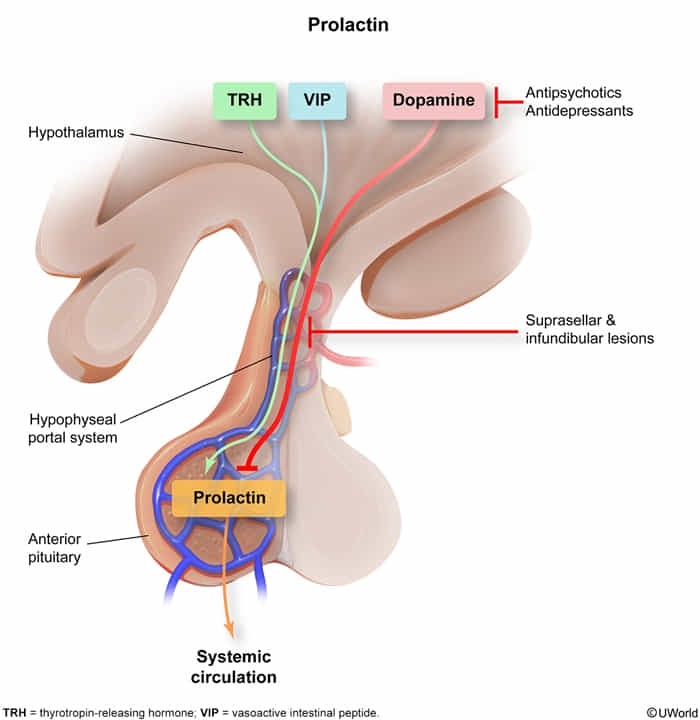
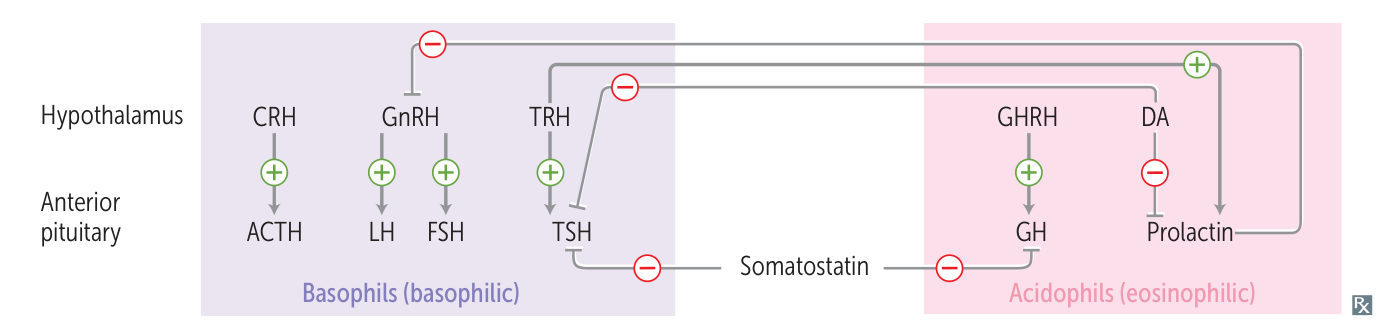
- They compress the infundibular stalk and result in an interruption of the tonic inhibitory effect of hypothalamic dopamine on the secretion of prolactin
- Severe primary hypothyroidism: ↓ T3/T4 → ↑ TRH → ↑ prolactin c
- Drugs
- Dopamine antagonists:
- Antiemetics: metoclopramide, domperidone
- Antipsychotics (e.g., haloperidol, risperidone)
- Certain tricyclic antidepressants: e.g., clomipramine
- Dopamine antagonists:
- Physiological causes: stress, pregnancy, lactation, nipple stimulation, crying baby, sexual orgasm, sleep, exercise
Tip
The dopamine-prolactin pathway (tuberoinfundibular pathway) is unique among other pathways, as dopamine inhibits prolactin.
Pathophysiology
- ↑ Prolactin → galactorrhea
- ↑ Prolactin → suppression of GnRH → ↓ LH, ↓ FSH → ↓ estrogen, ↓ testosterone → hypogonadotropic hypogonadism
Clinical features
Male
- ↓ Testosterone
- Loss of libido, erectile dysfunction, infertility
- Gynecomastia
- Reduced facial and body hair
- Osteoporosis
Tip
Patients with hyperprolactinemia due to a pituitary adenoma may also present with bitemporal hemianopsia and headache.
Female
- Premenopausal women: oligomenorrhea/amenorrhea, infertility, galactorrhea, hot flashes, decreased bone density
- Postmenopausal women: mass-effect symptoms (headache, visual field defects)
Diagnostics
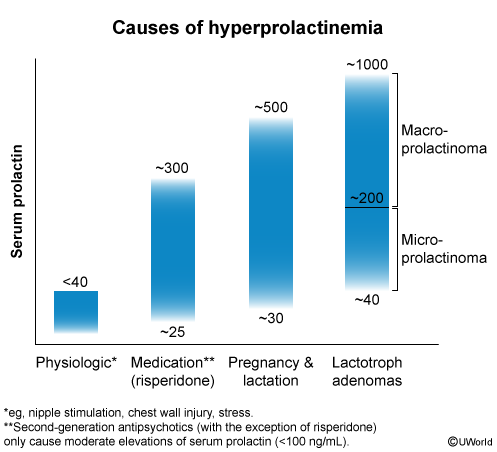
- Initial/Screening: Serum prolactin level (>20 ng/mL is elevated).
- PRL >200 ng/mL strongly correlates with prolactinoma (proportional to tumor size).
- Mild elevation (20–150 ng/mL): Medications, primary hypothyroidism, or non-functioning adenoma (stalk effect). c
- Key Labs:
- Serum TSH and Free T4: Rule out primary hypothyroidism.
- Serum β-hCG: Rule out pregnancy in females of childbearing potential.
- BUN/Cr and LFTs: Rule out renal failure and hepatic cirrhosis.
- Serum LH, FSH, and testosterone/estradiol: Evaluate hypogonadism.
- Imaging:
- Brain/Pituitary MRI with contrast: Indicated after non-pituitary causes are excluded or if mass-effect symptoms/PRL >100 ng/mL are present.
- Diagnostic Pitfalls:
- Hook Effect: Extremely high PRL saturates assay antibodies → false low reading. Resolved by diluting serum sample.
- Macroprolactinemia: High PRL due to benign PRL-IgG complexes; inactive biologically, requires PEG precipitation for differentiation.
Treatment
- Ergot dopamine agonists (treatment of choice): bromocriptine, cabergoline
- Non-ergot dopamine agonists (Ropinirole, Pramipexole, Apomorphine, Rotigotine) are not used here