Definition
- A form of chronic communicating hydrocephalus that primarily affects adults > 60 years of age
- Characterized by a distinct clinical triad (gait apraxia, dementia, and urinary incontinence) and normal or only mildly elevated ICP
Etiology
Idiopathic (iNPH, most common in adults > 60 years of age)
Pathophysiology
- ↓ CSF absorption → CSF accumulation → enlargement of the ventricle → stretching the descending cortical fibers (corona radiata) and compression of cortex and basal ganglia
- ICP: normal or only mildly elevated because ventricular dilation compensates for the slow accumulation of CSF
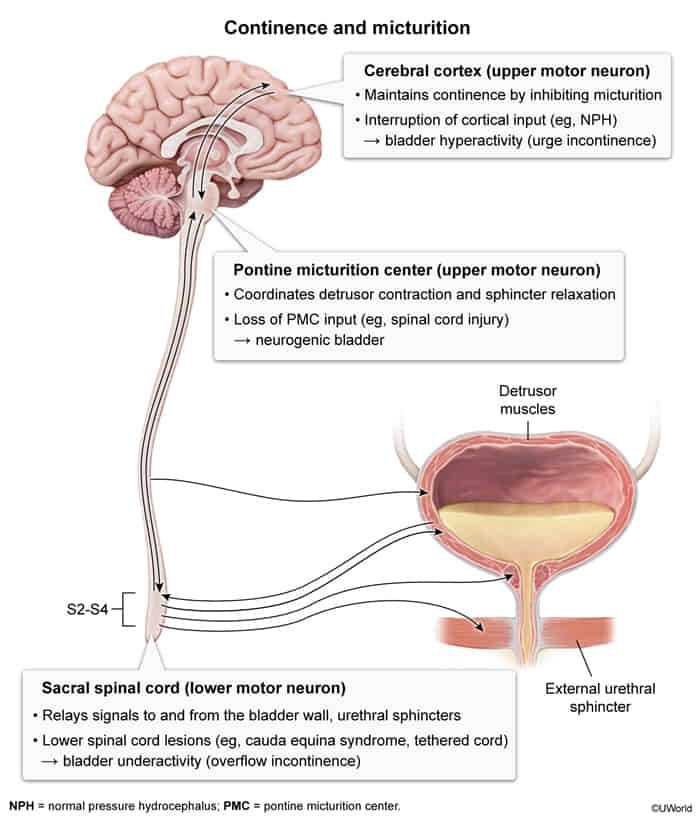
Clinical features
A classic triad of:
- Gait abnormalities: frequent falls, broad-based gait with short shuffling steps (gait apraxia, also known as magnetic gait)
- Dementia: short attention span, loss of motivation, disturbances of spatial orientation
- Urinary incontinence
Tip
Normal pressure hydrocephalus does not manifest with signs of increased ICP (e.g., headache, papilledema).
Mnemonic
Patients present with the classic triad of the 3 Ws: Wet (urinary incontinence), Wacky (dementia), and Wobbly (gait apraxia).
Diagnostics
- MRI
- Ventriculomegaly without to sulcal enlargement
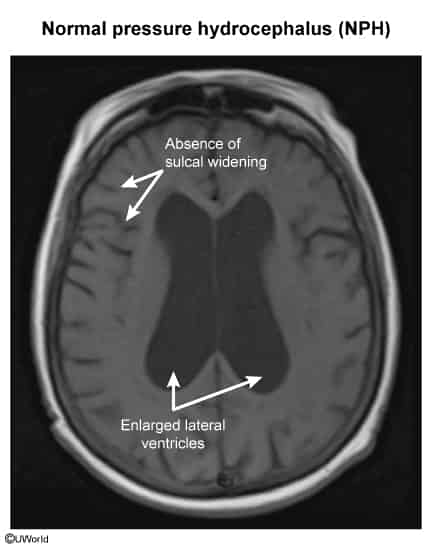
- Ventriculomegaly without to sulcal enlargement
Treatment
- Definitive / First-line: Surgical CSF Diversion (Ventriculoperitoneal [VP] Shunt).
- Indicated in pts with classic clinical triad, supportive MRI, and positive response to high-volume CSF tap test.
- Gait improves the most; dementia is least likely to fully reverse.
- Second-line / Alternative:
- Ventriculoatrial (VA) or Ventriculopleural Shunt: Used if VP shunt is contraindicated (e.g., extensive abdominal adhesions, recurrent peritonitis).
- Refractory / Non-Surgical Candidates:
- Physical therapy, fall prevention measures, timed voiding/urinary catheterization.
- Note: Serial therapeutic LPs are not recommended long-term due to infection risk and transient relief.
- Acetazolamide has no effect because its mechanism is to decrease CSF production, whereas the problem in NPH is impaired CSF absorption. c