Epidemiology
Etiology
Causes
- Hormonal factors
- ↑ Androgens during puberty → increased production of sebum by sebaceous glands
- In women: menstrual cycle
- Acne usually worsens the week before menstruation begins. The increase of progesterone can make the skin secrete more oil.
- Follicular hyperkeratosis: Higher keratinocyte activity and decreased keratinocyte shedding in pilosebaceous units leads to the formation of comedones.
- Bacterial colonization with Cutibacterium acnes (formerly known as Propionibacterium acnes) → inflammatory reactions with formation of papules, nodules, pustules, and/or cysts
Risk factors
- Increased circulating androgens (eg, puberty, polycystic ovary syndrome)
- Mechanical trauma/friction (eg, excessive scrubbing, tight clothing)
- Comedogenic oil-based skin & hair products
Pathophysiology
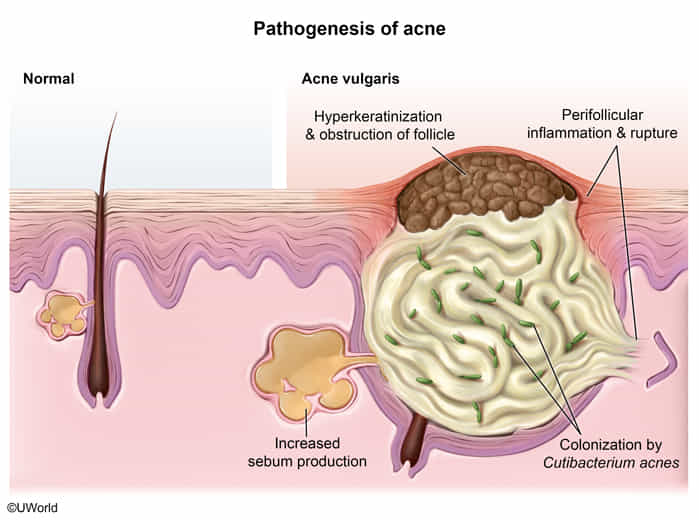
- Hyperkeratinization due to abnormal epithelial growth and differentiation of corneocytes leads to keratin plug formation in the pilosebaceous follicles. These blocked follicles are referred to as comedones (ie, whiteheads and blackheads).
- In response to androgen stimulation (eg, during pubertal adrenarche), sebaceous glands enlarge (not involute) and increase production of sebum, a lipid-rich substance that facilitates obstruction of pilosebaceous follicles (Choice A).
- Cutibacterium acnes, an anaerobic bacteria that relies on sebum as a nutrient source, proliferates in occluded follicles, triggering an inflammatory response that results in the red papules and pustules characteristic of nodulocystic acne.
Clinical features
- Commonly found in areas with sebaceous glands (predilection sites: face, shoulders, upper chest, and back)
- Noninflammatory acne: comedonal acne
- Open comedones (“blackheads”): dark, open portion of sebaceous material
- Closed comedones (“whiteheads”): closed small round lesions that contain whitish material (sebum and shed keratin)
- Inflammatory acne: Affected areas are red and can be painful.
- Papular/pustular acne: papules, pustules that arise from comedones
- Nodulocystic acne (> 5 mm in diameter)
- Commonly affects the back and neck
Diagnostics
Treatment
-
General Principles:
- All regimens take 8–12 weeks to assess true efficacy; maintain adherence.
- Avoid monotherapy with topical or oral antibiotics due to high risk of bacterial resistance; always combine with benzoyl peroxide (BP).
-
Stepwise Treatment Algorithm:
- Mild / Comedonal Acne:
- First-line: Topical retinoids (tretinoin, adapalene, tazarotene).
- Alternative/Adjunct: Benzoyl peroxide (BP), azelaic acid, or salicylic acid.
- Mild-to-Moderate Inflammatory (Papulopustular) Acne:
- First-line: Topical retinoid + Benzoyl peroxide +/- topical antibiotic (e.g., clindamycin or erythromycin). c
- Moderate-to-Severe / Refractory Inflammatory Acne:
- First-line: Topical retinoid + BP + Oral antibiotic (Doxycycline or Minocycline).
- Limit oral Abx course to 3–4 months to mitigate resistance.
- Hormonal therapy (females only): Combined oral contraceptives (COCs) or spironolactone (aldosterone/androgen receptor antagonist).
- First-line: Topical retinoid + BP + Oral antibiotic (Doxycycline or Minocycline).
- Severe Nodulocystic or Refractory Acne:
- First-line: Oral isotretinoin.
- Requirements prior to and during isotretinoin:
- iPLEDGE Program: Strict teratogenicity mitigation.
- Two negative pregnancy tests prior to initiating tx.
- Two forms of contraception used starting 1 month before, during, and 1 month after tx.
- Monthly pregnancy tests, monitoring of LFTs and serum lipids (risk of severe hypertriglyceridemia and hepatotoxicity).
- Mild / Comedonal Acne:
Medications
- Topical Retinoids (Tretinoin)
- MOA: Vitamin A derivatives. Normalize follicular keratinization, preventing microcomedone formation (comedolytic).
- Use: Comedonal acne.
- Key Pearl: Causes photosensitivity.
- Benzoyl Peroxide
- MOA: Antimicrobial.
- Use: Inflammatory acne. Prevents antibiotic resistance when combined with clindamycin.
- Key Pearl: Bleaches fabric/hair.
- Oral Tetracyclines (Doxycycline)
- MOA: Antimicrobial & anti-inflammatory.
- Use: Moderate-to-severe acne.
- Key Pearls: SEs are photosensitivity, pill esophagitis. C/I in pregnancy & kids <8 (tooth discoloration).
- Oral Retinoid (Isotretinoin)
- MOA: Targets all 4 pathogenic factors: ↓ sebum production, normalizes keratinization, ↓ C. acnes colonization, and ↓ inflammation.
- Use: Severe, nodulocystic acne.
- Key Pearls: Highly teratogenic (iPLEDGE program required). Most common SE is cheilitis (dry lips). Also causes ↑ TGs.
- Hormonal (OCPs, Spironolactone)
- MOA: Anti-androgenic.
- Use: Acne in adult females.
- Key Pearls: Spironolactone can cause hyperkalemia.