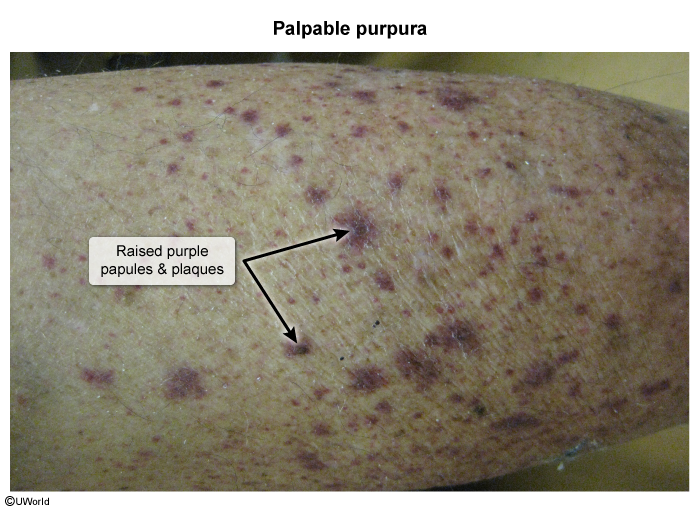
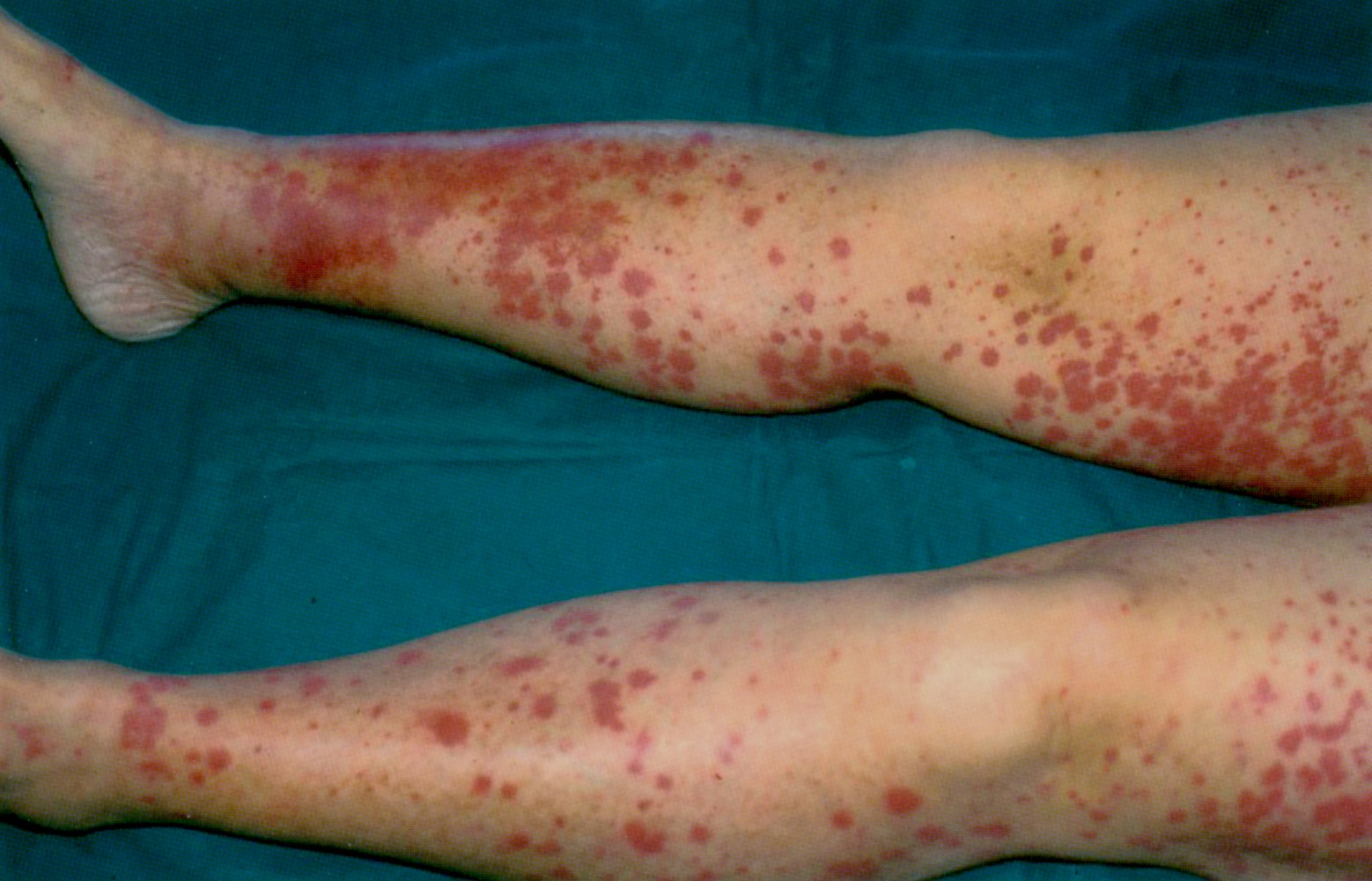
Cryoglobulins: a group of immunoglobulins (IgM, IgG, IgA) that precipitate in vitro at cold (< 37°C).
Cryoglobulinemia: a condition characterized by elevated serum cryoglobulin concentration
Cryoglobulinemic vasculitis: a vasculitis caused by the deposition of temperature-dependent IgG and IgM immunoglobulins/immune complexes (i.e., cryoglobulins), with subsequent inflammation of surrounding tissue
Etiology
Strong association with Hepatitis C Virus (HCV) (>90% of mixed cryoglobulinemia cases).
Complement levels: Characteristically extremely low C4 (C3 is often normal or only mildly decreased). c
High-Yield Lab Note: Blood sample must be kept warm at 37°C during collection, transport, and processing to prevent premature cryoglobulin precipitation (which causes false-negative results).
Confirmatory/Gold Standard: Biopsy of involved organ.
Skin: Leukocytoclastic vasculitis.
Kidney: MPGN with subendothelial immune complex deposits (“wire loops”) and intraluminal cryoglobulin thrombi.
Secondary Screening: HCV RNA, HBV serologies, HIV testing, SPEP/UPEP to rule out underlying monoclonal gammopathies.
Differential Diagnostics
IgA Vasculitis: Pediatric focus, normal complements, IgA deposits, prominent GI colic.
Polyarteritis Nodosa (PAN): Associated with HBV, medium-vessel microaneurysms, spares glomeruli, normal complements.
Granulomatosis with Polyangiitis (GPA): Sinus/cavitary lung lesions, c-ANCA (+), normal complements.
SLE: ANA/anti-dsDNA (+), both C3 and C4 profoundly low, malar rash.