Epidemiology & Risk Factors
- Contaminated well water (most common chronic source).
- Industrial exposure: Mining, smelting, pesticides, wood preservation.
- Medical: Arsenic trioxide (APL / AML M3 treatment).
Clinical Features
- Acute:
- Garlic breath odor, severe abdominal pain, watery/rice-water diarrhea.
- Hypotension/shock, QTc prolongation (risk of TdP), encephalopathy, seizures.
- Chronic:
- Dermatologic: Palmar/plantar hyperkeratosis, mottled “raindrop” hyperpigmentation, Mees lines (transverse nail bands). c
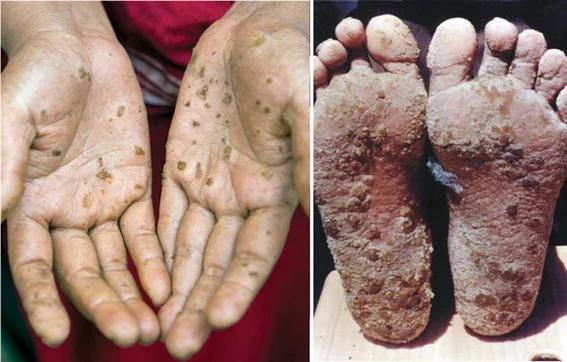
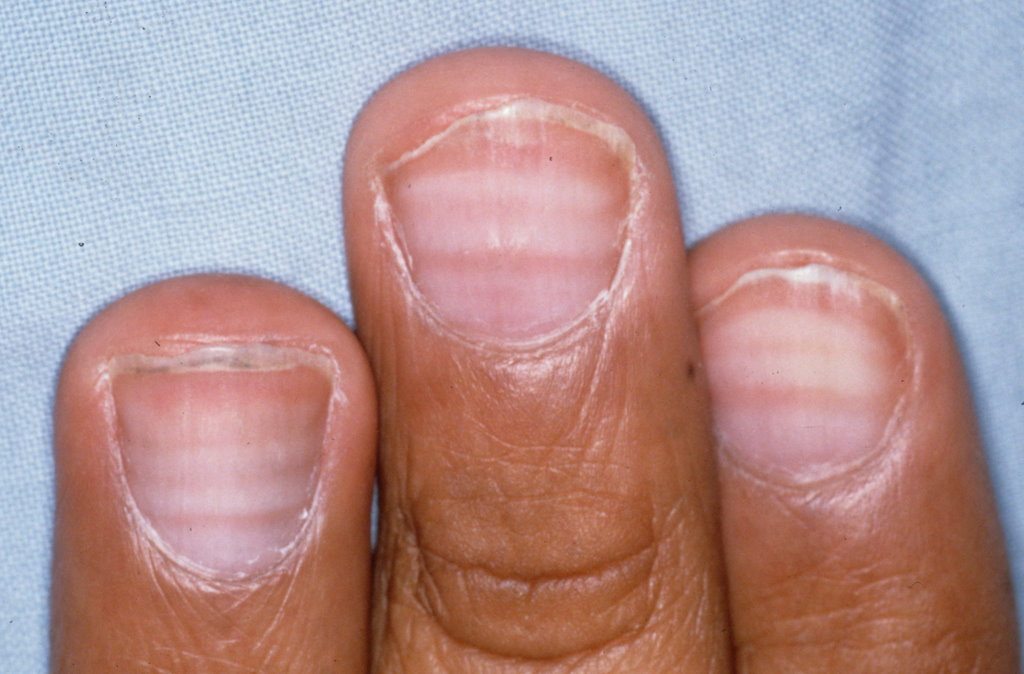
- Neurologic: Painful, symmetric, stocking-glove sensorimotor polyneuropathy.
- Hematologic: Pancytopenia.
Diagnosis
- Initial:
- ECG: Screen for QTc prolongation and ventricular arrhythmias.
- CBC: Pancytopenia, basophilic stippling.
- Confirmatory / Gold Standard:
- 24-hour urine arsenic level (must abstain from seafood > 48 hrs prior).
- Note: Blood arsenic is unreliable due to rapid clearance (< 4 hrs).
Differential Diagnostics
- Lead Toxicity: Motor-predominant neuropathy (wrist/foot drop), Burton lines (gingiva), microcytic anemia; lacks hyperkeratosis.
- Mercury Toxicity: Erethism (behavior changes/neuropsych), intention tremors, acrodynia (painful, erythematous palms/soles).
- Guillain-Barré Syndrome (GBS): Ascending motor paralysis with minimal sensory loss; elevated CSF protein with normal WBC count.
- Thallium Toxicity: Painful peripheral neuropathy + severe alopecia (hallmark).
Management
- First-line (Resuscitation & Chelation):
- Aggressive IVF + cardiac monitoring (treat TdP with IV magnesium).
- Dimercaprol (BAL): First-line parenteral chelator for acute/severe poisoning or encephalopathy.
- Note: Activated charcoal does NOT bind arsenic.
- Second-line / Transition:
- Succimer (DMSA): Oral chelator; used for mild symptoms or following clinical improvement on BAL.
- Refractory / Renal Failure:
- Hemodialysis: Clears chelated complexes if acute renal failure occurs.
- Chronic Exposure:
- Remove source of exposure; supportive care (chelation ineffective for fixed neuro deficits).
Complications
- Arrhythmias: Torsades de pointes (TdP), V-fib, sudden cardiac arrest.
- Renal: Acute tubular necrosis (ATN).
- Permanent Deficits: Irreversible sensorimotor axonal neuropathy.
- Malignancies (Chronic): Squamous cell carcinoma (SCC) of skin, hepatic angiosarcoma, lung and bladder cancers.