- Definition: an inherited, diffuse bone disease that results in sclerotic thickening of the skeleton on radiological examination
- Etiology: infancy or early childhood
- Pathophysiology
- Failure of normal osteoclast bone resorption.
- Result: Thickened, dense bones that are prone to fracture (“Marble Bone Disease”).
- Mechanism: Commonly due to Carbonic Anhydrase II mutation → inability to generate acidic environment needed to dissolve bone matrix.
- Loss of acidic microenvironment prevents hydroxyapatite breakdown.
- Clinical features
- Recurring pathological fractures (osteopetrotic bone tissue is very dense but brittle)
- Cranial nerve disorders (e.g., palsies) due to hyperostosis and stenosis of the cranial nerve foramina
- Pancytopenia due to reduced marrow space
- Hepatosplenomegaly due to extramedullary hematopoiesis
- Diagnostics
- X-ray: symmetrical, homogenous, sclerotic thickening of both cortical and trabecular bone (stone bone)
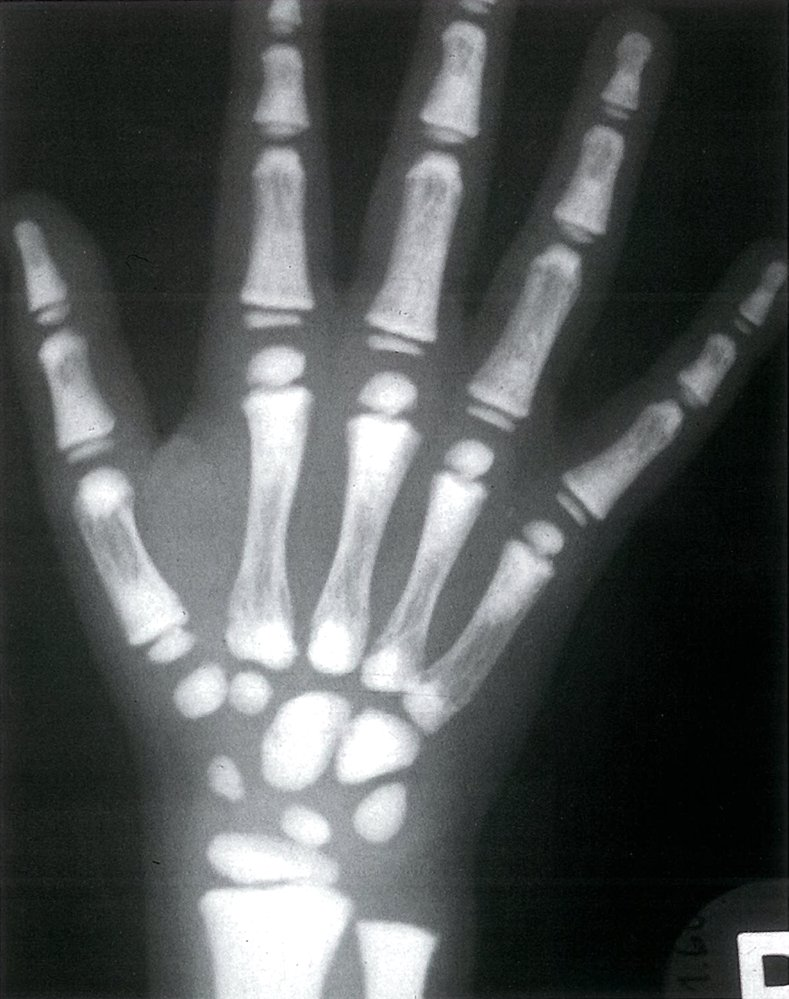
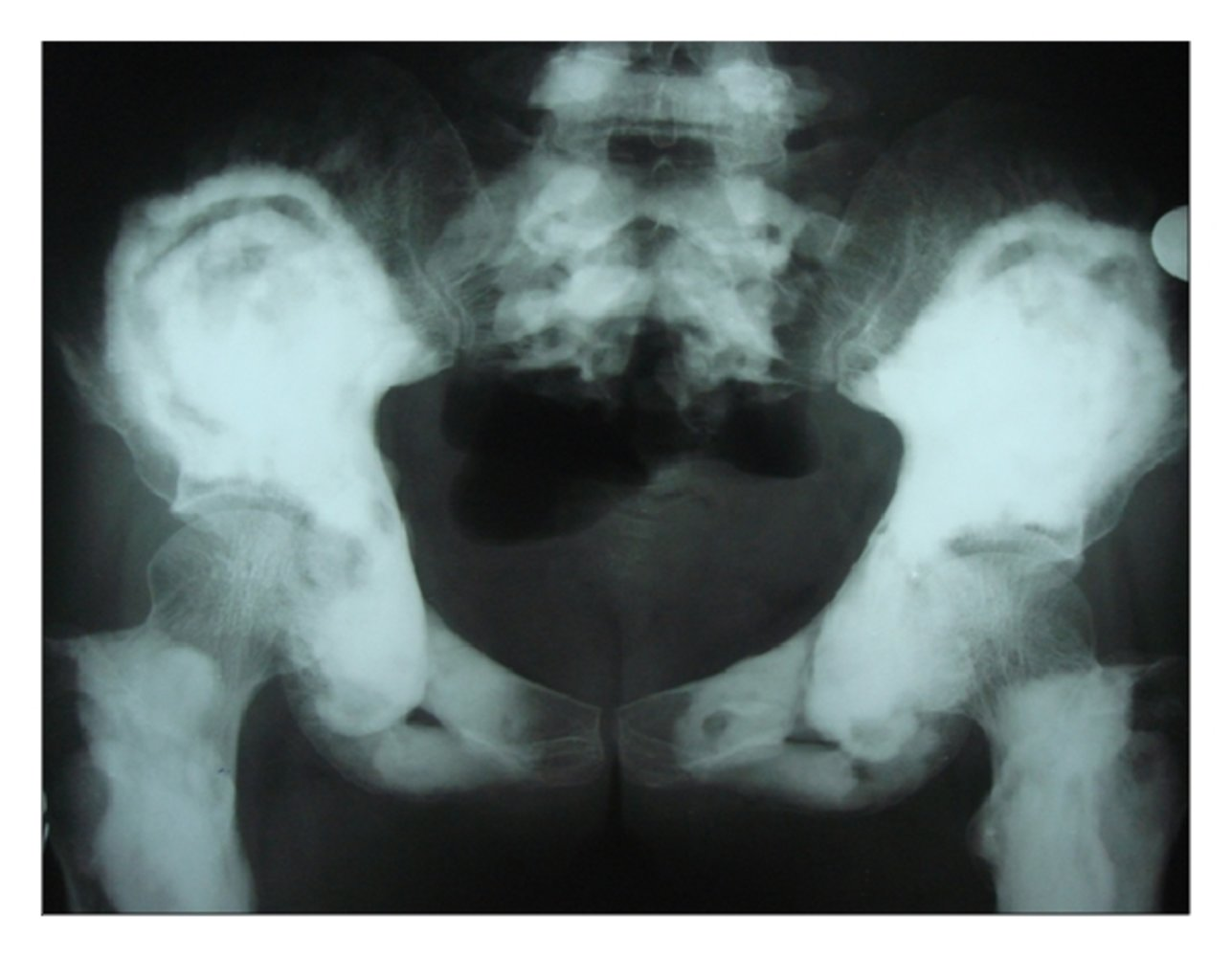
- Calcium levels may be normal or low (especially in severe form, e.g., type I osteopetrosis).
- Therapy
- Bone marrow transplant (potentially curative treatment): Functional osteoclasts may develop from unimpaired monocytes deriving from transplanted stem cells.