Umbilical cord descends below the fetal presenting part after membrane rupture.
RFs:Breech presentation, transverse lie, polyhydramnios, prematurity, long cord.
Clinical Features
History:
Sudden onset of fetal heart rate (FHR) abnormalities immediately following spontaneous rupture of membranes (SROM) or AROM.
Physical Exam:
Overt Prolapse: Direct visualization or palpation of a soft, pulsatile cord loop inside the vagina or protruding from the introitus.
Occult Prolapse: Cord compressed alongside the presenting part without herniating through the cervix (cord not directly palpable; identified by FHR patterns).
Fetal Heart Rate (FHR) Tracing:
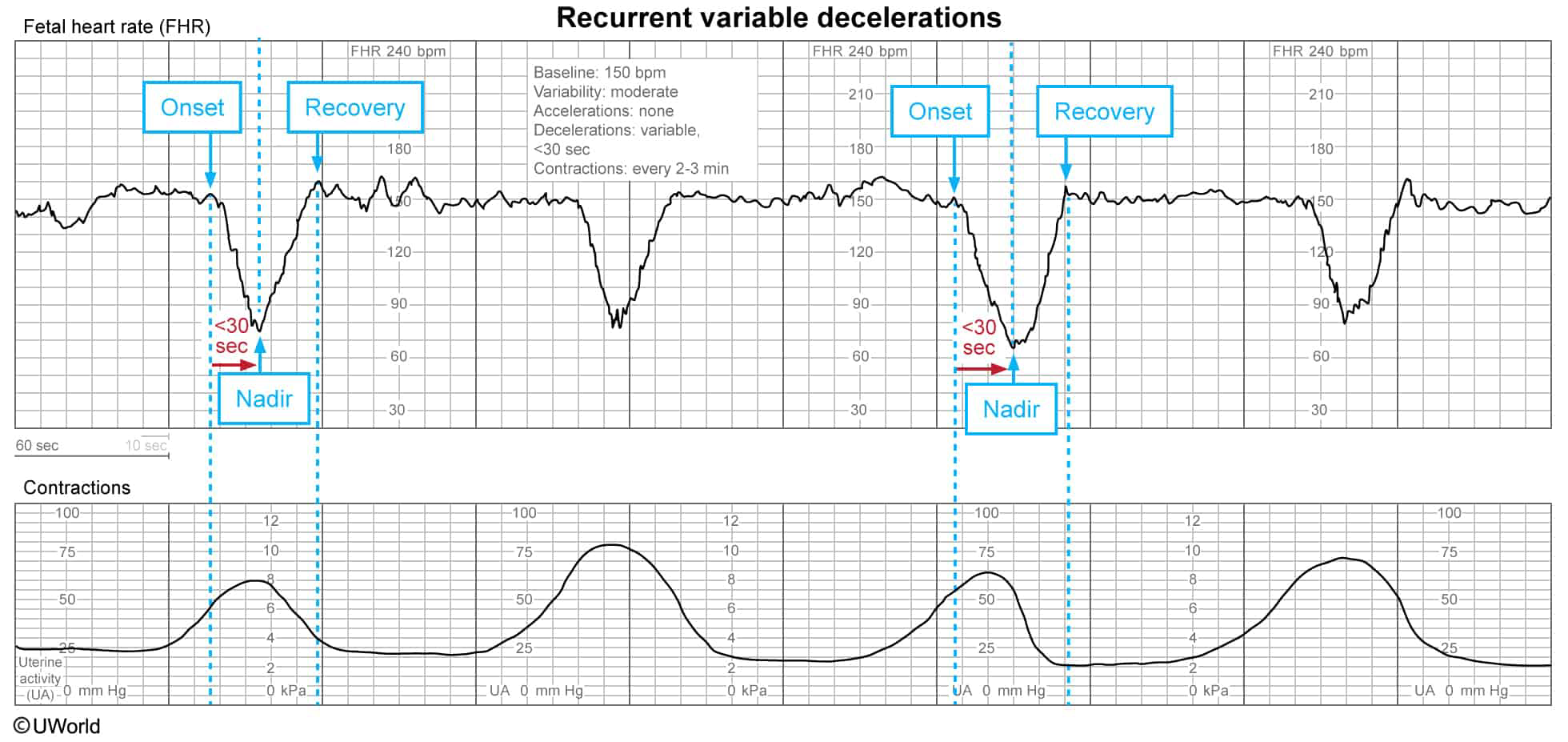
Abrupt, severe prolonged decelerations or recurrent, deep variable decelerations due to mechanical cord compression and vasospasm.
Management
Immediate Management (Relieve Compression):
Manual elevation: Insert gloved hand into vagina and push presenting part upward; keep hand in place continuously until delivery.
Maternal repositioning: Knee-chest or steep Trendelenburg position (uses gravity to shift fetus). c
Tocolysis: Administer terbutaline 0.25 mg SQ to arrest uterine contractions and reduce pressure.
Cord care: Do NOT push cord back inside (triggers vasospasm); cover exposed cord with warm, moist saline dressings.
Definitive Delivery:
Emergent C-section: Standard of care for nearly all viable cases.
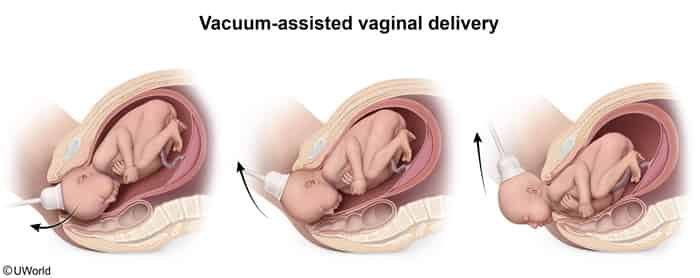
Operative vaginal delivery (Forceps/Vacuum): Only if cervix is fully dilated (10 cm), head is low/engaged, and delivery is instantaneous.
Velamentous Cord Insertion
Pathophysiology
Umbilical cord inserts into the chorioamniotic membranes rather than the placental mass.
Fetal vessels travel between amnion and chorion without protection of Wharton jelly before reaching the placenta.
Elective Delivery: Planned initiation of labor (induction of labor [IOL]) or elective cesarean delivery (CD) in the absence of maternal or fetal medical indications.
Timing & Eligibility (GA≥39w 0d)
Elective delivery (IOL or CD) is strictly contraindicated prior to 39w 0d to prevent iatrogenic neonatal morbidity (RDS, TTN, NICU admission). c
ARRIVE Trial: Elective IOL at 39w 0d–39w 4d in low-risk nulliparous pts reduces CD rates and gestational HTN without increasing neonatal risks.
Criteria to Confirm GA > 39w: Requires US <20w, FHT ≥30w by Doppler, or (+) pregnancy test ≥36w prior.