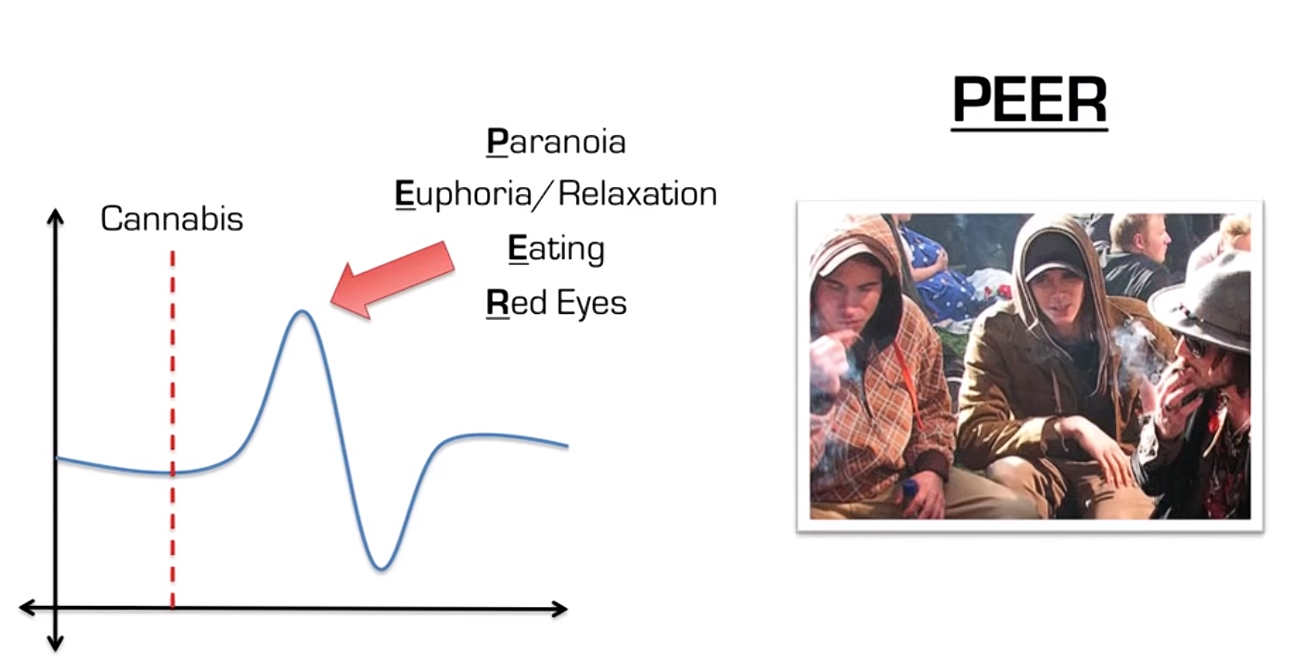
Cannabis intoxication
Substances
- Whole-plant cannabis (street names: marijuana, weed, grass, pot, ganja)
Mechanisms of action
- Tetrahydrocannabinol (THC): main psychoactive component
- Interacts with cannabinoid receptors CB1 and CB2 → inhibition of adenylate cyclase
Clinical features
- Key Triad/Buzzwords: Conjunctival injection, increased appetite (“the munchies”), and dry mouth (xerostomia). c
- Physical Exam:
- Vitals: Mild tachycardia, orthostatic hypotension (high doses), mild tachypnea; body temperature typically normal or hypothermic.
- Ocular: Conjunctival injection (hallmark; 2/2 vasodilation), normal pupil size or sluggish reaction (no marked miosis or mydriasis).
- Neuromuscular: Impaired motor coordination, slurred speech (mild), fine tremors, slowed reaction time.
- Psychiatric/Behavioral:
- Euphoria, relaxation, inappropriate laughter, disinhibition.
- Distorted sensory perception (altered sense of time/space).
- Dysphoria, acute panic attacks, severe paranoia/anxiety (common in cannabis-naive users or high THC concentrations).
- Transient psychosis (hallucinations, delusions) typically seen w/ high-potency products or synthetic cannabinoids.