Epidemiology
Etiology
Pathophysiology
Clinical features
- Most patients experience only mild withdrawal and spontaneously recover. These stages can occur independently or be skipped. c
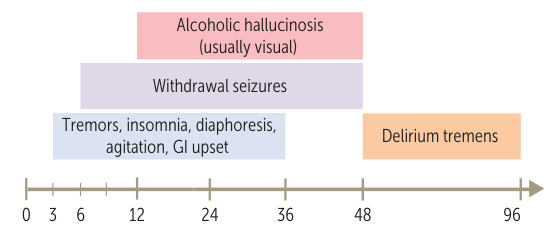
- 6–12 hours (Mild Withdrawal):
- Tremulousness (“the shakes”), anxiety, diaphoresis, palpitations, tachycardia, headache, insomnia, GI distress (nausea/vomiting).
- Orientation and sensorium remain intact.
- 12–24 hours (Alcoholic Hallucinosis):
- 24–48 hours (Withdrawal Seizures):
- Single or brief clustered Generalized Tonic-Clonic (GTC) seizures.
- Short post-ictal period; status epilepticus is rare (<3%).
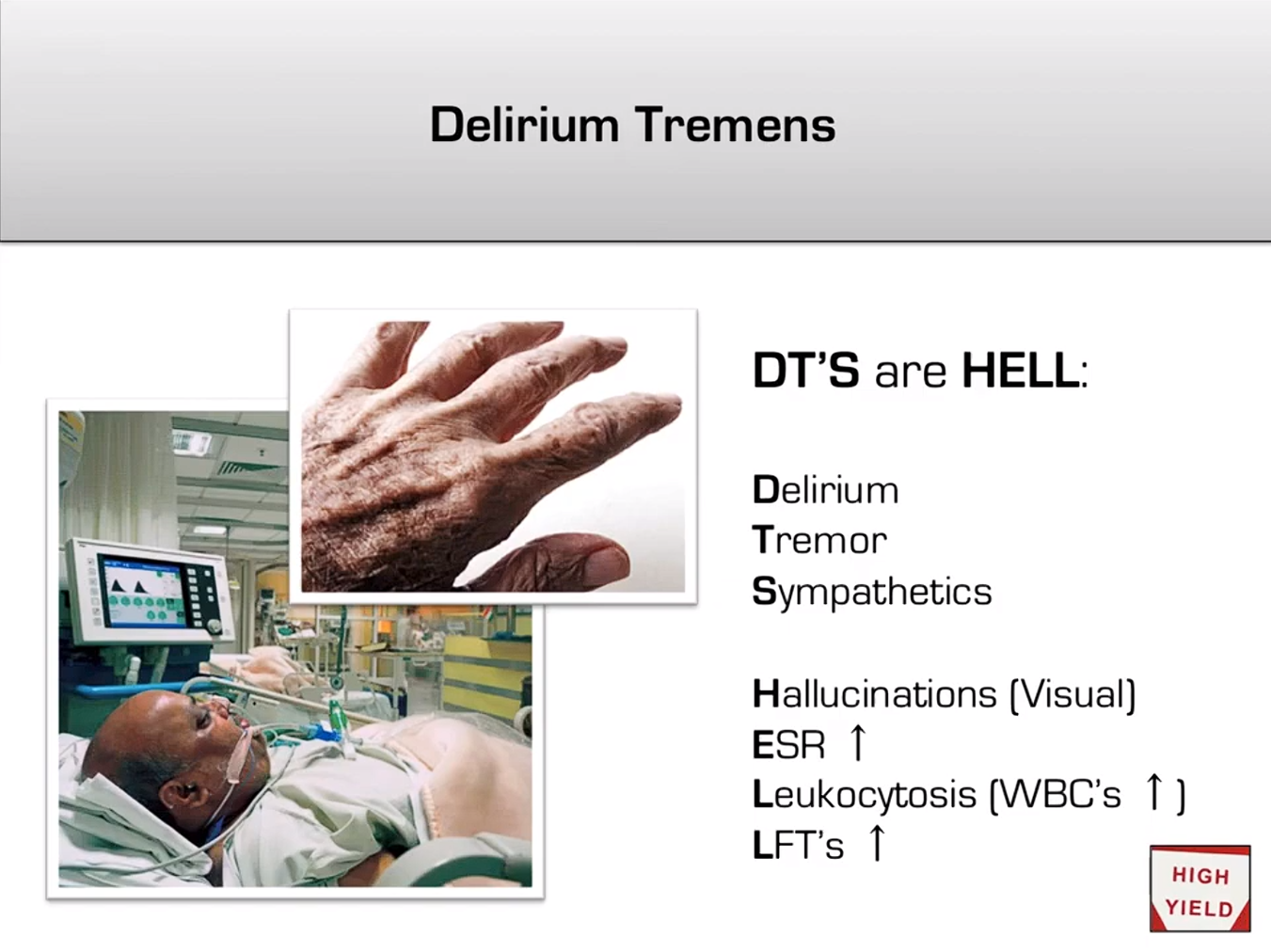
- 48–96 hours (Delirium Tremens - Medical Emergency):
- Delirium / Confusion: Severe disorientation, fluctuating consciousness, agitation.
- Severe Autonomic Instability: Tachycardia, HTN, hyperthermia/fever, profuse diaphoresis.
- High mortality (up to 5% even with treatment, up to 20% if untreated).
Similar features like serotonin syndrome, but without neuromuscular findings (especially prominent clonus and lower limb rigidity/hyperreflexia)
Diagnostics
Treatment
- First-line: benzodiazepines
- Shorter or intermediate-acting (e.g., oxazepam, lorazepam): Consider in patients with a slow metabolism (e.g., the elderly, those with liver failure).
- Longer acting (e.g., chlordiazepoxide, diazepam): preferred in all other patients
Mnemonic
Alcohol, barbiturates, and benzodiazepines all enhance GABA receptors, so their withdrawal syndromes share similar symptoms (seizures, tachycardia, and tremors).