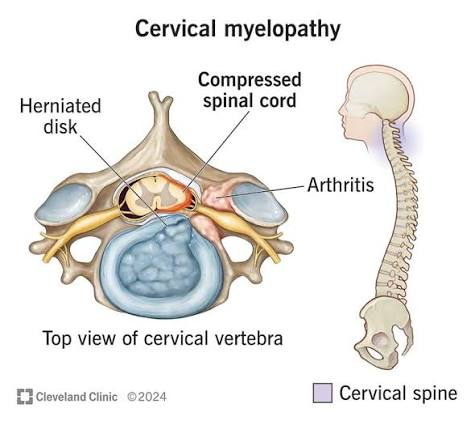
Cervical Myelopathy : Compression of the central spinal cord (central canal stenosis).
Diff w/ Cervical Radiculopathy : Compression of an isolated spinal nerve root (neural foraminal stenosis, lateral disc herniation).
Epidemiology & Risk Factors
Most common cause of spinal cord dysfunction in patients >55 yo .
Etiology : Cervical spondylosis (degenerative disc disease, facet arthropathy, osteophytes), OPLL, congenital canal stenosis, rheumatoid arthritis w/ atlantoaxial subluxationc Pathophysiology : Extrinsic spinal cord compression in the cervical spine leading to ischemia, mechanical damage, and cord parenchymal injury.
Clinical Features
LMN signs at lesion level (Upper Extremities) : Hand weakness, wasting of intrinsic hand muscles, lost fine motor dexterity (difficulty buttoning shirt), hyporeflexia.UMN signs below lesion level (Lower Extremities) : Spastic/ataxic broad-based gait , leg stiffness/weakness, hyperreflexia, (+) Babinski .Painless sensory deficits in hands or feet c
High-Yield Signs :
Hoffmann sign : Flicking distal phalanx of middle finger produces involuntary flexion/adduction of thumb and index finger.Lhermitte sign : Flexion of the neck causes an electric shock-like sensation radiating down the spine into the limbs.Inverted brachioradialis reflex (wrist/finger flexion on percussion).Bowel/bladder dysfunction (late finding).
Diagnosis
Initial / Screening : Cervical spine X-ray (shows degenerative changes/instability; cord not seen).Confirmatory / Gold Standard : Cervical spine MRI (demonstrates cord compression and intrinsic T2 cord hyperintensity / myelomalacia).MRI Contraindicated : CT myelography .
Differential Diagnostics
ALS : Combined UMN + LMN signs; lacks sensory deficits and bowel/bladder signs; features bulbar symptoms (dysarthria/dysphagia).Normal Pressure Hydrocephalus (NPH) : Classic triad (“wobbly, wet, wacky”); no focal upper extremity LMN signs ; ventricular enlargement on head CT/MRI.Cervical Radiculopathy : Pure root/LMN deficits (dermatomal pain/numbness, focal weakness); no UMN signs (normal gait/plantar responses).Subacute Combined Degeneration (B12 deficiency) : Loss of vibration/proprioception; ↑ methylmalonic acid/low B12 ; lacks focal cervical LMN deficits.
Management
Definitive / Moderate-to-Severe (First-Line) : Urgent surgical decompression & stabilization (e.g., ACDF, posterior laminectomy/laminoplasty) to halt progression.Mild / Non-Progressive (Conservative) : Immobilization w/ cervical collar, physical therapy, NSAIDs, close serial neuro checks.
Complications
Irreversible spastic quadriparesis / paralysis.
Permanent neurogenic bowel and bladder.
Fall-related injuries.