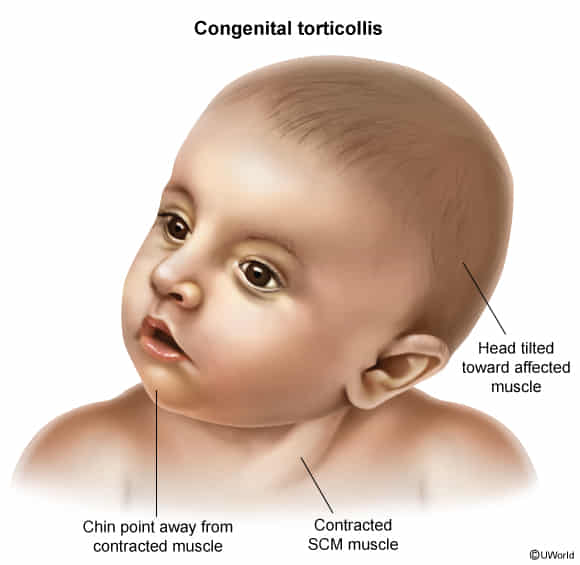
Unilateral contracture and shortening of the sternocleidomastoid (SCM) muscle, leading to fibrosis.
The exact cause is often unknown, but proposed mechanisms include intrauterine malposition (e.g., crowding), birth trauma (especially breech), or perinatal compartment syndrome of the SCM.
Sandifer syndrome: Spasmodic torticollis associated with gastroesophageal reflux (GERD).
Acquired torticollis: May result from trauma, infection (e.g., Grisel’s syndrome), or inflammation.
Management/Treatment
First-line treatment: Conservative management with physical therapy and a home stretching program. This includes passive stretching of the SCM and active strengthening of contralateral muscles.
Parental education is key: Teaching parents positioning techniques (e.g., encouraging the infant to turn their head to the non-preferred side during feeding and play) and the importance of “tummy time”.
Over 90% of cases resolve with conservative therapy, especially if started before 6 months of age.
Botulinum toxin injections or surgical release of the SCM are reserved for refractory cases that do not respond to at least a year of conservative management.
Key Associations/Complications
Developmental Dysplasia of the Hip (DDH): A strong association exists (5-20% of cases), so all infants with congenital torticollis should have a thorough hip examination (e.g., Ortolani, Barlow maneuvers) and may require hip imaging.
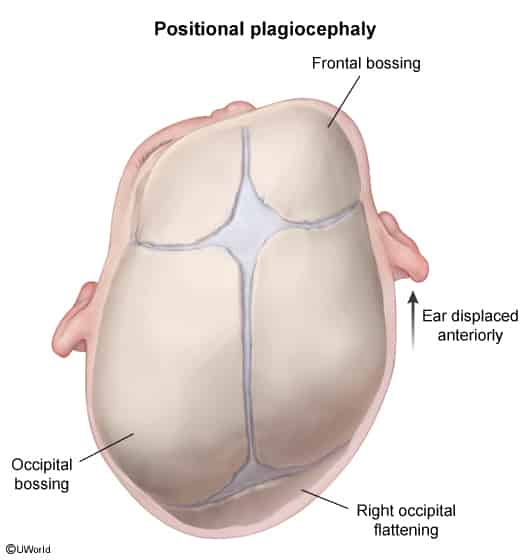
Plagiocephaly: Asymmetrical flattening of the skull on the contralateral side due to the infant consistently lying on that side.
Untreated torticollis can lead to permanent craniofacial asymmetry and restricted neck motion.
Gross motor delays may occur but often resolve with treatment.