Spinal stenosis is characterized by the narrowing of the central spinal canal, intervertebral foramen, and/or lateral recess within the cervical spine, thoracic spine, or lumbar spine, resulting in progressive nerve root compression.
Epidemiology
Etiology
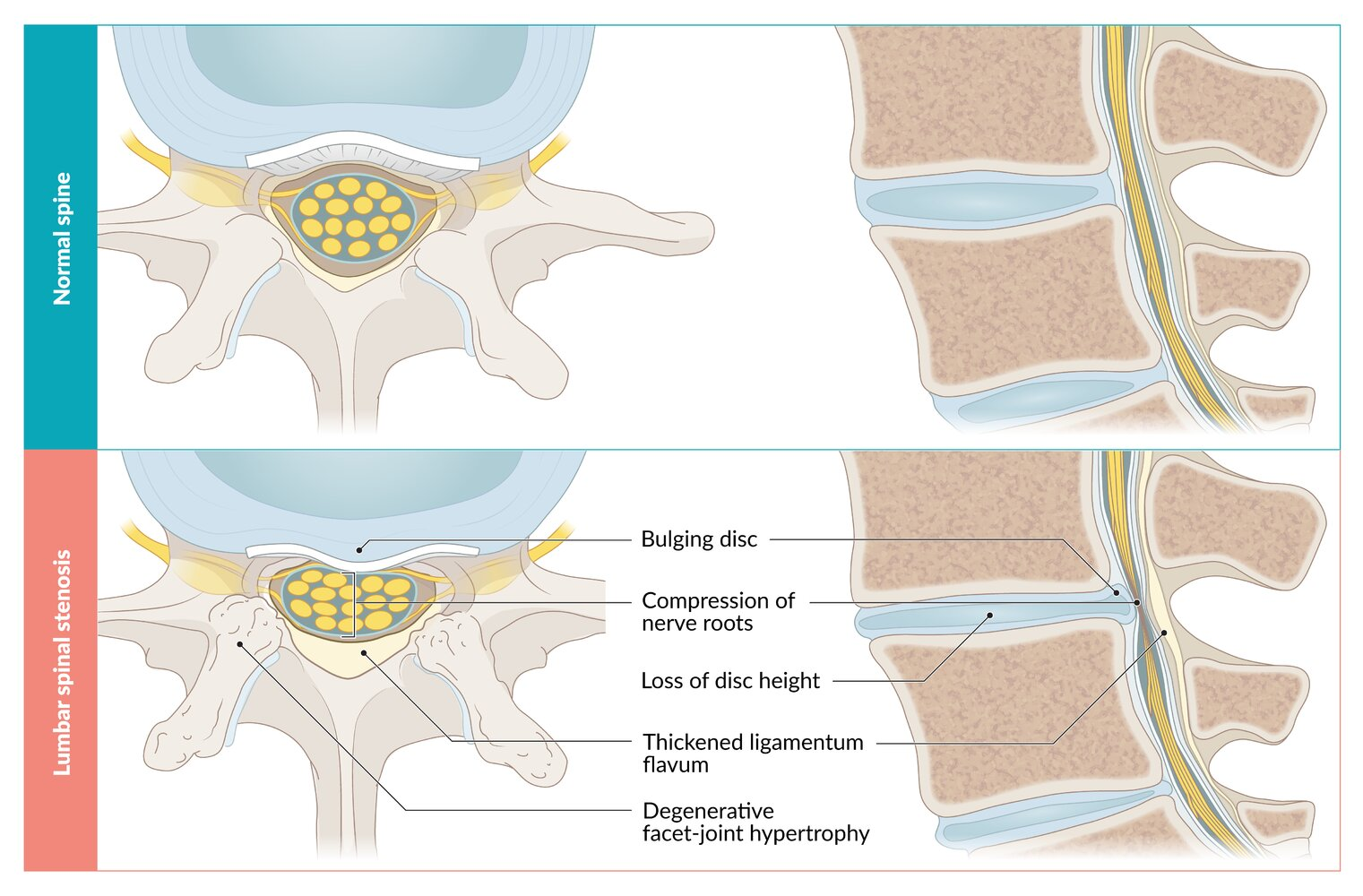
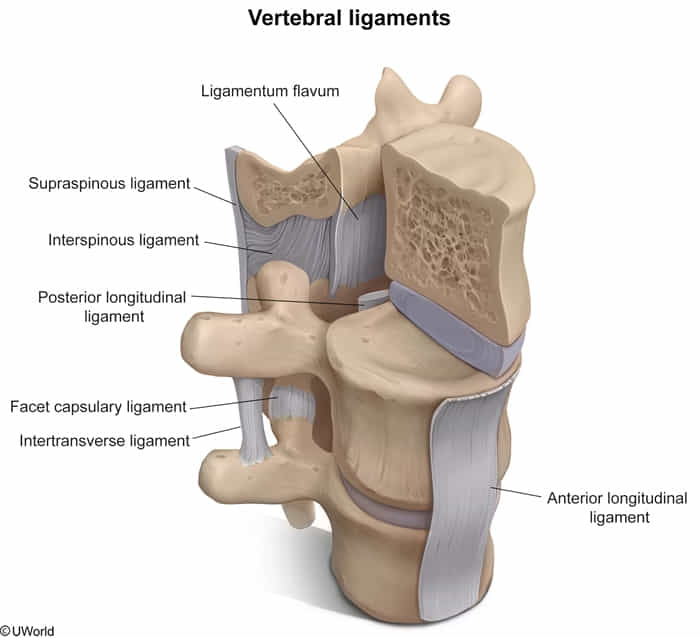
- Most common cause of lumbar spine surgery in patients > 65 yo.
- Degenerative Spondylosis / Osteoarthritis (~75–80% of all cases; primary etiology): Hypertrophy of ligamentum flavum, facet joint arthrosis/osteophytes, bulging/herniated intervertebral discs. c
- Spondylolisthesis (vertebral slippage). c
- Congenitally narrow spinal canal.
- Paget disease of bone, ankylosing spondylitis, post-surgical fibrosis.
- Location: Most commonly affects lumbar spine (L4-L5 > L3-L4 > L5-S1), followed by cervical spine.
Pathophysiology
Clinical features
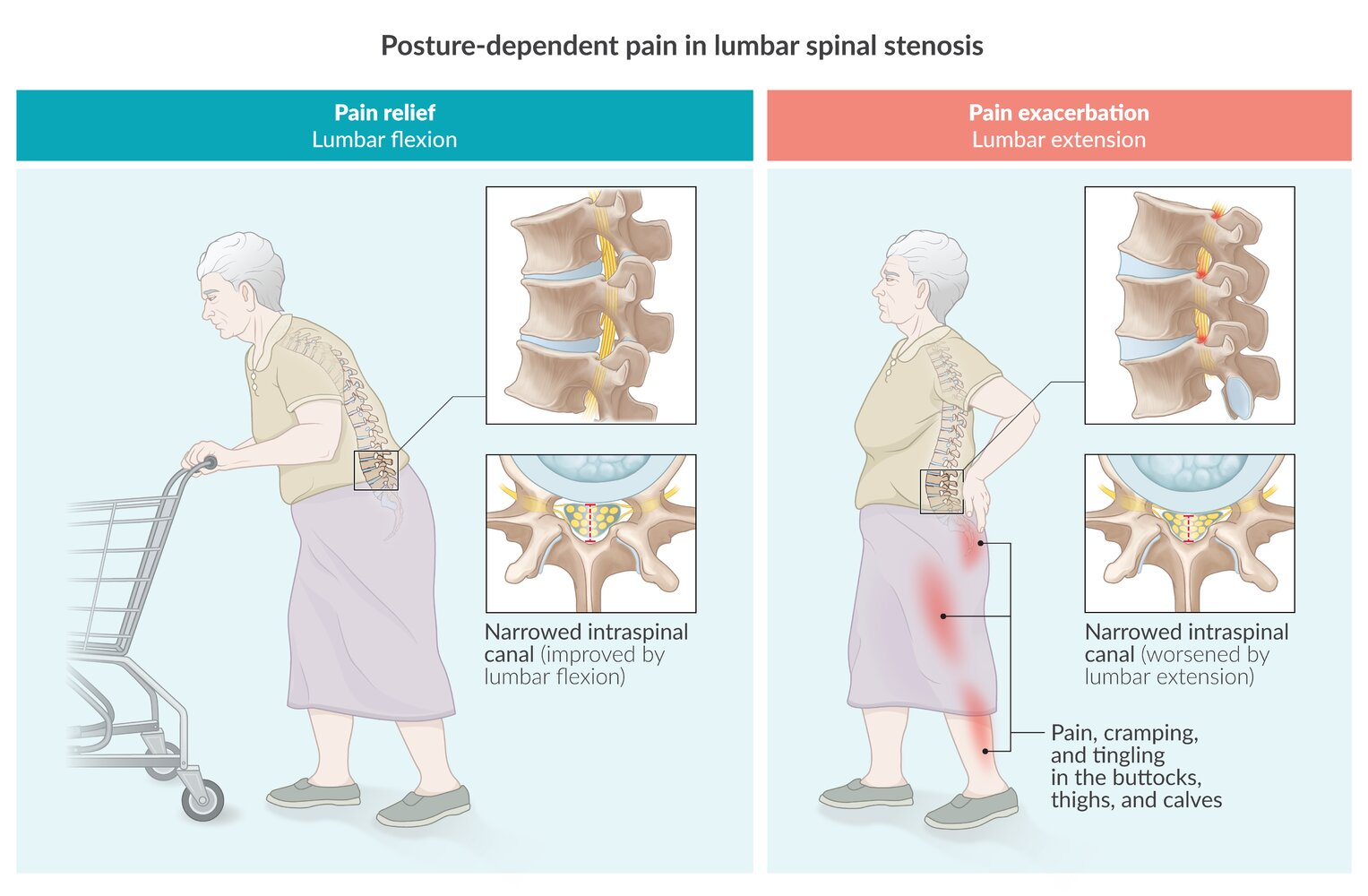
- Neurogenic Claudication (Pseudoclaudication):
- Bilateral LE pain, numbness, paresthesias, heaviness, or weakness.
- Exacerbated by lumbar extension: Standing, walking downhill (narrows the spinal canal).
- Relieved by lumbar flexion: Sitting, leaning forward, pushing a cart (“shopping cart sign”), walking uphill (widens the spinal canal). c
- Physical Exam:
- Normal peripheral pulses (normal vascular exam).
- Straight Leg Raise (SLR) usually negative. c
- Wide-based, unsteady gait in advanced cases.
- Deep tendon reflexes (DTRs) may be diminished or normal.
Diagnostics
Differential Diagnostics
- Vascular Claudication (PAD):
- Differentiating features: Pain reproduced by fixed walking distance regardless of spine posture, relieved promptly by standing still (does not require flexion); associated with diminished distal pulses, pallor on elevation, and ABI < 0.9.
- Lumbar Disc Herniation (Sciatica / Radiculopathy):
- Differentiating features: Unilateral, dermatomal electric/shooting pain; worse with flexion and sitting; (+) Straight Leg Raise (SLR); commonly seen in younger pts (< 50 yo).
- Cauda Equina Syndrome (CES):
- Differentiating features: Saddle anesthesia, acute urinary retention/overflow incontinence, fecal incontinence, decreased anal sphincter tone; surgical emergency.
- Diabetic Peripheral Neuropathy:
- Differentiating features: Symmetric distal “stocking-glove” distribution; constant burning pain/paresthesias not related to walking/posture; loss of vibratory/proprioceptive sense.