Epidemiology
Etiology
- Common Triggers:
- Urushiol: Poison ivy, poison oak, poison sumac (most common cause of plant dermatitis).
- Nickel: Jewelry, belt buckles, cell phones, jean snaps (most common overall contact allergen).
- Topical antimicrobials: Neomycin, bacitracin.
- Fragrances & Preservatives: Balsam of Peru, formaldehyde, quaternium-15.
- Rubber / Accelerators: Latex gloves (accelerators cause type IV; latex protein causes type I), elastic bands.
- Topical anesthetics: Benzocaine.
Pathophysiology
Allergic contact dermatitis is an example of a type IV hypersensitivity reaction.; develops 12–48 hours post-re-exposure.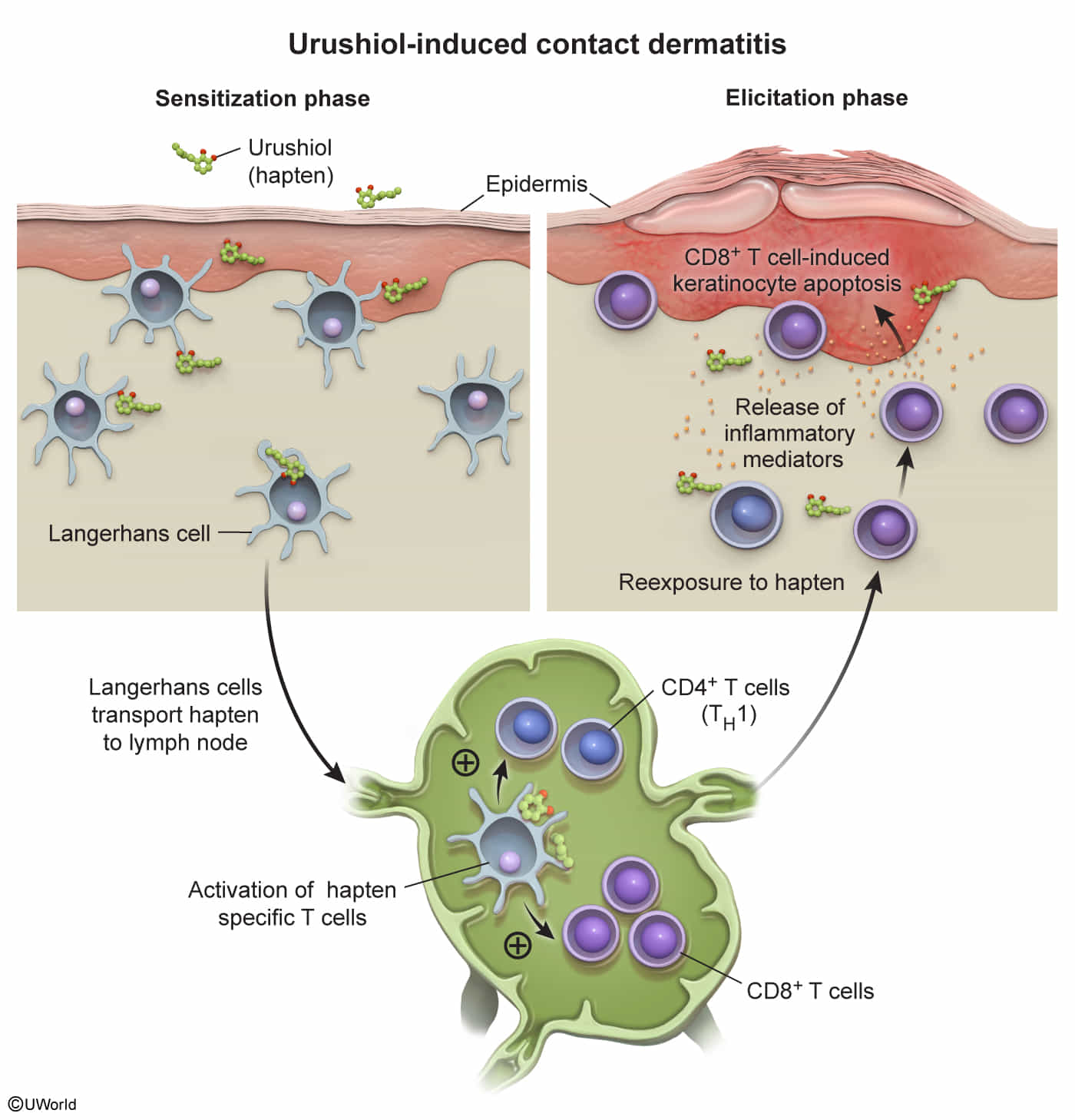
- Sensitization Phase (1st exposure, 10-14 days)
- Hapten (nickel, urushiol) binds carrier protein → complete antigen
- Langerhans cells capture antigen, migrate to lymph nodes
- Present via MHC II to CD4+ T cells → Th1 cell activation & memory formation
- No symptoms yet
- Elicitation Phase (Re-exposure, 24-72 hrs)
- Memory Th1 cells recognize antigen
- Release IFN-γ, IL-2, TNF-α
- Recruit macrophages & CD8+ T cells → keratinocyte damage
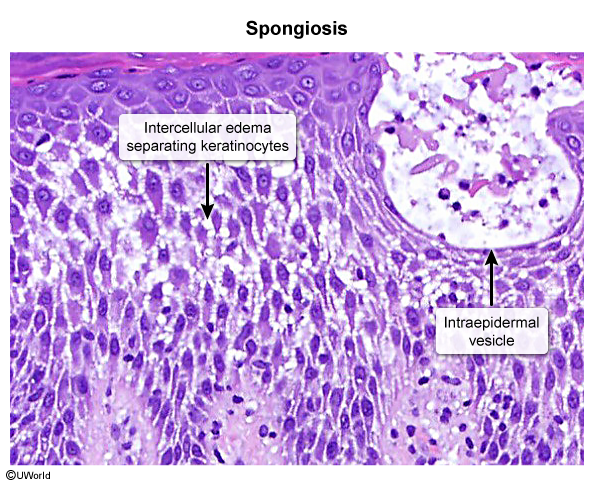
- Result: pruritic, erythematous, vesicular rash with spongiosis
- Key Point: No antibodies or mast cells (vs Type I)
Clinical features
- Key Symptoms: Intense pruritus, erythema, and localized swelling.
- Physical Exam Findings:
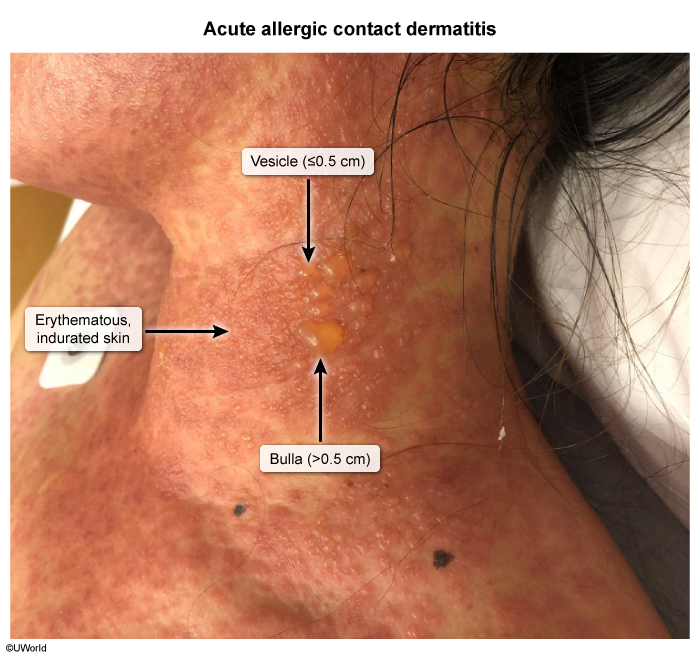
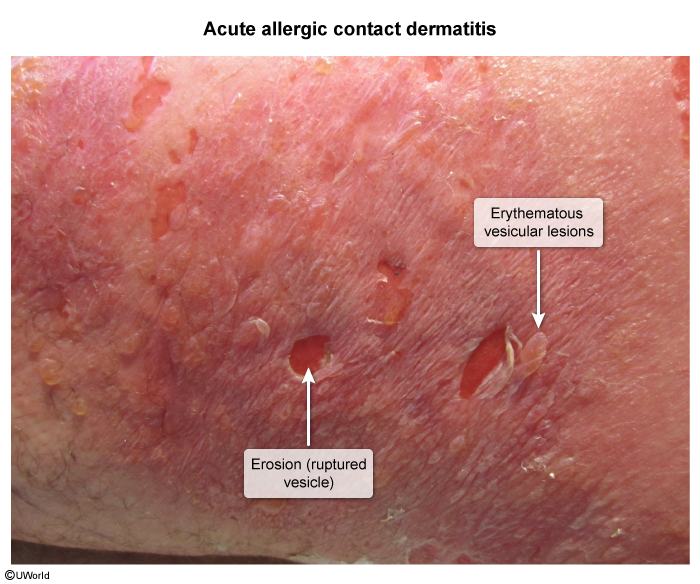
- Acute: Erythematous, edematous papules, vesicles, and bullae.
- Hallmark Pattern: Linear streaking of vesicles (pathognomonic for urushiol/plant contact via brushing against leaves or scratching).
- Geometric/Demarcated Shapes: Sharply demarcated to the specific site of exposure (e.g., circular rash under a watch, periumbilical rash from a belt buckle).
- Subacute/Chronic: Scaling, fissuring, lichenification, and xerosis due to persistent exposure and scratching.
Diagnostics