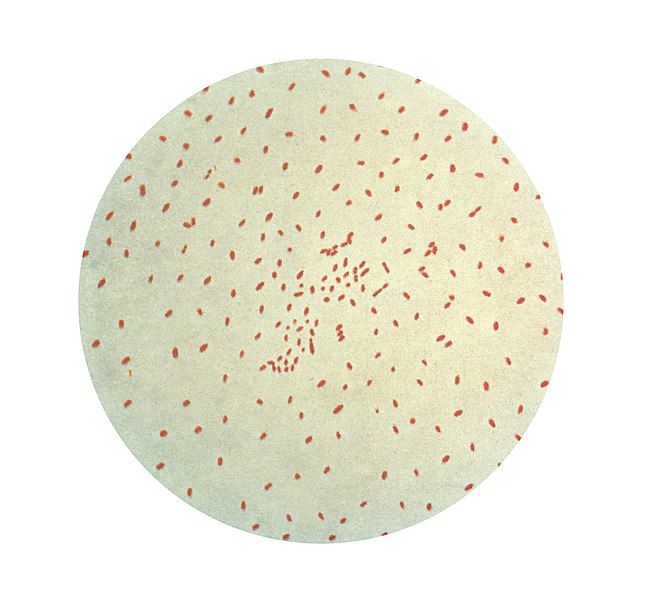
Pathogen: Bordetella pertussis is a gram‑negative, obligate aerobic coccobacillus.
Pathophysiology
Proliferation of Bordetella pertussis on ciliated epithelial cells of the respiratory mucosa → production of virulence factors (e.g., tracheal cytotoxin) → paralysis of respiratory epithelium cilia and inflammation → secretion of inflammatory exudate into respiratory tract → compromise of small airways → cough, pneumonia, cyanosis
Bordetella pertussis produces pertussis toxin → ADP-ribosylation of the α subunit of Gi protein → inhibition of Gi protein → adenylate cyclase disinhibition → cAMP accumulation → impaired cell signaling pathways → systemic manifestations associated with whooping cough (e.g., hypoglycemia, lymphocytosis, modulation of host immune response)
Clinical features
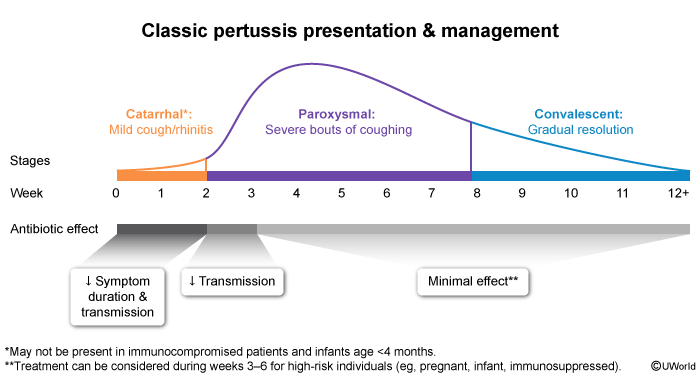
Catarrhal (1-2 weeks): mild cough, rhinitis
Paroxysmal (2-6 weeks): severe coughing spells with inspiratory whoop, posttussive emesis (risk of dehydration); ± apnea/cyanosis (infants)
Lungs are usually clear to auscultation
Convalescent (weeks to months): gradual resolution
Diagnostics
Diagnosis is primarily clinical, supported by lab findings.
PCR of a nasopharyngeal swab is the gold standard for confirmation.
Culture on specialized media like Bordet-Gengou or Regan-Lowe agar is possible but less sensitive.
CBC often shows a marked lymphocytosis, which is unusual for a bacterial infection.
Pertussis toxin causes lymphocytosis by preventing lymphocytes from entering lymphoid tissues.
Serology can be useful later in the disease course (>4 weeks).
Differential diagnostics
Viral URIs: Pertussis cough progressively worsens instead of improving.
Mycoplasma pneumoniae: Also causes a persistent cough but typically without the “whoop” or post-tussive emesis.
Treatment
First-Line Antibiotic Therapy:
Macrolides: Azithromycin (5 days), Clarithromycin, or Erythromycin.
Infants < 1 month: Azithromycin is required (Erythromycin is contraindicated due to increased risk of hypertrophic pyloric stenosis).
Clinical Note: Antibiotics eradicate the organism and prevent transmission; they do not alter the clinical course if started during the paroxysmal phase.
Alternative Therapy:
Trimethoprim-sulfamethoxazole (TMP-SMX) if macrolide-allergic (contraindicated in infants < 2 months).
Post-Exposure Prophylaxis (PEP):
Macrolide for ALL close contacts regardless of vaccination status. c
Adult family members can act as asymptomatic reservoirs and infect others