Listeriolysin O: This major virulence factor generates pores in phagosome membranes, which allows phagocytosed L monocytogenes to escape into the cytoplasm of monocytes and avoid lysosomal destruction.
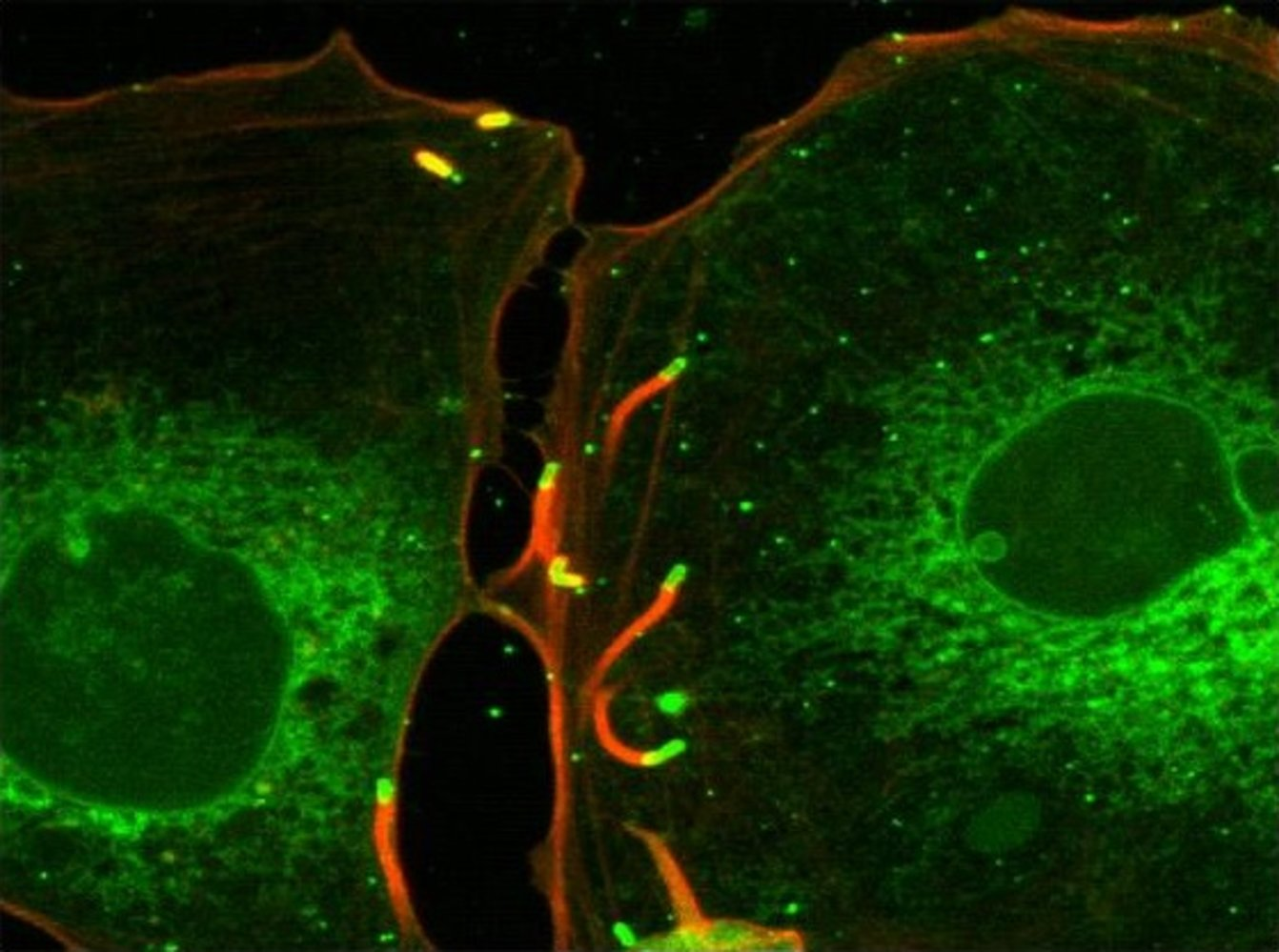
Actin-based transcellular spread: The organism hijacks the actin-based cellular motility mechanism of host cells, which allows it to spread to adjacent cells without reentering the extracellular space. This significantly reduces exposure of L monocytogenes to antibodies and phagocytic cells.
Because of these adaptations, antibody- and phagocyte-mediated destruction of the pathogen is impaired; therefore, infections are controlled primarily by the cytotoxic T-cell response.
Flu-like illness (fever, chills, myalgias, back pain).
Maternal disease is usually mild, but leads to chorioamnionitis, spontaneous abortion, premature labor, or stillbirth.
Neonates:
Early-onset (In utero): Granulomatosis infantiseptica (disseminated microabscesses/granulomas in multiple organs), respiratory distress, septic shock; extremely high mortality.
Late-onset (Birth canal/postnatal): Manifests at 2–3 weeks as meningitis or sepsis.
Elderly & Immunocompromised:
Acute Bacterial Meningitis: #3 overall cause of bacterial meningitis in adults; #1 cause in elderly/immunocompromised. Presents with fever, headache, altered mental status, nuchal rigidity.
Bacteremia / Sepsis: High fever, hemodynamic instability without clear focal site.
Key Contraindication/Resistance: Listeria is resistant to all Cephalosporins (part of the LAME mnemonic for organisms not covered by cephalosporins: Listeria, Atypicals, MRSA, Enterococci).