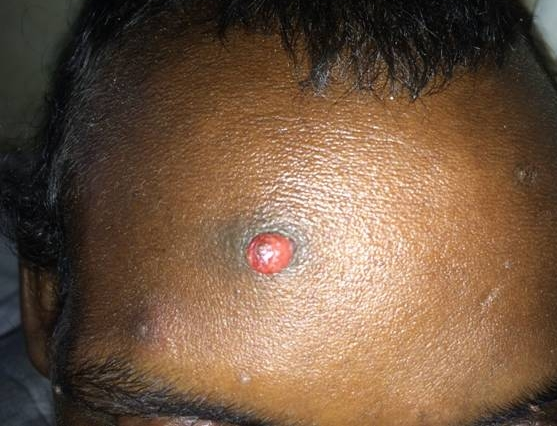
Cutaneous: Bright red/purple/violaceous, vascular papules or subcutaneous nodules; friable and bleed easily. c
Systemic: Fever, night sweats, weight loss in HIV/AIDS patient (CD4 < 100/mm³).
Visceral: Peliosis hepatis (cystic, blood-filled vascular spaces in liver/spleen), osteolytic bone lesions.
Culture-Negative Endocarditis:
Subacute fever, heart murmur, embolic phenomena with persistently negative standard blood cultures.
Diagnostics
Biopsy
Lymph nodes
Warthin-Starry staining of the involved lymph node may show clusters of rod-shaped bacteria.
H&E staining of cutaneous lesions may show necrotizing granuloma formation and neutrophilic infiltrate.
Bacillary angiomatosis
Benign capillary vascular proliferation
Neutrophilic infiltrate
Neutrophilic inflammation is seen in bacillary angiomatosis. Lymphocytic inflammation is seen in Kaposi sarcoma.
The Warthin-Starry stain is used to visualize bacilli
Feature
Bacillary Angiomatosis (BA)
Kaposi Sarcoma (KS)
Etiology
Bartonella spp. (Bacteria)
HHV-8 (DNA Virus)
Histology
Capillary proliferation, plump endothelial cells
Spindle cells, slit-like vascular spaces
Infiltrate
Neutrophilic
Lymphocytic & Plasmacytic
Special Stain
Warthin-Starry stain shows organisms
N/A
Treatment
Antibiotics (Doxycycline, Erythromycin)
ART (first-line), Chemotherapy/Radiation for severe disease
Differential Diagnostics
Kaposi Sarcoma: Caused by HHV-8. Differs by biopsy showing lymphocytic/plasma cell infiltrate with spindle cells, lacking neutrophils or positive silver stain.
Pyogenic Granuloma: Solitary vascular lesion, usually follows trauma. Differs by lack of systemic symptoms or severe immunosuppression.
Molluscum Contagiosum: Caused by Poxvirus. Differs by firm, non-vascular papules with central umbilication that do not bleed easily.
Cherry Angioma: Benign vascular proliferation common in adults. Differs by non-friable nature, lack of systemic symptoms, and presence in immunocompetent pts