- Pathophysiology/Etiology
- A twisting (volvulus) of the sigmoid colon on its mesenteric pedicle, leading to a closed-loop obstruction. Torsion is usually counter-clockwise.
- Predisposing factors include a long, redundant sigmoid colon with a narrow mesenteric base, chronic constipation, high-fiber diets, and old age.
- Often seen in elderly, debilitated, or institutionalized patients, and those with neuropsychiatric conditions (e.g., Parkinson’s disease, multiple sclerosis).
- Clinical Presentation
- Abrupt onset of severe, colicky abdominal pain, progressive abdominal distention, and obstipation (inability to pass stool or flatus).
- Nausea and vomiting are typically late symptoms.
- On exam: marked, tympanitic abdominal distention is characteristic. Tenderness, fever, or signs of shock suggest ischemia or perforation. The rectum is often empty on digital exam.
- Diagnosis
- Abdominal X-ray (AXR): Often diagnostic. Shows a large, dilated loop of colon lacking haustra, forming an inverted “U” shape, classically known as the “coffee bean sign”. The apex of the loop often points toward the right upper quadrant. c
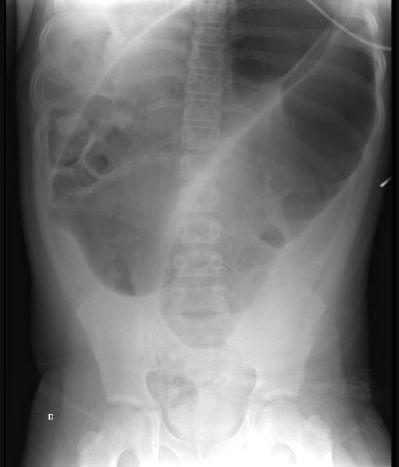
- CT Scan: Confirms the diagnosis, showing a “whirl sign” (twisted mesentery) and can assess for signs of ischemia or perforation.
- Contrast Enema: Shows a “bird’s beak” appearance at the point of the twist but is contraindicated if perforation is suspected.
- DDx (Differential Diagnosis)
- Cecal Volvulus: Dilated loop often in the LUQ, associated with small bowel obstruction, younger patient demographic.
- Large Bowel Obstruction (from other causes): e.g., colorectal malignancy, which typically has a more gradual onset.
- Paralytic Ileus: Diffuse bowel dilation without a clear transition point.
- Toxic Megacolon: Associated with IBD or C. difficile infection, patient appears systemically ill with fever and tachycardia.
- Management/Treatment
- Initial Stabilization:
- NPO, IV fluid resuscitation, electrolyte correction.
- NGT decompression if vomiting/distension.
- Stable Pts (No signs of ischemia/perforation):
- First-line: Flexible sigmoidoscopy for detorsion and decompression. c
- Decompression maintenance: Place a rectal tube to prevent immediate re-accumulation of gas/fluid (leave in place for 24-48 hrs).
- Definitive (Same admission): Semi-elective sigmoid colectomy with primary anastomosis (high recurrence rate of ~60% if treated with decompression alone).
- Unstable Pts OR Signs of Ischemia/Perforation:
- First-line: Emergent laparotomy.
- Surgical choice: Sigmoid resection (Hartmann’s procedure with temporary colostomy) due to risk of anastomotic leak in unstable/contaminated fields.
- Key Associations/Complications
- Complications: Bowel obstruction is the most common. Others include ischemia, gangrene, perforation, and peritonitis, which significantly increase mortality.
- Recurrence: High risk (up to 84%) after endoscopic decompression alone, justifying subsequent elective surgery.