Epidemiology
Etiology
- Intestinal bands/adhesions
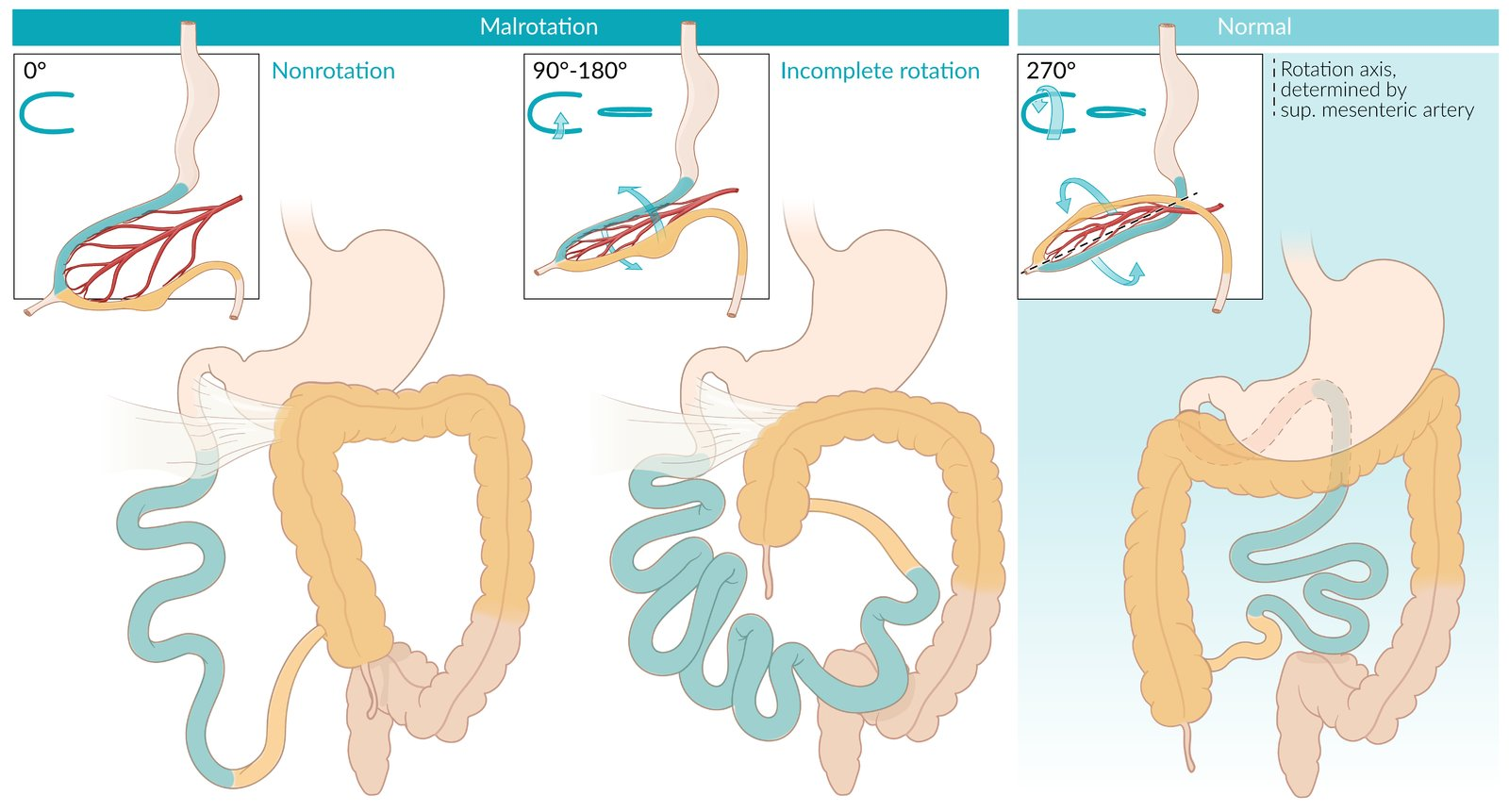
- Intestinal malrotation: abnormal rotation of the bowel with abnormal fixation of mesentery to the posterior abdominal wall
- Megacolon
Pathophysiology
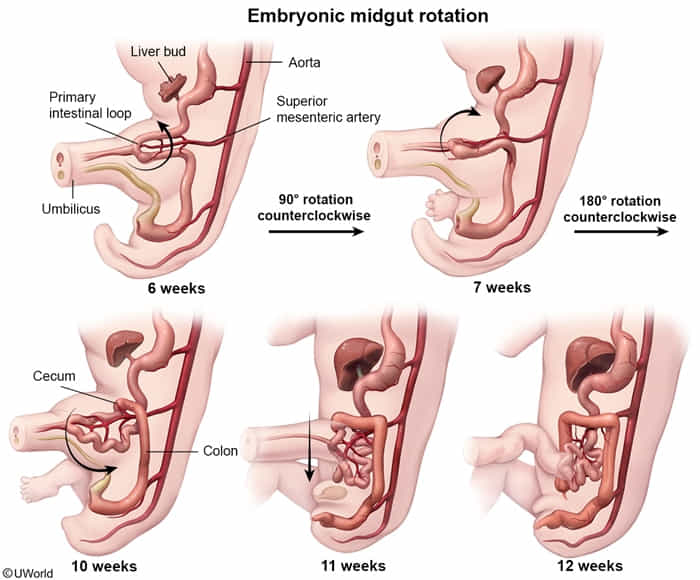
- Ladd’s bands, sometimes called bands of Ladd, are fibrous stalks of peritoneal tissue that attach the cecum to the retroperitoneum in the right lower quadrant (RLQ).
- Obstructing Ladd’s Bands are associated with malrotation of the intestine, a developmental disorder in which the cecum is found in the right upper quadrant (RUQ), instead of its normal anatomical position in the RLQ.
Clinical features
- Malrotation: mostly asymptomatic
- Midgut volvulus
- Bilious vomiting with abdominal distension in a neonate/infant
- Signs of bowel ischemia: hematochezia, hematemesis, hypotension, and tachycardia
Diagnostics
- Initial / Screening Test:
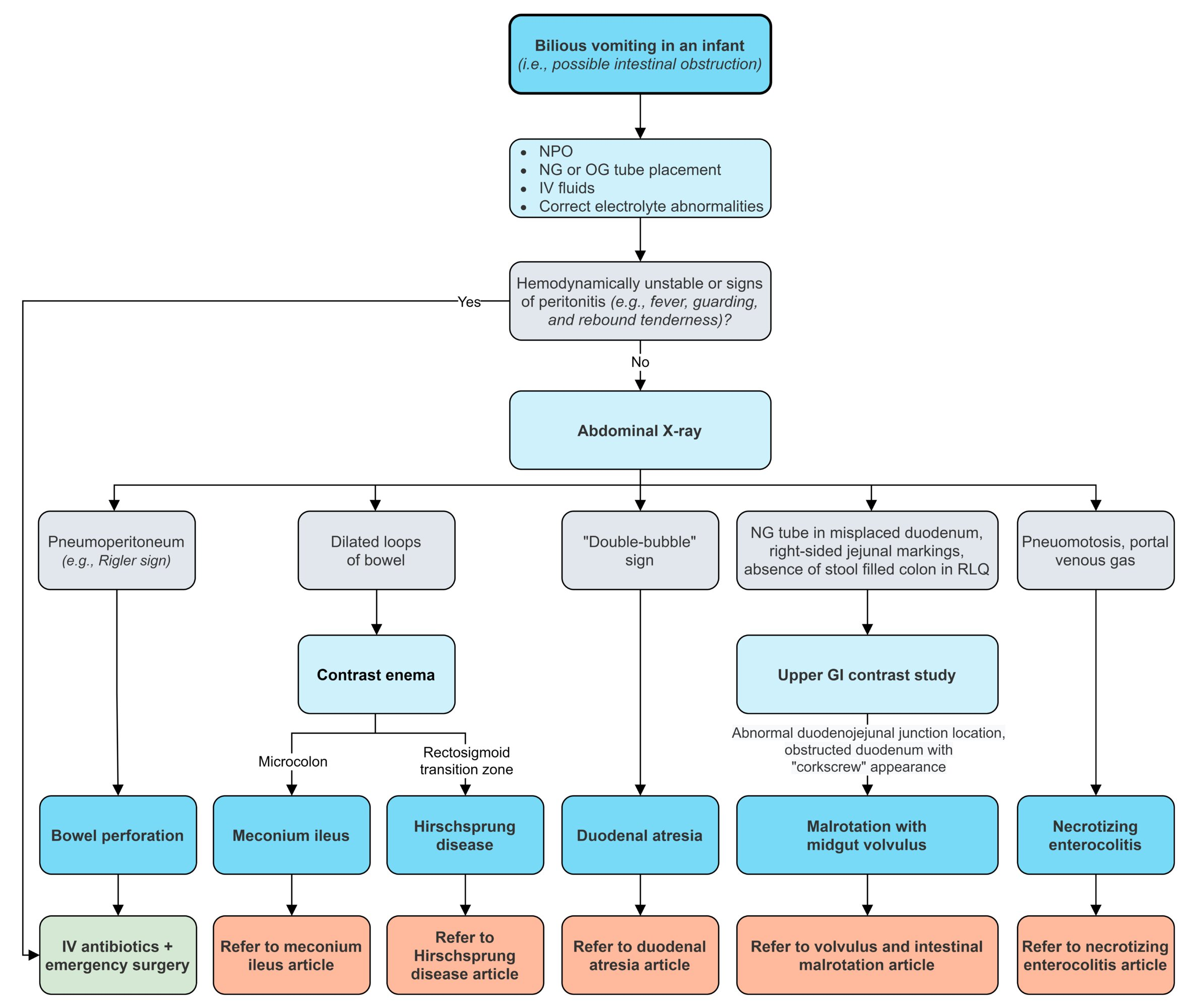
- Abdominal X-ray (AXR): Done first to rule out pneumoperitoneum (perforation).
- Findings: Often normal early; may show gasless abdomen, dilated loops with air-fluid levels, or rarely “double bubble” sign (if duodenal obstruction complete).
- If pneumoperitoneum or peritonitis present \rightarrow skip further imaging \rightarrow emergent laparotomy.
- Abdominal X-ray (AXR): Done first to rule out pneumoperitoneum (perforation).
- Confirmatory / Gold Standard:
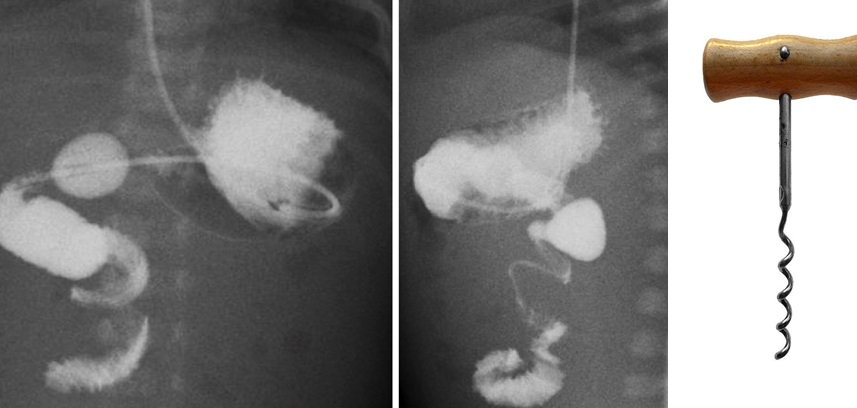
- Upper GI Series (UGI / Barium swallow): Diagnostic test of choice in a stable patient.
- Pathognomonic finding: Ligament of Treitz on the right side of the abdomen (duodenojejunal junction fails to cross midline).
- Volvulus finding: “Corkscrew” sign (twisted, spiral configuration of distal duodenum/jejunum).
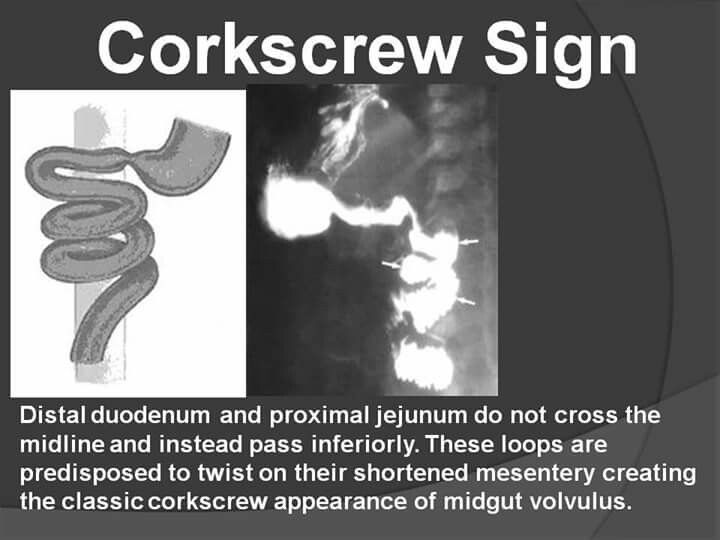
- Upper GI Series (UGI / Barium swallow): Diagnostic test of choice in a stable patient.
Differential diagnostics
Differential diagnostics
Link to original