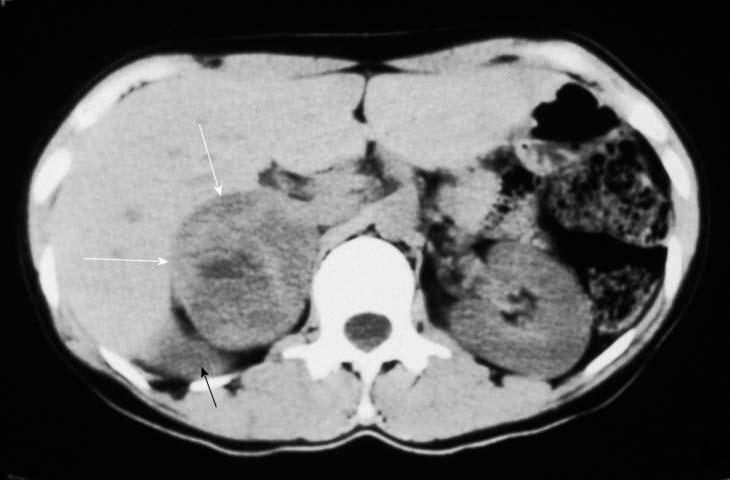
Refractory/Resistant HTN: Paroxysmal (50%) or persistent.
Sustained HTN (50–60% of cases): The majority of patients with pheochromocytoma actually have persistent, daily high blood pressure. c
Paroxysmal HTN (40–50% of cases): Spikes in blood pressure occur intermittently, often superimposed on normal blood pressure or baseline sustained HTN.
Normotension (~10% of cases): Patients may have normal blood pressure, particularly those diagnosed early via familial screening (e.g., VHL, MEN2).
Other features: Anxiety, panic-like attacks, orthostatic hypotension (due to low plasma volume), hyperglycemia (impairs insulin secretion/increases glycogenolysis). c2
Triggers: Surgery/anesthesia induction, exercise, defecation, trauma, foods high in tyramine (cheese, red wine). c
Diagnostics
Differential diagnostics
Condition
Key Differentiating Features
Confirmatory Test
Anxiety/Panic
Psychological triggers; lacks severe paroxysmal HTN; may respond to psychiatric meds.
Normal metanephrines.
Hyperthyroidism
Persistent symptoms (not spells); goiter, proptosis; fine tremor.