Epidemiology
Etiology
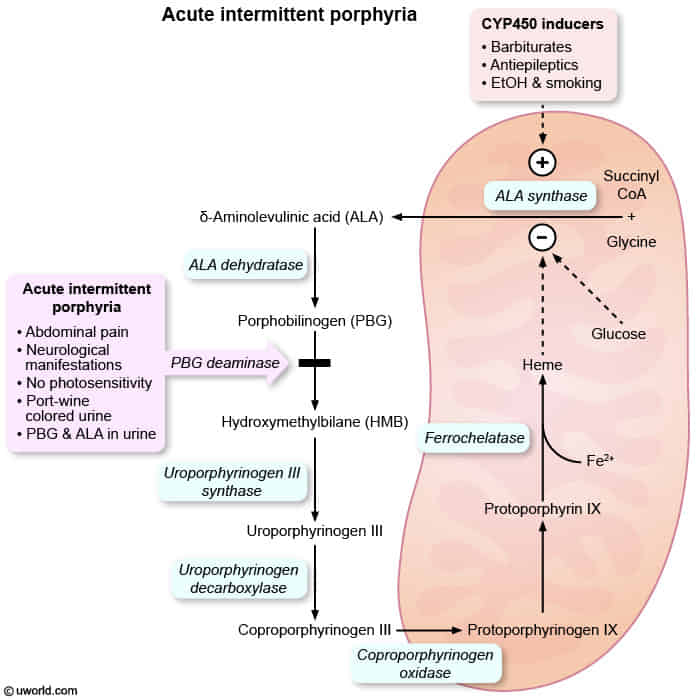
- Autosomal dominant gene mutation, with variable penetrance
- Trigger → ↑ heme demand and biosynthesis → impaired enzyme activity due to a mutation of porphobilinogen deaminase (PBG-D) (previously known as uroporphyrinogen I synthase) → accumulation of heme intermediates porphobilinogen (PBG) and δ-aminolevulinic acid (ALA) → symptoms
- ALA and it’s derivates are neurotoxic
Triggers
Most triggers increase the demand for hepatic heme, thereby stimulating heme biosynthesis, which, in the setting of an AIP enzyme mutation, results in the accumulation of heme intermediates.
- Medications (especially inducers of hepatic cytochrome P450 enzymes, which are used in the biosynthesis of heme), including:
- Anticonvulsants (e.g., barbiturates, phenytoin)
- Sulfonamides
- Anesthetics
- Hormone therapy
- Alcohol
- Smoking
- Fasting
- Increase gluconeogenesis in liver, which also increase heme production
Clinical features
- Neurovisceral attacks (“5 Ps of AIP”):
- Painful Abdomen: Severe, diffuse, colicky abdominal pain out of proportion to exam (no peritoneal signs, soft abdomen).
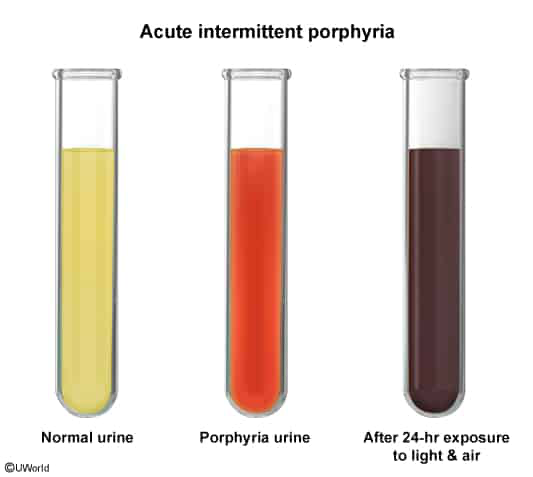
- Port-Wine Colored Urine: Darkens to red/brown when exposed to air and light (oxidation of porphobilinogen).
- Polyneuropathy: Peripheral motor neuropathy (symmetric proximal > distal weakness, hyporeflexia); can progress to bulbar palsy and quadriplegia. c
- Psychological Disturbances: Anxiety, depression, insomnia, delirium, hallucinations, frank paranoia/psychosis.
- Precipitated by Drugs/Triggers.
- Autonomic Instability: Tachycardia, HTN, diaphoresis, severe constipation, urinary retention.
- Electrolyte Imbalance: Hyponatremia (often due to SIADH secondary to hypothalamic injury).
- Key Negative: NO rash / NO cutaneous photosensitivity (unlike Porphyria Cutanea Tarda).
Tip
The skin is not involved in acute intermittent porphyria.
Diagnostics
| Feature | Acute Intermittent Porphyria (AIP) | Porphyria Cutanea Tarda (PCT) |
|---|---|---|
| Enzyme | Porphobilinogen (PBG) Deaminase | Uroporphyrinogen Decarboxylase (UROD) |
| Accumulation | ALA & PBG | Uroporphyrin |
| Property | Neurotoxic | Photosensitizing |
| Presentation | Neurovisceral (5 P’s): - Painful Abdomen - Polyneuropathy - Psychological sx - Port-wine urine - Precipitated by drugs | Photosensitivity: - Blisters & Bullae - Skin fragility - Hypertrichosis |
| Triggers | CYP450 Inducers, Fasting | Alcohol, Hep C, ↑ Iron, Estrogen |
| Tx | IV Heme, Glucose (Dextrose) | Phlebotomy, Hydroxychloroquine |
Treatment
- Hemin therapy
- Heme is unstable in aqueous solutions. It rapidly oxidizes to hemin (Fe3+) and further degrades. Hemin is oxidized form of heme (Fe2+ → Fe3+), more stable.
- Start as soon as possible
- Mechanism: Hemin is an iron-containing porphyrin that decreases the activity of δ-aminolevulinate synthase, thereby decreasing heme biosynthesis and the accumulation of intermediates.
- Glucose loading: consider only for mild attacks or as temporizing measure