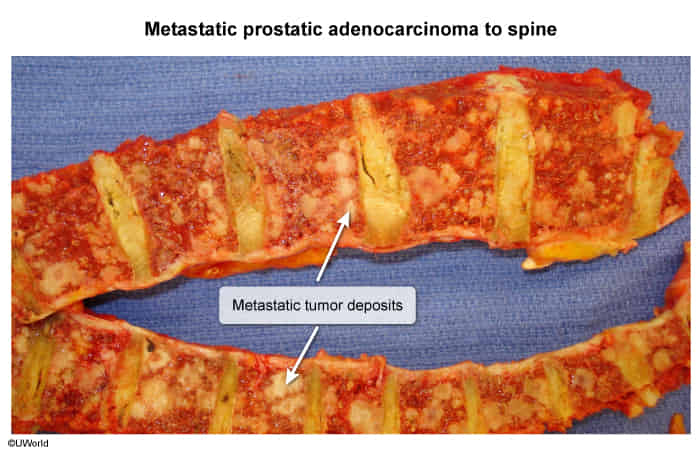
Incidence: following skin cancer (i.e., melanoma and nonmelanoma combined) most common cancer in men in the US
Mortality: in 2020, second leading cause of cancer deaths in men in the US (after lung cancer)
Etiology
Pathophysiology
Clinical features
Advanced prostate cancer can manifest with:
Constitutional symptoms: fatigue, loss of appetite, clinically significant unintentional weight loss
Features of metastatic disease; examples include:
Bone pain (due to bone metastasis, especially in the lumbosacral spine)
Neurological deficits (e.g., due to vertebral fracture causing spinal cord compression)
Lymphedema (caused by obstructing metastases in the lymph nodes)
Diagnostics
Biopsy
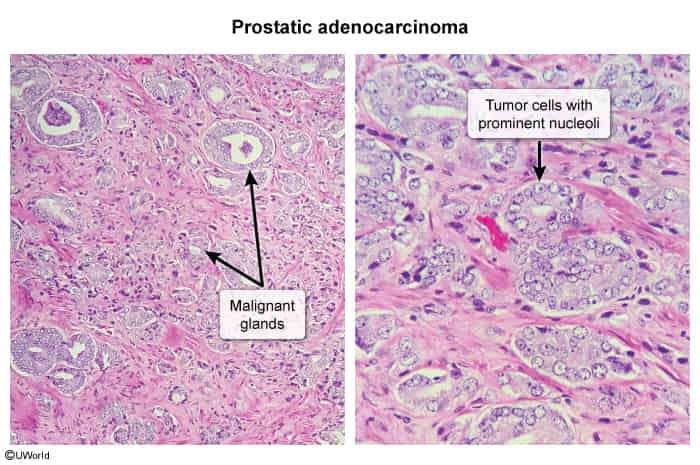
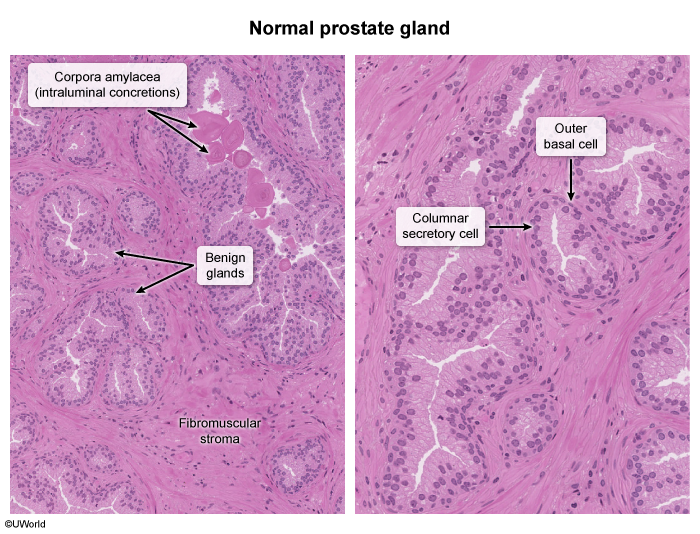
Findings: adenocarcinoma
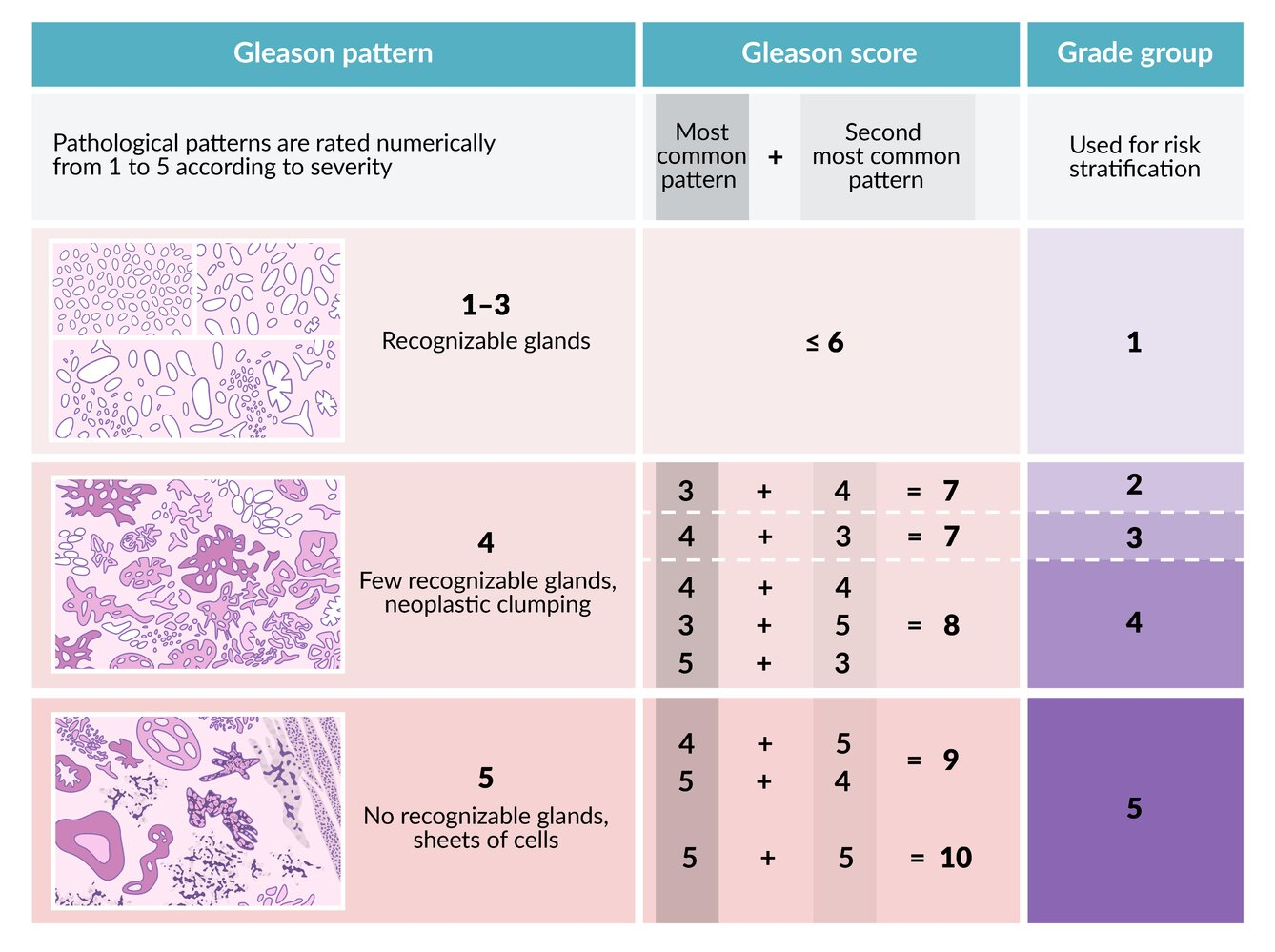
Gleason grade (Gleason pattern): depending on the degree of differentiation of tumor cells and stromal invasion, tumors are graded from 1 (well-differentiated) to 5 (poorly differentiated)
Treatment
Active Surveillance: For low-risk disease (Gleason 6, low PSA, small volume). Monitor with serial PSA, DRE, and repeat biopsies.
Localized Disease:
Radical Prostatectomy: Removal of prostate. Risk of Erectile Dysfunction (cavernous nerve injury) and Urinary Incontinence.
Radiation (EBRT or Brachytherapy): Risk of radiation proctitis/cystitis.
Important: Must co-administer Androgen Receptor Antagonist (e.g., Flutamide, Bicalutamide) initially to block the transient “tumor flare” (surge in LH/testosterone) that occurs at start of therapy.
GnRH Antagonists (e.g., Degarelix): Immediate ↓ LH/testosterone (no flare).