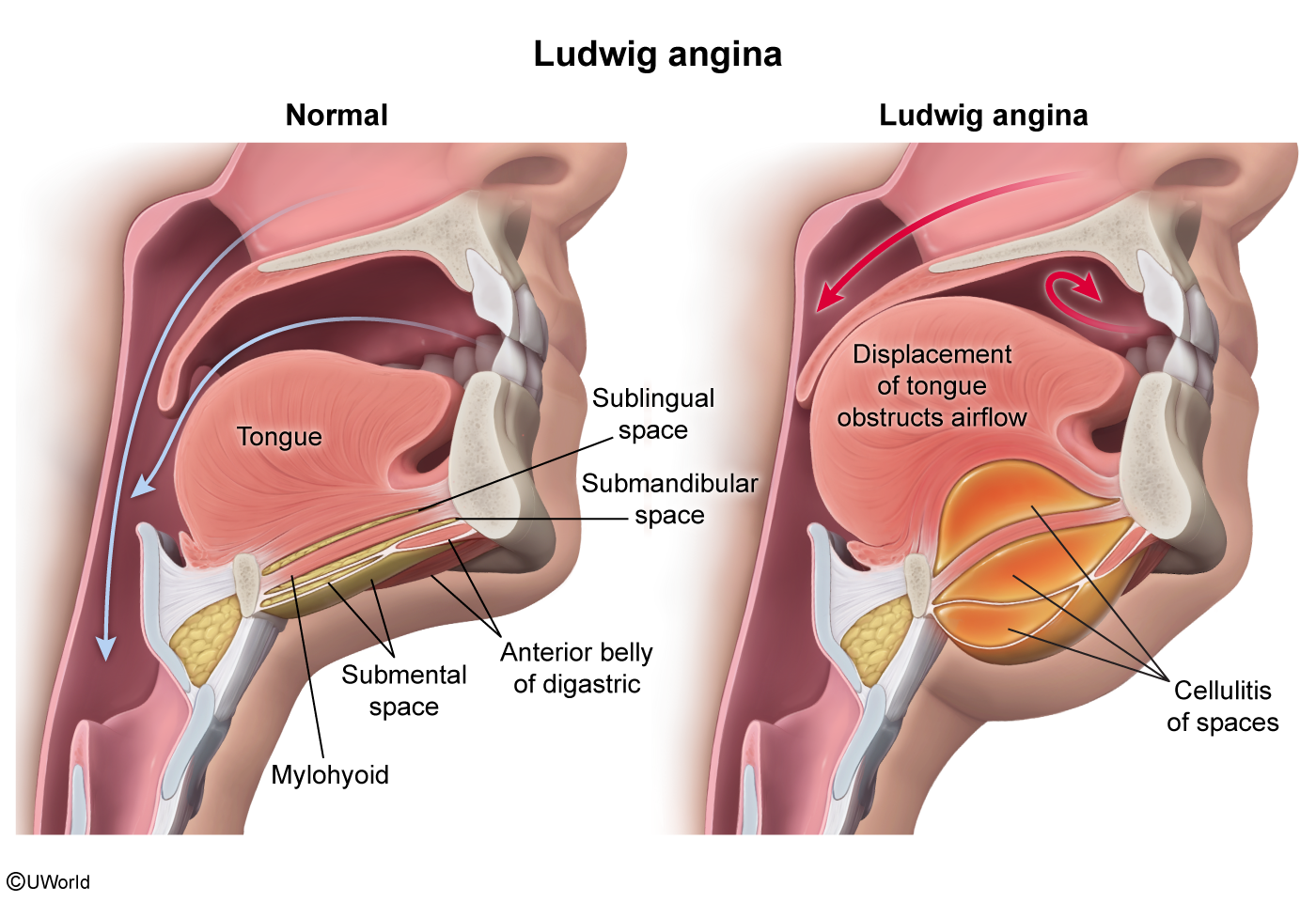
Epidemiology & Risk Factors
Most common etiology: Odontogenic infection (~90%), typically originating from the 2nd or 3rd lower molar teeth (roots extend below mylohyoid muscle). c
Risk factors: Poor oral hygiene, recent dental extraction, DM, immunosuppression, severe malnutrition, IV drug use.
Microbiology: Polymicrobial oral flora.
Anaerobes (Peptostreptococcus , Bacteroides , Prevotella ).
Aerobes (Streptococcus viridans , Staphylococcus aureus ).
Clinical Features
Rapidly progressive, bilateral cellulitis of the submandibular, sublingual, and submental spaces.
Physical Exam:
“Woody” or brawny induration of the floor of the mouth and anterior neck (typically non-fluctuant, no frank abscess early on).Erythematous, elevated, displaced tongue (pushed posteriorly and superiorly, risking complete airway occlusion). c Muffled “hot potato” voice, drooling, trismus, stridor, severe neck/throat pain, dysphagia, odynophagia.
Systemic signs: Fever, chills, tachycardia, tachypnea, agitation/anxiety (signaling impending airway loss).
Diagnosis
Clinical Diagnosis : Primary driver of management; do NOT delay airway management for diagnostic testing.Initial/Priority Step : Immediate clinical assessment of airway stability.Imaging :
CT Neck w/ IV Contrast : Best imaging modality. Performed ONLY AFTER securing the airway . Assesses gas formation, fluid collections, and extent of spread (e.g., mediastinum).
Key Labs :
Leukocytosis w/ left shift.
Blood cultures & wound/drainage cultures (aerobic + anaerobic).
Differential Diagnostics
Peritonsillar Abscess :
Diff: Unilateral tonsillar swelling, uvular deviation to contralateral side, tonsillar exudate.
Retropharyngeal Abscess :
Diff: Bulging of posterior pharyngeal wall, pain with neck extension, visible on lateral soft tissue X-ray/CT neck.
Epiglottitis :
Diff: Rapid onset high fever, severe sore throat, “thumbprint sign” on lateral neck X-ray, normal submandibular/floor of mouth exam.
Submandibular Abscess :
Diff: Unilateral , localized fluctuant swelling vs bilateral non-fluctuant brawny induration in Ludwig angina.
Management
Airway Management (Highest Priority) :
Awake fiberoptic intubation is preferred (direct laryngoscopy often impossible due to floor of mouth elevation and anatomical distortion).Immediate emergency cricothyroidotomy or tracheostomy if fiberoptic intubation fails or is unavailable.
Empiric Broad-Spectrum IV Antibiotics :
Ampicillin-sulbactam OR Ceftriaxone + Metronidazole OR Penicillin G + Metronidazole.
Add Vancomycin or Linezolid if MRSA is suspected.
Surgical Drainage / Decompression :
Indicated if fluid collection/abscess on CT, presence of subcutaneous gas, or lack of clinical improvement on IV Abx.
Source Control :
Dental consultation for extraction of offending molar once airway and infection are controlled.
Complications
Acute Airway Obstruction (most common cause of mortality).Descending Mediastinitis (spread via retropharyngeal/danger space into posterior mediastinum; high mortality).Necrotizing fasciitis of the neck.
Sepsis and Septic Shock.
Internal jugular vein thrombosis (Lemierre-like presentation) or carotid artery rupture.