Epidemiology
Etiology
Pathophysiology
Clinical features
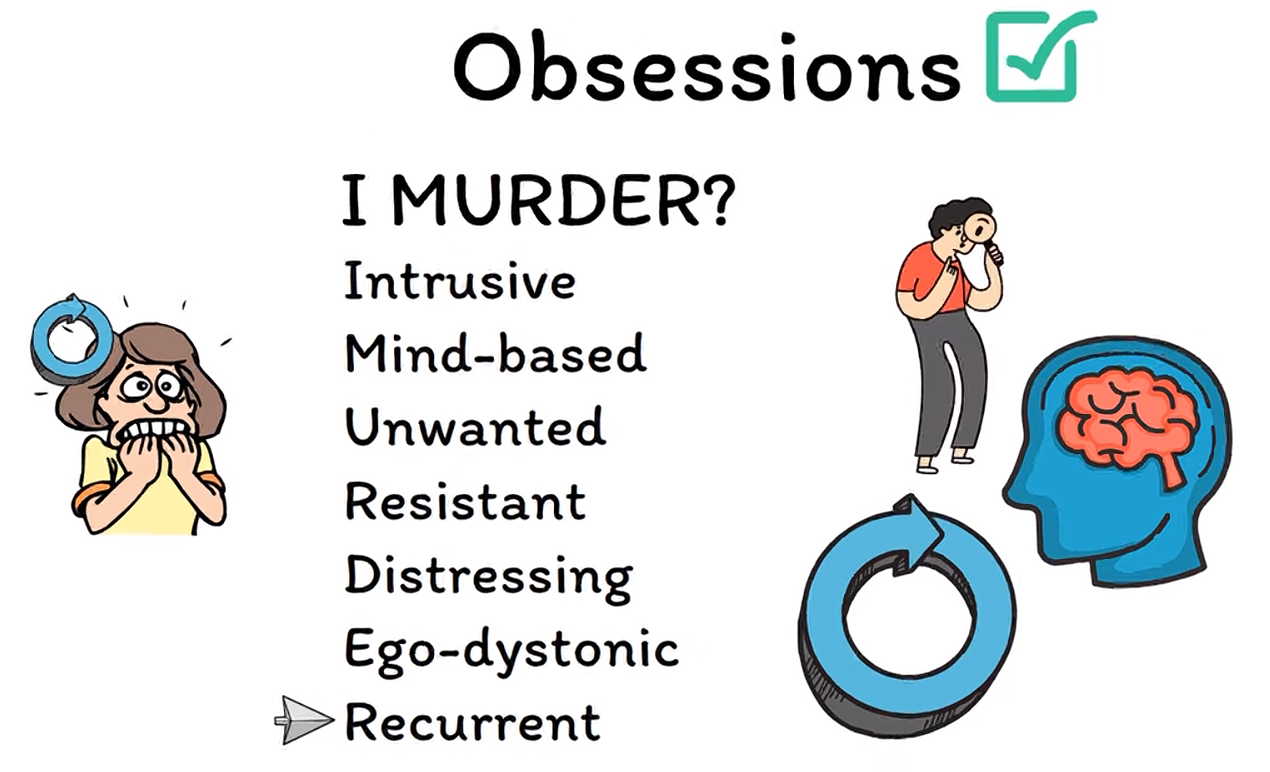
- Ego-dystonic: behavior or thought patterns that are inconsistent with or repulsive to one’s sense of self
- Opposite of ego-syntonic
- Behavior patterns are in agreement with one’s sense of self
- Seen in obsessive-compulsive personality disorder
- Opposite of ego-syntonic
- Obsessions: distressing thoughts, emotions, and/or sensations that are recurring and intrusive
- Compulsions: repetitive actions to provide relief from anxiety caused by obsessions (can take up a substantial amount of time)
Mnemonic
Compulsions are actions to calm down.
Diagnostics
Treatment
- First-line:
- Psychotherapy: Cognitive Behavioral Therapy (CBT) utilizing Exposure and Response Prevention (ERP).
- Pharmacotherapy: SSRIs (e.g., fluoxetine, sertraline, fluvoxamine, paroxetine).
- Requires higher doses and longer duration (8–12 weeks) for clinical trial compared to MDD.
- Combination therapy: CBT (ERP) + SSRI is first-line for moderate-to-severe disease. c
- Second-line:
- Switch to a different SSRI or switch to Venlafaxine (SNRI).
- Clomipramine (TCA): Highly effective due to potent serotonergic action, but reserved for 2nd/3rd line due to anticholinergic, antihistaminic, and cardiac (QT prolongation, arrhythmia) toxicity risk.
- Refractory:
- Augmentation of SSRI with atypical antipsychotics (e.g., low-dose risperidone, aripiprazole).
- Invasive interventions for severe, disabling, treatment-resistant OCD:
- Deep Brain Stimulation (DBS).
- Surgical neuroablation (e.g., anterior capsulotomy, cingulotomy).